Ovarian cancer community rallied Parliament
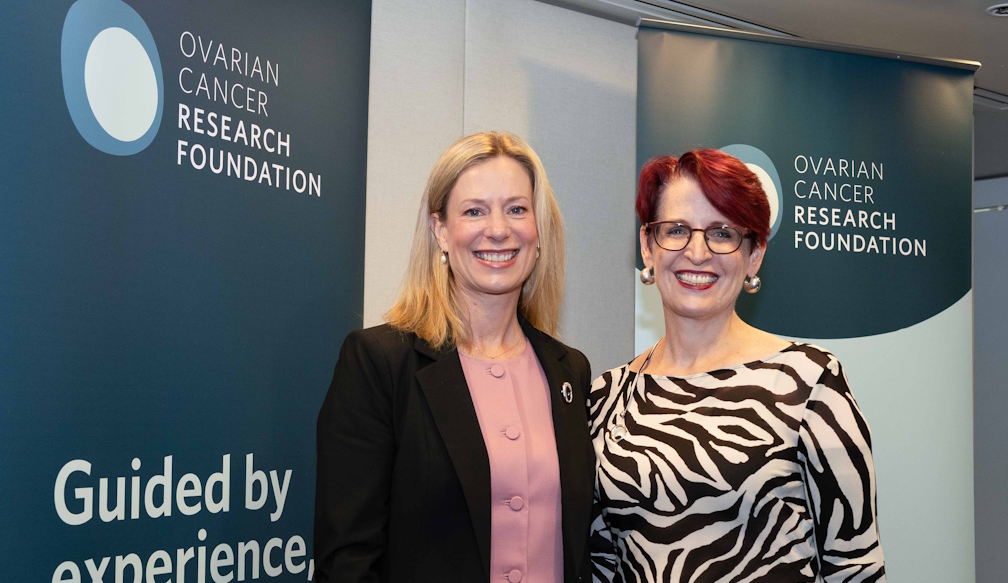
The fight against ovarian cancer took centre stage at Parliament House in Canberra last week as the Ovarian Cancer Research Foundation (OCRF) formally launched its five-year Research Impact Strategy, seeking to transform the outlook for Australians affected by what remains the nation’s deadliest gynaecological cancer. The event drew significant bipartisan support from key health figures, including the Assistant Minister for Health and Ageing, Indigenous Health and Women, The Hon Rebecca White MP, and Senator The Hon Anne Ruston MP, Shadow Minister for Health and Ageing. Their attendance, alongside other parliamentarians and senior policy officials, marked what advocates hope is a turning point in the chronic underfunding of this disease.
For too many families, change will come too late. Among the most poignant moments of the event was an address by Chad Barnier, whose partner, 35-year-old Heidi d’Elboux, died in July, only three months after she was diagnosed with ovarian cancer. Barnier called on the government to confront the tragic cost of inaction and to invest meaningfully in research, highlighting the urgent need to prevent other families from enduring similar loss.
Ovarian cancer continues to lag behind other major cancers, with a five-year survival rate stubbornly below 50%. While almost 2,000 Australian women and girls are diagnosed each year, there is still no early detection test and treatment options remain limited. Recurrence is common, and, despite its prevalence, ovarian cancer has received less than one percent of government medical research funding in the past 15 years.
The newly unveiled Research Impact Strategy, developed with the input of more than 420 Australians—including those directly affected by ovarian cancer and leading scientists—sets out a series of clear, community-driven priorities. These include advancing research into early detection, improving treatments, and focusing on prevention. According to OCRF CEO Robin Penty, the strategy is “not just a roadmap, it’s a call to arms,” underlining the need for scientific collaboration, gender equity in research, and urgent action to translate discoveries into clinical care.
Key aims of the strategy include:
Expanding and strategically targeting research funding
Enhancing national and international collaboration between organisations and individual researchers
Improving advocacy, policy, and targeted government investment
Promoting gender equity and inclusion in research leadership
Strengthening research infrastructure and knowledge sharing
Accelerating the translation of research into clinical practice
The OCRF, a community-funded organisation, was founded to address the funding shortfall in ovarian cancer research and has raised and invested more than $33 million since 2000. Its efforts currently support 17 Australian medical research projects in early detection and treatment. This year alone, the OCRF granted $3.5 million towards progress, but the organisation stresses that government investment is vital to close the gap.
The new Research Impact Strategy is intended to complement broader national measures such as the Australian Cancer Plan and the proposed Gynaecological Cancer Transformation Initiative, aiming to deliver desperately needed progress and hope to those affected by ovarian cancer over the coming decade.
Image - The Hon Rebecca White MP, Assistant Minister for Health (left) with Robin Penty, CEO of the OCRF