
Is defunding police the answer?
- Written by: Robyn Newitt, Lecturer, Criminology, Western Sydney University
In the lead-up to the 30th anniversary of the royal commission into Aboriginal deaths in custody report, there have been four Indigenous deaths in custody in three weeks[1].
The royal commission report presented 339 recommendations to ensure the safety of First Nations people in custody. If all these recommendations had been implemented, there could have been lives spared, including perhaps these recent deaths in custody.
Too many lives cut short
The latest deaths bring the number of Aboriginal people who have died in custody since the royal commission to over 450[2].
-
On March 2, an Aboriginal man[3] in his mid-30s died in his cell at the hospital within Long Bay prison in NSW. However, there were many preexisting medical issues that may have contributed to his early death.
-
On March 5, at Silverwater Women’s Prison in NSW, an Aboriginal woman[4] in her mid-50s died in her cell. Peter Severin, Corrective Services Commissioner said he believed the woman had “killed herself”.
-
On March 7, in Victoria, an Aboriginal man[5] held in Ravenhall medium security prison died in custody. His death is being investigated, after Corrections Victoria made a public statement four days after his death.
-
On March 18, Barkindji man Anzac Sullivan[6] suffered a medical episode during a police pursuit in NSW. Despite attempts by police to resuscitate him, he was declared deceased at Broken Hill Hospital.
The news[7] of two deaths this month in New South Wales came as the state’s corrective services defended the decision not to make a public statement to announce the deaths in custody.
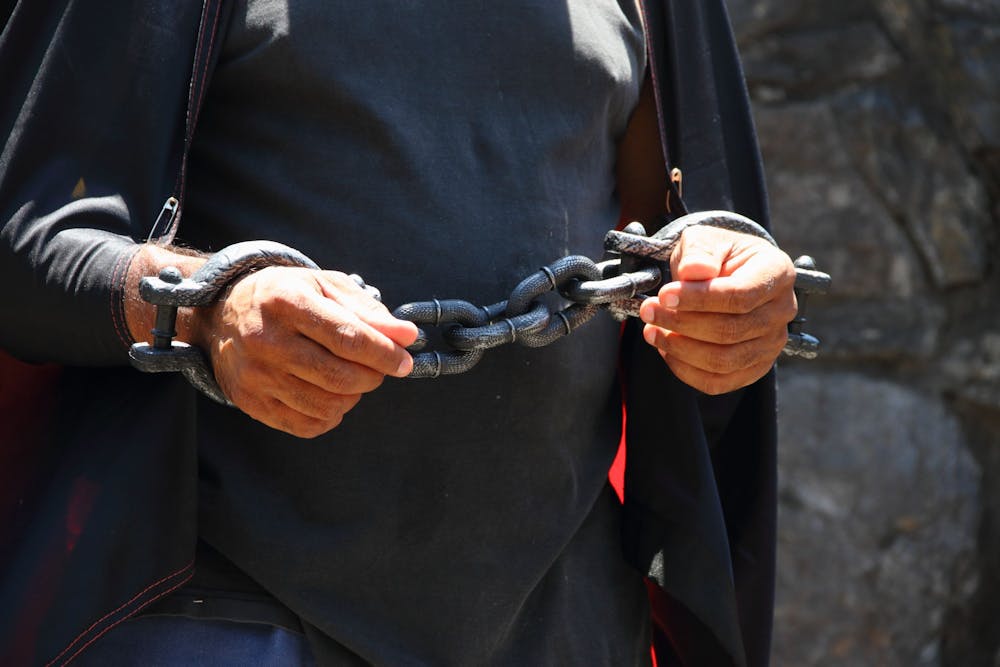 First Nations people continue to be overrepresented in Australian prisons. https://www.shutterstock.com[8]
Recommendations ignored
April 15 marks the 30 year anniversary[9] of the Royal Commission into Aboriginal Deaths in Custody report[10] tabled in parliament in 1991. The report recorded 99 deaths in custody between 1980 and 1989, and made 339 recommendations[11] to prevent further Aboriginal deaths in custody. The report also addressed other issues leading to the over-representation of Indigenous people within Australia’s legal system.
The recommendations in the royal commission report could have prevented the four deaths this month, had they been implemented.
-
The Long Bay man in this mid-30s who died due to pre-existing conditions could have been saved if recommendation 154[12] had been in place. There would have been appropriate cultural health services available for him, and other Aboriginal people in custody.
-
It’s possible the woman who died in Silverwater Prison could have been safer if recommendation 165[13] had been implemented (if she did in fact take her own life). This recommendation suggests police and corrective services carefully assess equipment and facilities to eliminate or reduce the potential for harm. An example of this is the removal of hanging points in police and prison cells. Peter Severin has said removing hanging points from cells is a budget issue[14].
-
Recommendation 133(a)[15] addresses the necessity for police to undertake training to know when someone is in distress from their presence. This training could have assisted the police when approaching Anzac Sullivan.
What needs to be done?
There are no words to describe the loss suffered by families of those who die in custody. This is especially so amid the knowledge justice will never be served — there has not been one person ever held criminally responsible for the death[16] of an Aboriginal and/or Torres Strait Islander person in custody, despite there being 450 such deaths[17].
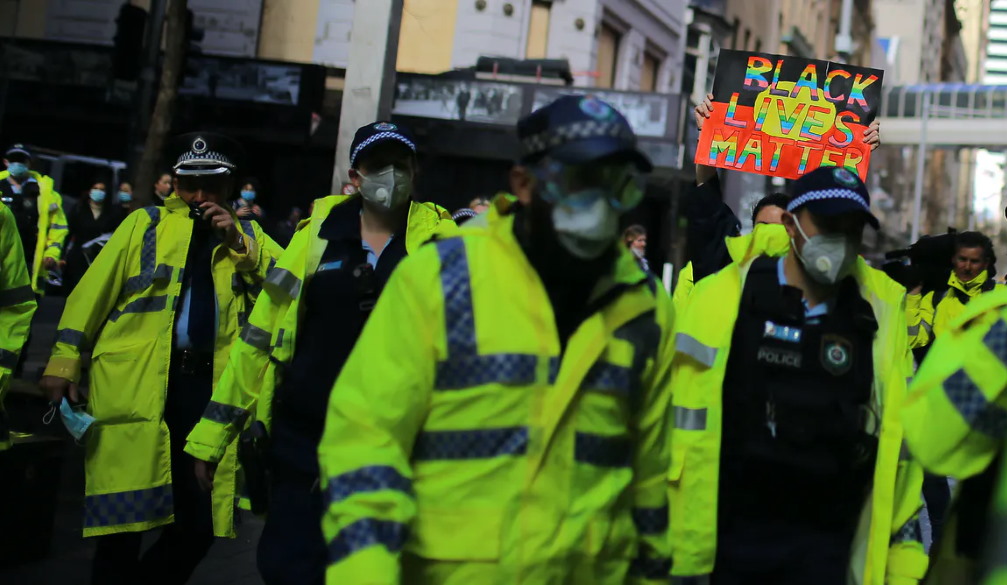
Police brutality[18] has been the centre of debates relating to the treatment of Aboriginal people in this country since colonisation began. However, since the Black Lives Matter (BLM) movement gained momentum in Australia and globally, we have seen a shift in the way wider society perceives police and their interactions with the public.
A recurring suggestion is the idea to defund and abolish[19] the police and divert funds to First Nations community-led solutions. An ANROWS (Australia’s National Research Organisation for Women’s Safety) report[20] highlights the importance of community-led solutions that are culturally safe, but community law efforts are often undermined by settler law and forms of government. Academic Chris Cunnen writes of [21] community-based justice reinvestment projects in First Nations communities, which have seen reductions in offending and and incidences of domestic violence.
Unfortunately, although the BLM movement has caused people to see the ways police can abuse power, some people remain so detached[22] from what is happening to Indigenous people they have no desire to question or challenge[23] the dominant government paradigm for achieving safer communities. It speaks volumes regarding the public’s perceived value of Aboriginal lives, despite being the oldest, continuing living culture[24] in the world.
Police brutality and lack of adequate knowledge on medical issues has become a common theme[25] in Aboriginal deaths in custody, and something must be done to remedy this.
This government needs to take action to protect the lives of Aboriginal and/or Torres Strait Islander people. This can be done by implementing[26] the 339 recommendations from the 1991 royal commission report.
Another option is to defund the police[27] and institute community-led solutions. Both of these options are viable and easily achievable in order for Australia to stop the racist, dehumanising and degrading[28] treatment of Aboriginal and/or Torres Strait Islander people.
References
- ^ four Indigenous deaths in custody in three weeks (www.sbs.com.au)
- ^ over 450 (www.theguardian.com)
- ^ Aboriginal man (www.theguardian.com)
- ^ Aboriginal woman (www.theguardian.com)
- ^ Aboriginal man (nit.com.au)
- ^ Anzac Sullivan (www.sbs.com.au)
- ^ news (www.abc.net.au)
- ^ https://www.shutterstock.com (www.shutterstock.com)
- ^ 30 year anniversary (www.amnesty.org.au)
- ^ Royal Commission into Aboriginal Deaths in Custody report (apo.org.au)
- ^ 339 recommendations (www.austlii.edu.au)
- ^ recommendation 154 (www.austlii.edu.au)
- ^ recommendation 165 (www.austlii.edu.au)
- ^ is a budget issue (www.abc.net.au)
- ^ Recommendation 133(a) (www.austlii.edu.au)
- ^ criminally responsible for the death (theconversation.com)
- ^ 450 such deaths (thewest.com.au)
- ^ Police brutality (indigenousx.com.au)
- ^ defund and abolish (link.springer.com)
- ^ report (apo.org.au)
- ^ Chris Cunnen writes of (theconversation.com)
- ^ detached (www.theguardian.com)
- ^ challenge (d1wqtxts1xzle7.cloudfront.net)
- ^ oldest, continuing living culture (www.theguardian.com)
- ^ common theme (papers.ssrn.com)
- ^ implementing (classic.austlii.edu.au)
- ^ defund the police (theconversation.com)
- ^ racist, dehumanising and degrading (www.jstor.org)