
Labor's plan for $15 billion 'reconstruction fund' to promote post-pandemic manufacturing economy
- Written by: Michelle Grattan, Professorial Fellow, University of Canberra
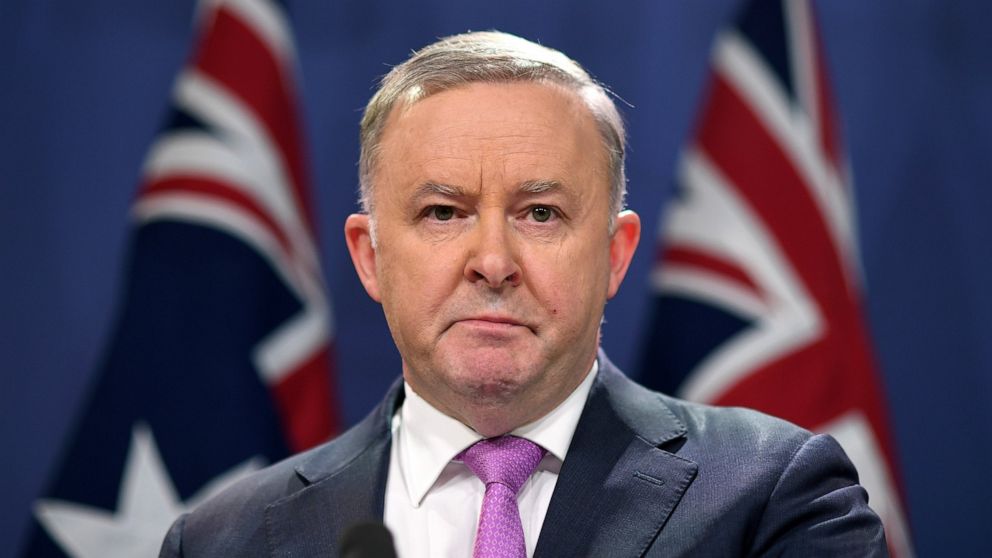
A Labor government would set up a $15 billion National Reconstruction Fund to promote manufacturing in Australia’s post pandemic economy.
The fund, to be announced on Tuesday as Labor begins its national conference, would partner with private investors and superannuation funds, which have access to large reserves of capital.
It would be aimed at helping build new industries and boosting existing ones. The $15 billion would be provided through a combination of loans, equity, co-investment and guarantees.
In a statement on the plan, Anthony Albanese and shadow minister for national reconstruction. Richard Marles, say the pandemic has highlighted the serious deficiencies Australia has in its manufacturing capabilities and its ability to be globally competitive in innovation and technology.
“If there is anything that COVID has taught us, it is the need for Australia to be a place which makes things – to have our own industrial and manufacturing capabilities, our own sovereign capabilities,” they say.
“From commercialising our historic capacity in science and innovation to boosting the development of medical devices and pharmaceuticals, through to reviving our capability to make cars, trains and ships, today’s announcement will support the businesses in these industries to secure the capital and investment to grow and prosper,” Albanese and Marles say.
The fund would concentrate on a range of strategic industries. These would include resources value adding; food and beverage processing; transport; medical science; renewables and low emission technologies; defence capability, and enabling capabilities across engineering, data science and software development.
Objectives of the fund would be to:
-
reduce the risk of investment in innovation
-
help firms grow by support for new investment especially in regional areas
-
strengthen self-sufficiency and industrial diversity in Australia by assisting businesses build national sovereignty and decrease the risks in their supply chains
-
support regional developoment by enhancing private sector investment in industries of the future.
Labor would model the fund on entities such as the successful Clean Energy Finance Corporation, which was set up by the Labor government. It has invested billions to promote the transition to renewable energy, energy efficiency and low emissions technologies.
Labor’s proposed fund would have an independent board.
Assistance it provided would need to return rates above the government borrowing rate.
The $15 billion capital provided would be off-budget.
Labor points out that according to the OECD Australia ranks last in manufacturing self-sufficiency among industrialised countries. It produces just over two thirds of what it uses.
The pandemic as well as the deepening Australia-China tensions have increased debate over the past year about the need for greater self-sufficiency especially in certain key areas, such as medical supplies. The pandemic led to supply chain problems which are still being experienced for some products.