Can you get sunburnt or UV skin damage through car or home windows?
- Written by: Theresa Larkin, Associate Professor of Medical Sciences, University of Wollongong
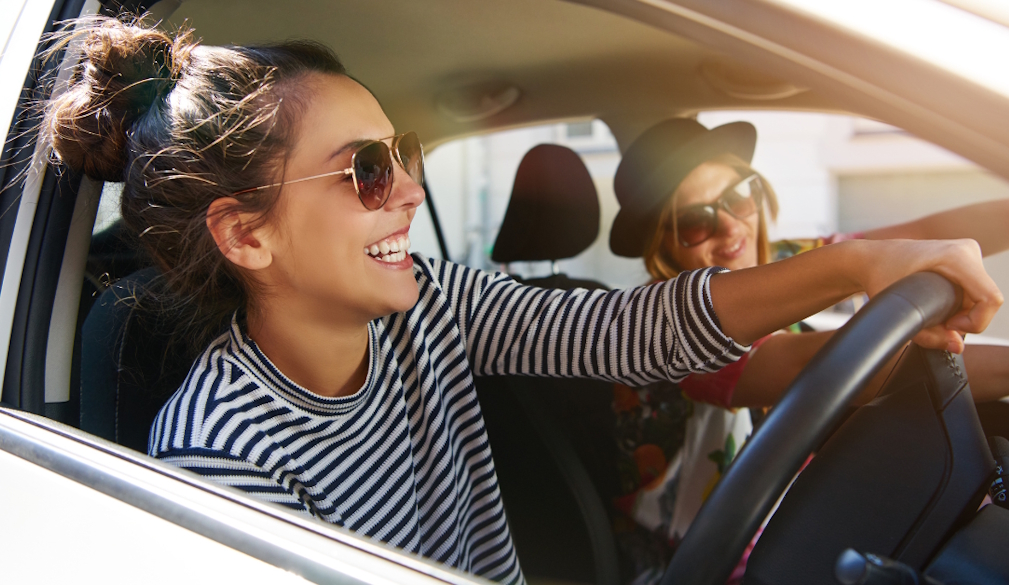
When you’re in a car, train or bus, do you choose a seat to avoid being in the sun or do you like the sunny side?
You can definitely feel the sun’s heat through a window. But can you get sunburn or skin damage when in your car or inside with the windows closed?
Let’s look at how much UV (ultraviolet) radiation passes through different types of glass, how tinting can help block UV, and whether we need sunscreen when driving or indoors.
What’s the difference between UVA and UVB?
Of the total UV[1] radiation that reaches Earth, about 95% is UVA and 5% is UVB.
UVB only reaches the upper layers[2] of our skin but is the major cause[3] of sunburn, cataracts and skin cancer.
UVA penetrates deeper[4] into our skin and causes cell damage that leads to skin cancer.
Glass blocks UVA and UVB radiation differently
All glass[6] used in house, office and car windows completely blocks UVB from passing through.
But only laminated glass can completely block UVA. UVA can pass through[7] other glass used in car, house and office windows and cause skin damage[8], increasing the risk of cancer.
Car windscreens block UVA, but the side and rear windows don’t
A car’s front windscreen lets in lots of sunshine and light. Luckily it blocks 98% of UVA radiation[9] because it is made of two layers of laminated glass.
But the side and rear car windows are made of tempered glass, which doesn’t completely block UVA. A study of 29 cars[10] found a range from 4% to almost 56% of UVA passed through the side and rear windows.
The UVA protection was not related to the car’s age or cost, but to the type[11] of glass, its colour and whether it has been tinted or coated in a protective film. Grey or bronze coloured glass, and window tinting, all increase UVA protection. Window tinting[12] blocks around 95% of UVA radiation.
In a separate study from Saudi Arabia, researchers fitted drivers with a wearable radiation monitor[13]. They found drivers were exposed to UV index ratings up to 3.5. (In Australia, sun protection is generally recommended[14] when the UV index is 3 or above – at this level it takes pale skin about 20 minutes to burn.)
So if you have your windows tinted, you should not have to wear sunscreen in the car. But without tinted windows, you can accumulate skin damage.
UV exposure while driving increases skin cancer risk
Many people spend a lot of time in the car – for work, commuting, holiday travel and general transport. Repeated UVA radiation exposure through car side windows might go unnoticed, but it can affect our skin.
Indeed, skin cancer is more common on the driver’s side of the body. A study in the United States[15] (where drivers sit on the left side) found more skin cancers on the left than the right side for the face, scalp, arm and leg, including 20 times more for the arm.
Another US study[16] found this effect was higher in men. For melanoma in situ[17], an early form of melanoma, 74% of these cancers were on the on the left versus 26% on the right.
Earlier Australian studies reported more skin damage[18] and more skin cancer[19] on the right side.
Cataracts and other eye damage are also more common on the driver’s side[20] of the body.
What about UV exposure through home or office windows?
We see UV damage from sunlight through our home windows in faded materials, furniture or plastics.
Most glass used in residential windows lets a lot of UVA pass through, between 45 and 75%[21].
Single-pane glass lets through the most UVA, while thicker, tinted or coated glass blocks more UVA.
The best options are laminated glass, or double-glazed, tinted windows that allow less than 1% of UVA through.
Skylights[23] are made from laminated glass, which completely stops UVA from passing through.
Most office and commercial window glass has better UVA protection than residential windows, allowing less than 25% of UVA transmission[24]. These windows are usually double-glazed and tinted, with reflective properties or UV-absorbent chemicals.
Some smart windows[25] that reduce heat using chemical treatments to darken the glass can also block UVA.
So when should you wear sunscreen and sunglasses?
The biggest risk with skin damage while driving is having the windows down or your arm out the window in direct sun. Even untinted windows will reduce UVA exposure to some extent, so it’s better to have the car window up[26].
For home windows, window films or tint[27] can increase UVA protection of single pane glass. UVA blocking by glass is similar to protection by sunscreen.
When you need to use sunscreen depends on[28] your skin type, latitude and time of the year. In a car without tinted windows, you could burn after one hour in the middle of the day in summer, and two hours in the middle of a winter’s day.
But in the middle of the day next to a home window that allows more UVA to pass through, it could[29] take only 30 minutes to burn in summer and one hour in winter.
When the UV index is above three, it is recommended you wear protective sunglasses[30] while driving or next to a sunny window to avoid eye damage.
References
- ^ total UV (www.who.int)
- ^ upper layers (theconversation.com)
- ^ is the major cause (theconversation.com)
- ^ penetrates deeper (theconversation.com)
- ^ Shutterstock/solar22 (www.shutterstock.com)
- ^ glass (onlinelibrary.wiley.com)
- ^ can pass through (www.skincancer.org)
- ^ cause skin damage (theconversation.com)
- ^ blocks 98% of UVA radiation (onlinelibrary.wiley.com)
- ^ study of 29 cars (jamanetwork.com)
- ^ the type (www.sciencedirect.com)
- ^ Window tinting (academic.oup.com)
- ^ wearable radiation monitor (pmc.ncbi.nlm.nih.gov)
- ^ is generally recommended (www.cancer.org.au)
- ^ study in the United States (pmc.ncbi.nlm.nih.gov)
- ^ Another US study (pubmed.ncbi.nlm.nih.gov)
- ^ melanoma in situ (www.cancerresearchuk.org)
- ^ skin damage (pmc.ncbi.nlm.nih.gov)
- ^ skin cancer (jamanetwork.com)
- ^ more common on the driver’s side (www.aoa.org)
- ^ between 45 and 75% (onlinelibrary.wiley.com)
- ^ Sherman Trotz/Pexels (www.pexels.com)
- ^ Skylights (onlinelibrary.wiley.com)
- ^ less than 25% of UVA transmission (www.sciencedirect.com)
- ^ smart windows (theconversation.com)
- ^ car window up (theconversation.com)
- ^ window films or tint (onlinelibrary.wiley.com)
- ^ depends on (onlinelibrary.wiley.com)
- ^ could (onlinelibrary.wiley.com)
- ^ wear protective sunglasses (theconversation.com)