Where’s nature positive? Australia must ensure environment reforms work to restore what’s been lost
- Written by: Emille Boulot, Lecturer of Law, University of Tasmania
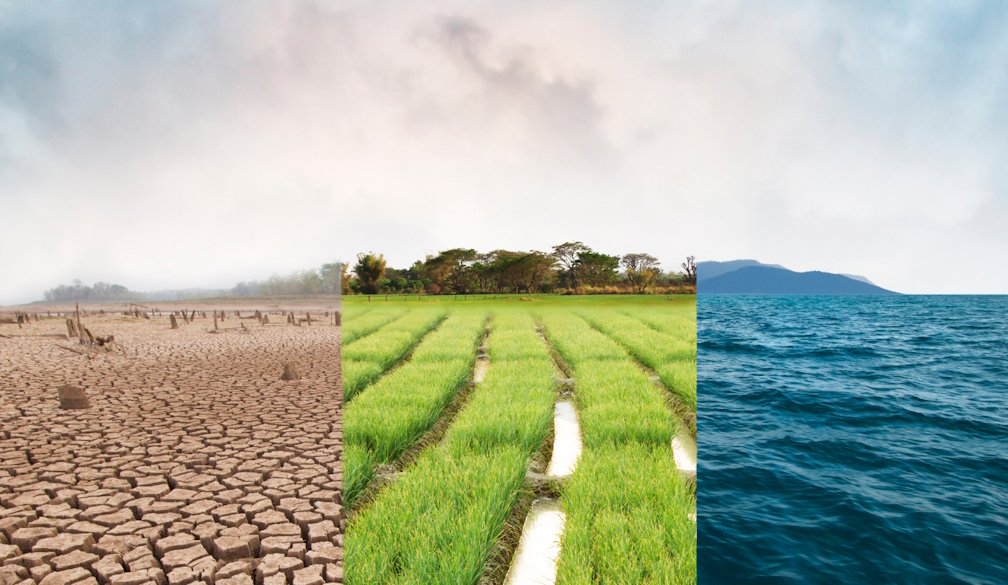
For decades, conservation was focused on stemming how much nature was being lost. But a new era of nature positive[1] environmental policy is taking hold worldwide, shifting from preventing further harm to restoring what’s been lost.
In 2022, almost 200 countries signed up[2] to the goal of 30 by 30 – restoring 30% of lands and seas by 2030. Globally, the goal is to restore an area almost the size of India. Australia is working towards this international goal[3] of increasing protection and restoring the highest priority areas under its Strategy for Nature[4]. Over the last two centuries, Australia has already lost much biodiversity[5].
Laws should play a key role in protecting and restoring nature. But Australia’s national Environment Protection and Biodiversity Conservation Act is not currently fit for purpose. The 2020 Samuel Review[6] concluded the existing laws do not “facilitate the maintenance or restoration of the environment”.
In 2022, the Australian government promised to reverse the decline of nature with new nature positive[7] laws which would repair ecosystems and help species recover. Shortly afterwards, parliament created a national Nature Repair Market[8] to provide incentives for land managers to restore degraded ecosystems.
After a failed attempt at reform last year, the federal government last week announced its long-awaited broader reform package. In introducing the bill, Environment Minister Murray Watt said the laws would enable[9] “stronger environmental protection and restoration”. Will these reforms be a game changer for restoration? It’s not so clear.
What would the proposed laws do for restoration?
Labor’s reform bills run to over 550 pages. This level of complexity means it’s hard to give a definitive answer on what the reforms would do for restoration.
At this stage, it appears that while the package contains long-awaited reforms, it falls short on ecosystem restoration.
The cornerstone of the reforms will be a new power for the Environment Minister to create National Environmental Standards, as called for in the Samuel Review. Once in place, they would work by requiring environment approvals not to be inconsistent with any standard.
These standards have been watered down somewhat. The Samuel Review recommended binding national standards which would outline clear requirements for protecting endangered species and other nationally significant matters. Under the current reforms, the minister is not obliged to make any standards and environment approvals need only be “not inconsistent” with them.
The reform package continues Australia’s reliance on environmental offsets – the practice of allowing developers to destroy habitat in one place by “compensating” for it by restoring habitat elsewhere.
The text of the draft bills suggests a developer must compensate for any long-lasting significant impact through offsets or paying a restoration contribution. The goal is to have a net gain for nature.
This sounds promising, but the concept of “net gain” is unclear and the focus on offsets still assumes the loss of nature somewhere.
A better option would be if developers were legally required to explore ways to avoid or mitigate environmental damage first before relying on offsets. While the minister must “consider” this hierarchy of options in making decisions, they’re not actually obliged to apply it.
Overall, this is disappointing. Rather than creating new incentives for restoration at a landscape scale, restoration work will instead be linked to the traditional legal model of approval[12] for specific, environmentally degrading projects through the use of offsets and restoration elsewhere.
The new “restoration contributions” scheme is even more troubling. It would allow developers to contribute to an offset fund rather than undertake the work themselves. This would be a shortcut, allowing developers to pay for environmental destruction.
Offsets should only be used where habitat can genuinely be replaced. But as they stand, these reforms don’t require assessment of whether offsets are even feasible for a particular project. Biodiversity offsets have also been thoroughly criticised[13] for their failure to prevent loss of nature, let alone generate nature positive outcomes[14].
The reforms would also allow biodiversity certificates issued under the Nature Repair Market to serve as offsets, despite the government ruling this out[15] in 2023. Linking the nature repair market to offsets may divert investment away from some types of restoration projects. It diminishes the net gain from voluntary restoration when the results merely compensate for a loss elsewhere.
Planning across landscapes
To boost ecological restoration, the Samuel Review recommended better planning at the national and regional scale. Taking a zoomed-out view would help environmental planners connect habitat, safeguard climate refuges and protect critical habitat on a landscape scale.
These new reforms seem to be a step forward on this front. The minister, though, would retain a power to make bioregional plans at their discretion. If plans are made under the environment laws, they should specify zones for development and areas where restoration will be undertaken.
It’s heartening to see restoration included in these plans. The problem is, restoration is still tied to land-degrading activities[16] such as mining or land clearing. That is, it’s done as a response to new damage caused to the environment, not to repair already degraded landscapes.
Time for a new model
What’s missing from the proposed reforms is a positive agenda to address Australia’s deep historic losses of nature.
As the draft laws are debated in parliament, the best outcome would be if clear measures to actually restore nature at landscape-scale and to do it actively, rather than as a response to development damage.
An excellent example Australia could look to is the European Union’s Nature Restoration Law[19] adopted last year. It sets ambitious targets to restore the EU’s heavily degraded ecosystems: 30% by 2030, 90% by 2050.
The targets would help restore biodiversity while combating climate change and boosting nature-based adaptation. Under the law, EU states must prepare their own national restoration plans. Prototype ecosystem restoration laws are also being developed by the international Society for Ecological Restoration[20].
After decades of decline and species loss, Australians deserve environment laws which genuinely protect and restore unique wildlife and ecosystems. The government’s proposed reforms have promise. But they don’t yet make restoration the national priority it must be.
References
- ^ nature positive (www.naturepositive.org)
- ^ signed up (prod.drupal.www.infra.cbd.int)
- ^ international goal (www.cbd.int)
- ^ Strategy for Nature (www.dcceew.gov.au)
- ^ much biodiversity (soe.dcceew.gov.au)
- ^ Samuel Review (www.dcceew.gov.au)
- ^ nature positive (www.dcceew.gov.au)
- ^ Nature Repair Market (theconversation.com)
- ^ would enable (minister.dcceew.gov.au)
- ^ Adam Campbell/Flickr (www.flickr.com)
- ^ CC BY-NC-ND (creativecommons.org)
- ^ model of approval (doi.org)
- ^ thoroughly criticised (theconversation.com)
- ^ nature positive outcomes (doi.org)
- ^ ruling this out (biodiversitycouncil.org.au)
- ^ land-degrading activities (doi.org)
- ^ Ant Le Breton/Flickr (www.flickr.com)
- ^ CC BY-NC-ND (creativecommons.org)
- ^ Nature Restoration Law (link.springer.com)
- ^ Society for Ecological Restoration (www.ser.org)