The E-Bike Revolution: Will Australians Have to Adapt, or Will the Law Catch Up?
- Written by: The Times
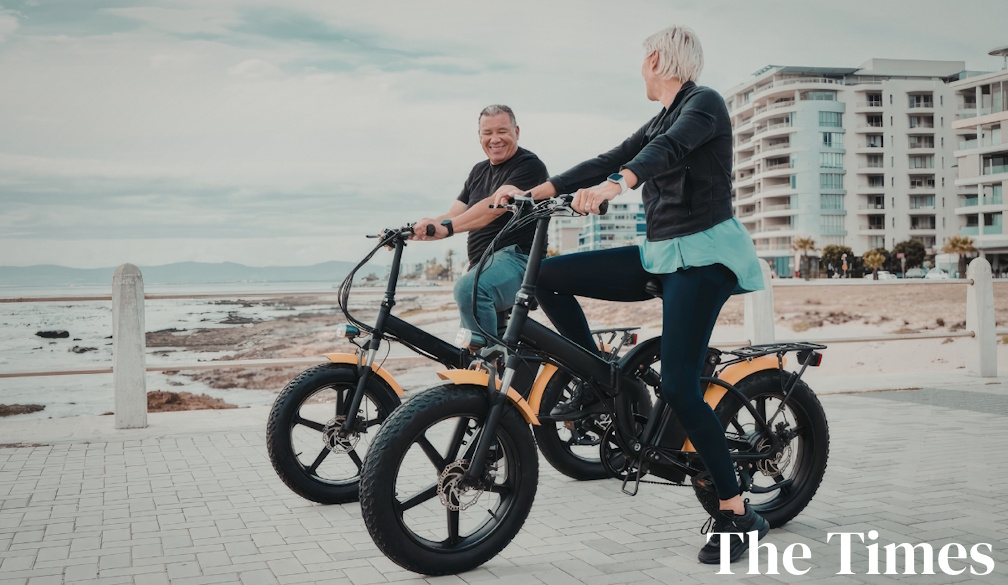
Electric bicycles have transformed the way Australians move around their cities and towns.
They are affordable to run, environmentally friendly, reduce traffic congestion and allow many people to travel further with less physical effort. For commuters, they have become a genuine alternative to the family car.
Yet the rapid growth of e-bikes has also created a new question: who has priority when pedestrians, cyclists and motorists increasingly share the same space?
A transport revolution
Australia has embraced e-bikes.
Commuters use them to avoid traffic. Delivery riders rely on them to earn a living. Older Australians enjoy remaining active with electric assistance, while younger riders appreciate their speed and convenience.
Infrastructure, however, has not always kept pace.
Many footpaths, shared pathways and cycling routes were designed long before today's faster and heavier electric bicycles became commonplace.
A growing safety concern
Reports of pedestrians being struck by bicycles and e-bikes have increased public concern.
While motor vehicles remain responsible for the overwhelming majority of road fatalities, collisions involving e-bikes can still result in serious injury or death, particularly where elderly pedestrians or young children are involved.
Many complaints centre on riders travelling at high speed through crowded pedestrian areas, failing to slow down when approaching walkers or using warning bells only moments before passing.
For many pedestrians, particularly older Australians, the experience can be unsettling.
Shared paths require shared responsibility
Australia's road rules generally require riders on shared paths to give way to pedestrians and to travel at a safe speed.
The challenge is enforcement.
Police cannot be everywhere, and many dangerous interactions occur in places where riders believe they are unlikely to face penalties.
As e-bike numbers continue to grow, authorities may face increasing pressure to enforce existing rules more consistently rather than simply introducing new ones.
We've adapted before
History suggests Australians are capable of adapting to major transport changes.
When motor cars first appeared, they frightened horses, lacked standard road rules and contributed to a rise in crashes as communities learned to share roads with a completely new technology.
Seat belts, traffic lights, speed limits, drink-driving laws, roundabouts and safer vehicle design all evolved over time.
The transport system gradually adjusted.
E-bikes may represent another stage in that evolution.
Technology alone is not the problem
An e-bike is simply a tool.
Whether it becomes dangerous depends largely on rider behaviour.
Most riders travel responsibly and appreciate the benefits of electric transport. A relatively small number travelling at excessive speed through pedestrian areas can shape public perception of the entire industry.
That raises an important distinction between regulating the machine and regulating the behaviour.
Where next?
Governments around Australia continue to review e-bike regulation as their popularity increases.
Future measures could include clearer classifications, stronger enforcement against illegally modified high-powered bikes, greater education for riders, improved cycling infrastructure and tougher penalties for reckless riding where pedestrians are placed at risk.
The challenge is preserving the environmental and transport benefits of e-bikes while ensuring that footpaths remain safe places for everyone.
The Times View
Australia is unlikely to abandon e-bikes. They are becoming an established part of modern transport and offer genuine economic and environmental benefits.
The real question is not whether Australians should accept e-bikes, but how communities can safely integrate them into everyday life. History shows that transport revolutions succeed when technology is matched by sensible rules, thoughtful infrastructure and responsible behaviour. Pedestrians should not have to fear walking on a footpath, and responsible e-bike riders should be able to enjoy the freedom their transport provides. Achieving both goals is likely to define the next chapter of Australia's transport policy.