Since 2020, 4 of Australia’s natural World Heritage properties have deteriorated
- Written by: Jon C. Day, Adjunct Principal Research Fellow, College of Science and Engineering, James Cook University
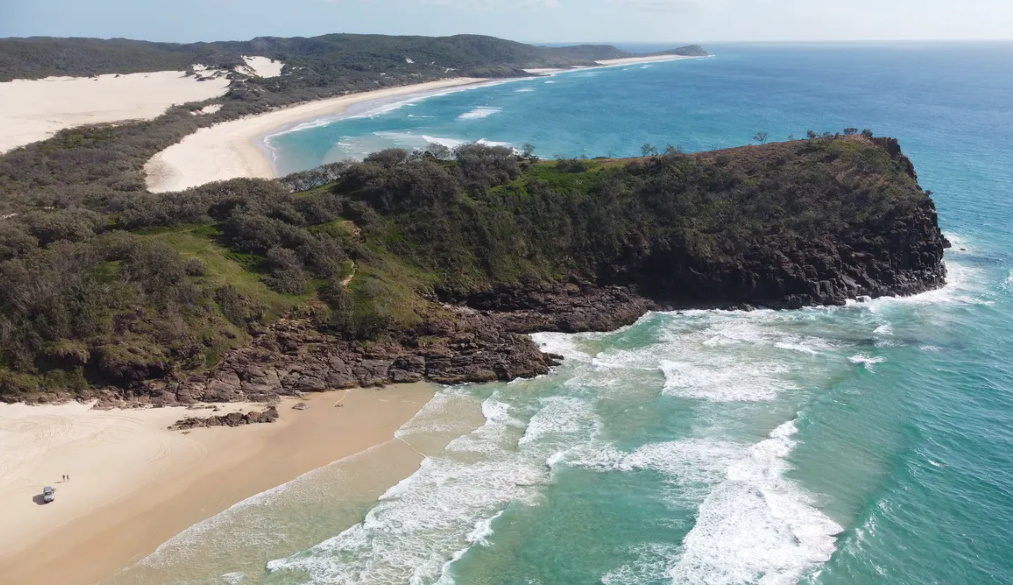
Since 2020, the conservation outlook has worsened for four of Australia’s 16 natural World Heritage properties – Ningaloo, Shark Bay, Purnululu National Park and the Australian Fossil Mammal Sites. This means 25% of our natural areas globally recognised as being significant are either in worse health or need better planning to secure their future.
The Great Barrier Reef remains in the lowest rating[1] – “critical” – as one of just 17 natural World Heritage properties globally with this outlook. Only Macquarie Island[2] has improved in its outlook, largely due to the removal of rodents and rabbits. Australia’s 11 other properties have an unchanged outlook.
These findings come from the new independent World Heritage Outlook, published today[3] by the world authority on nature, the International Union for Conservation of Nature.
Why the downgrades? Climate change[4] is the biggest threat. Worsening marine heatwaves are hitting coral reefs hard, while land areas are also affected by extreme weather and wildfires. Climate change now poses a severe threat to 12 of Australia’s properties – 75% of the total – more than any other threat.
What’s changed?
The new IUCN report shows six Australian World Heritage properties have a “significant concern” rating, while four are rated “good with some concerns” and five are rated as “good”. The Great Barrier Reef is the only one rated “critical”.
Reefs on the frontline
The Great Barrier Reef[5] recently suffered its sixth mass bleaching[6] since 2016. Recent surveys[7] show this is the first time very high (61-90% of corals) and extreme (over 90%) bleaching has been observed across all three regions of the reef.
The world’s largest coral reef complex is considered in critical condition, as it is severely threatened[8] and deteriorating.
Climate change is driving intensifying heat in the oceans, which can trigger coral bleaching and other adverse impacts. Climate change is only one of many threats[9] facing the reef, alongside poor water quality[10], unsustainable fishing and coastal development[11].
Western Australia’s Ningaloo Reef[12] is now listed as “significant concern”. Climate change is the biggest threat to this area, known for its whale sharks and manta rays.
Five marine heatwaves have hit Ningaloo over the last 15 years. But the worst by far was this year’s intense marine heatwave, which was off the charts[13]. Major bleaching[14] has been seen along the full length of the reef, inside the shallow lagoon and on the deeper reef slopes.

Western Australia’s Shark Bay[16] has also deteriorated due to escalating climate threats[17].
The damage done by this year’s marine heatwave is yet to be fully understood. But we do know Shark Bay’s ancient stromatolites[18] are vulnerable to rising sea levels and extreme climate events. A major dieback of enormous seagrass beds[19] occurred during an earlier heatwave in 2010-11.
Under a business as usual scenario[20] for carbon emissions, coral bleaching is expected to intensify to the point where coral reefs disappear[21] by the end of the century.
Land-based parks are also under threat
Most of Australian natural World Heritage areas on land have also been hit by extreme weather events. Severe and widespread bushfires have hit the Tasmanian Wilderness[22], Gondwana Rainforests[23], Greater Blue Mountains[24], K’gari[25], Wet Tropics of Queensland[26] and Kakadu National Park[27] at some point over the past decade.
The intensity and frequency of such events, compounded by extreme weather, are expected to increase and threaten the resilience of all these areas.
Downgrades due to lack of planning
Two more natural properties have been downgraded from “Good” to “Good with some concerns” due to concerns over planning for the future.
Western Australia’s Purnululu National Park[28] protects the Bungle Bungle Range. IUCN considers updated management planning is needed to address the main challenges facing the area’s ecology, especially given the intensifying threats from climate change.
The Australian Fossil Mammal Site[29] was downgraded for a similar reason. This site consists of two separate areas with rich fossil histories – South Australia’s Naracoorte Caves[30] and Queensland’s Riversleigh[31].
The downgrade here reflects the assessment that both areas need to be better protected with updated plans, more effective management, regular monitoring of Naracoorte caves and sustained funding for protection, staff training and scientific research[32].
Good news: Macquarie Island is rebounding
Australia’s Macquarie Island[33] lies halfway between New Zealand and Antarctica. Its isolation made it perfect for seabirds and unusual megaherb[34] plant species. But introduced rats, mice and rabbits did real damage.
The reason Macquarie has been upgraded to a good outlook is due to a highly successful[35] pest eradication and recovery program. Since these pests have been wiped out, plants have regrown and seabirds such as albatross and burrowing petrels have returned in large numbers to breed.
In other good news, the site protection and management of 14 of Australia’s natural properties have been rated as either mostly or highly effective. This is welcome praise for the dedicated work of the staff.
The question now is whether these efforts will be enough to protect these globally important sites against threats from outside the property boundaries, such as climate change[36], mining and infrastructure[37] and invasive species[38]. These threats are occurring as many properties face budgetary constraints.
Australia at the front of globally worrying trends
Australia isn’t alone in witnessing natural World Heritage properties deteriorate. Since 2020, 10% of the world’s 271 natural and mixed World Heritage areas have deteriorated, while 5% have shown improvement.
Regrettably, Australia is still punching below its weight, given 25% of its natural properties face a worse outlook than they did five years ago and only one has improved.
The threats[39] facing these famous natural places are escalating. Halting the decline will require good management of all types of pressures.
Read more: The Great Barrier Reef is in trouble. There are a whopping 45 reasons why[40]
.

Given climate change is the single biggest threat, it would make sense for policymakers to be as ambitious as possible[41] on climate action to help preserve what makes these places so special.
References
- ^ lowest rating (theconversation.com)
- ^ Macquarie Island (whc.unesco.org)
- ^ today (portals.iucn.org)
- ^ Climate change (www.csiro.au)
- ^ Great Barrier Reef (whc.unesco.org)
- ^ sixth mass bleaching (www.barrierreef.org)
- ^ surveys (www.aims.gov.au)
- ^ severely threatened (theconversation.com)
- ^ many threats (elibrary.gbrmpa.gov.au)
- ^ water quality (www.marineconservation.org.au)
- ^ coastal development (outlookreport.gbrmpa.gov.au)
- ^ Ningaloo Reef (whc.unesco.org)
- ^ off the charts (theconversation.com)
- ^ bleaching (www.abc.net.au)
- ^ Declan Stick/Australian Institute of Marine Science (photos.aap.com.au)
- ^ Shark Bay (whc.unesco.org)
- ^ escalating climate threats (theconversation.com)
- ^ stromatolites (www.sharkbay.org)
- ^ seagrass beds (www.sharkbay.org)
- ^ business as usual scenario (thebreakthrough.org)
- ^ disappear (whc.unesco.org)
- ^ Tasmanian Wilderness (www.abc.net.au)
- ^ Gondwana Rainforests (www.qld.gov.au)
- ^ Greater Blue Mountains (www.theguardian.com)
- ^ K’gari (www.theguardian.com)
- ^ Wet Tropics of Queensland (www.theguardian.com)
- ^ Kakadu National Park (www.tern.org.au)
- ^ Purnululu National Park (whc.unesco.org)
- ^ Australian Fossil Mammal Site (whc.unesco.org)
- ^ Naracoorte Caves (www.naracoortecaves.sa.gov.au)
- ^ Riversleigh (www.stateoftheenvironment.detsi.qld.gov.au)
- ^ scientific research (www.naracoortecaves.sa.gov.au)
- ^ Macquarie Island (whc.unesco.org)
- ^ megaherb (en.wikipedia.org)
- ^ highly successful (www.antarctica.gov.au)
- ^ climate change (whc.unesco.org)
- ^ mining and infrastructure (iucn.org)
- ^ invasive species (iucn.org)
- ^ threats (www.acs.gov.au)
- ^ The Great Barrier Reef is in trouble. There are a whopping 45 reasons why (theconversation.com)
- ^ ambitious as possible (www.climatecouncil.org.au)