Cancelled Albanese-Trump meeting a setback on tariffs, AUKUS
- Written by: Michelle Grattan, Professorial Fellow, University of Canberra
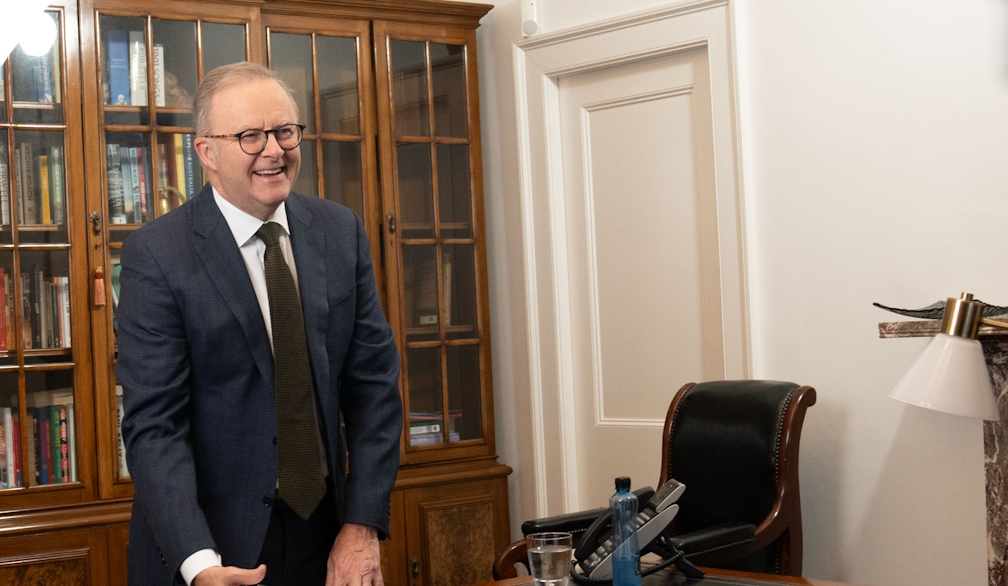
Anthony Albanese’s failure to get his much-anticipated meeting with US President Donald Trump is not the prime minister’s fault, nor should it be characterised as a “snub” by the president.
There was always a risk of derailment by outside events, particularly when the scheduled get-together was late in the piece, rather than soon after the president’s arrival in Canada for the G7.
Nevertheless, the result is something of a debacle for Albanese.
The prime minister needs to meet the president. Pressing issues – tariffs, AUKUS and defence – require discussion at leadership level. Quite apart from having the two leaders, who’ve never met, establishing some personal relationship.
It would have been especially desirable for the prime minister to convey, at the highest level, Australia’s views on the importance of and progress on AUKUS, as the month-long US inquiry into the agreement begins. This inquiry, announced last week, is examining whether the pact serves the US’ interests.It’s also difficult to see Australia being able to extract concessions on the US tariffs without a discussion between the leaders. Possibly something can be done in phone calls between the two. But they seem as rare as hen’s teeth.
The Albanese government’s spin is, no matter, there will be a chance for a meeting when Albanese goes to the US in September to address the United Nations leaders’ week. He can make a side trip to Washington.
Perhaps. But let’s wait to see the invitation to Washington. Many leaders are in the US at that time, wanting to get to the capital.
Anyway, it’s become increasingly clear Albanese is not keen on facing the now-risky Oval Office ritual. Trump may be in a bad mood. The US journalists present could be feral.
If Albanese hopes the meeting would be in New York, that would be at the whim of Trump’s schedule.
Looking back, whatever the counterarguments (that included the complication of an election campaign), the prime minister should have tried very hard to get to Trump earlier, including braving the Oval Office.
This is not because Australia should kowtow to the Americans, but because any Australian prime minister should engage, as soon as possible, with a new US administration, especially when the president is as volatile as this one.
When things slip, as they have now, it all becomes trickier to navigate.
Those with good memories might recall this is not the first time Albanese has found himself victim of a presidential no-show. In 2023, then president Joe Biden was supposed to come to Australia for the Quad, and address the federal parliament.
Because of a deadlock in negotiations over the US budget, the president didn’t make it. (Later he issued Albanese an invitation for an official visit to Washington, seen as compensation. Not a precedent Albanese should rely on.) The Biden no-show was a big inconvenience but no more, given the very positive relations between the Albanese government and that US administration.
Some in Labor would think about the Trump issue in domestic political terms – that given Australians don’t like Trump, it’s not that important whether there is a meeting. But that sort of approach is not in Australia’s national interests.
An exchange at the joint news conference Trump and UK Prime Minister Keir Starmer (who has a deal on tariffs) gave in Canada is instructive.
Question: On the AUKUS submarine agreement, is that still proceeding?
Starmer: Yep, we’re proceeding with that. It’s a really important deal to both of us. I think the president is doing a review. We did a review when we came into government, so that makes good sense to me.
Trump: We’re very long-time partners and allies and friends, and we’ve become friends in a short period of time. He’s slightly more liberal than I am, to put it mildly.
Starmer: I stand slightly on the left.
Trump: But for some reason, we get along.
Starmer: We make it work.
Somehow, Albanese needs to find a way to “make it work”.