Mike Burgess, delivered a stark and wide-ranging message to all Australians
- Written by: Times Media
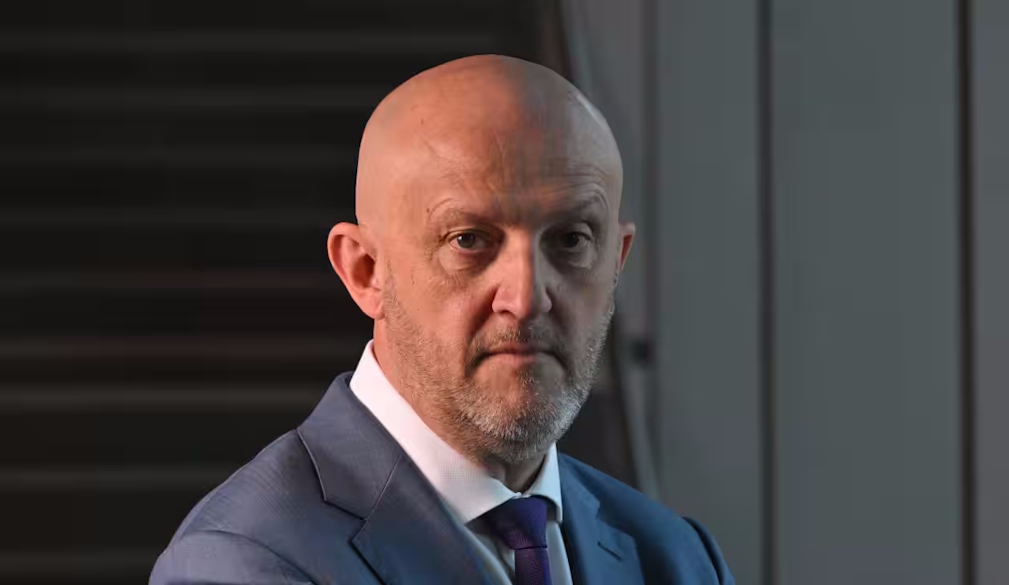
In his major address at the Lowy Institute in Sydney on 4 November 2025, the Director-General of the Australian Security Intelligence Organisation (ASIO), Mike Burgess, delivered a stark and wide-ranging message to all Australians.
Here is a detailed breakdown of what the message was, why it matters, and what it implies for Australians.
1. The Core Message
At its heart, Burgess’s message to Australians can be summarised in several key points:
a) The threat landscape has escalated
-
Australia now faces a “realistic possibility” that a foreign government may attempt an assassination on Australian soil. He said that ASIO assesses there are at least three nations willing and capable of conducting lethal targeting here.
-
More broadly, “we have never faced so many different threats, at scale, at once,” he said.
-
He also highlighted that foreign spies are very actively targeting Australians for intelligence — economy, critical minerals, the AUKUS submarine program among them.
b) Social cohesion is under serious strain
-
Burgess warned that Australia’s social fabric is fraying:
“Our social fabric is fraying – fraying in ways we have never experienced before.”
-
He identified three broad categories of actors working to undermine Australia’s stability and cohesion:
-
The aggrieved — disenfranchised or alienated individuals embracing extremist or hybrid ideologies.
-
The opportunistic — groups (e.g., extremist organisations) that exploit fissures in society to recruit and stir unrest.
-
The cunning — hostile nation-states using covert interference, disinformation, and strategic operations to weaken societies from within.
-
c) Technological and digital fronts matter
-
Burgess stressed that the internet, social media and artificial intelligence (AI) are accelerants for radicalisation, disinformation and societal fracture:
“While the internet incubates, social media accelerates … And … artificial intelligence exacerbates.”
-
He pointed out that foreign actors are not just spying in the traditional sense, but are using “trolls”, misinformation campaigns, proxy actors, and non-traditional tools of influence.
d) A call to collective responsibility
-
One of his most direct messages to the public was this: every Australian has a part to play in maintaining national resilience.
“Every one of us has a role to play protecting our social cohesion. Our words matter, our decisions matter, our actions matter.”
-
In other words: security isn’t just the job of ASIO and the government — community behaviour matters too.
e) A cautious note of optimism
-
Despite the gravity of his warnings, Burgess did not sound a note of despair. He emphasised that Australia is in a comparatively good position, that many plots have already been disrupted, and that the threats, while serious, are not insurmountable.
2. Why This Message Matters
Understanding Burgess’s message is important for several reasons:
National Security in a Changing Era
The nature of threats to Australia has shifted. While traditional espionage and terrorism remain real, we are now in an era where foreign states may carry out lethal operations on Australian soil, digital and social media manipulation can erode trust and cohesion, and AI-driven radicalisation may change the game yet again. This broadening of the threat spectrum is fundamental.
Social Cohesion as a Security Asset
By emphasising social cohesion, Burgess is signalling that national security is not just about borders, bombs or spies — it’s also about the internal condition of society: trust, tolerance, civility, constructive dialogue. When these erode, a nation becomes more vulnerable to external manipulation.
Everyone Has a Role
The call to citizens, communities, civil society, media, schools — to play their part — is a shift in narrative. Security is no longer confined to ministers, agencies or the police; ordinary behaviours (online and offline) matter.
A Signal to Foreign Actors
By publicly stating that ASIO assesses certain states are “willing and capable” of lethal operations in Australia, Burgess is broadcasting a message to those states: Australia is alert, the threshold is recognised, and the consequences (while not spelled out) are serious.
A Technological and Generational Shift
The focus on internet-mediated radicalisation, social media echo chambers and AI means younger Australians, digital-natives, and those in the online sphere are implicitly being pulled into the conversation about security in a way they might not previously have been.
3. Key Implications for Australians
Given the message delivered, what does this mean in practical terms for everyday Australians?
Be Aware and Vigilant
-
Recognise that foreign interference, espionage, digital manipulation and radicalisation are not distant phenomena — they are happening here, now.
-
Understand that your online behaviour (what you share, how you engage, how you respond) is part of the broader security picture.
-
Know that extremist ideologies (far-right, religiously motivated, conspiratorial) and foreign-state sponsored disinformation are active.
Support Social Cohesion
-
Foster respectful dialogue across differences — culturally, religiously, politically. Burgess stressed that how we engage matters.
-
Resist polarising, dehumanising, hateful narratives — both in conversation and on social media.
-
Recognise that measures to strengthen trust, tolerance, inclusion and civic norms are not “soft” or peripheral — they are strategic.
Strengthen Cyber-Hygiene
-
Given the emphasis on espionage and digital interference, individuals and organisations should consider how secure their communications, devices and networks are.
-
Be cautious about disinformation, online propaganda, algorithmic “echo chambers” — check sources, engage critically.
Support Resilience at a Community Level
-
Local institutions — schools, faith communities, neighbourhoods, workplaces — all have parts to play.
-
Communities can support newcomers, reduce alienation, build inclusion — which in turn thwarts the “aggrieved” and “opportunistic” cohorts Burgess described.
-
Public-private collaboration: business, education, civil society, government — all need to engage.
Maintain Perspective, Not Panic
-
While the threats are serious, Australia is not “doomed” or helpless. Burgess emphasised that many operations have been disrupted already, and that Australia remains in a relatively resilient state.
-
Working on prevention, social strength and resilience means Australians can be part of the solution — not just by being worried, but by being engaged and responsible.
4. Specific Highlights Worth Noting
Here are a few particular lines or issues from Burgess’s speech that warrant extra emphasis:
-
Assassination threat: “We believe there are at least three nations willing and capable of conducting lethal targeting here … It is entirely possible the regimes would try to hide their involvement by hiring criminal cut-outs.”
-
Foreign espionage case: He detailed how ASIO disrupted a foreign intelligence service’s attempt to recruit an Australian to obtain inside information on the economy, critical minerals and AUKUS.
-
Digital radicalisation & AI: “In terms of social cohesion, the internet is the greatest incubator of grievance narratives … Artificial intelligence exacerbates.”
-
Social groups undermining cohesion: Example given of the far-right National Socialist Network, religious organisation Hizb ut Tahrir, and state-backed disinformation networks (including linked to Russia) exerting influence within Australia.
5. How This Relates to Broader Australian Context
From your vantage (you run an online marketing service, engage in digital strategy, and keep a close eye on societal trends in Australia) there are some connections worth highlighting:
-
The discussion about social media, algorithms and AI has relevance for your marketing/online-presence work: the same platforms that drive consumer behaviour also intersect with security, disinformation and social-cohesion concerns.
-
Understanding how digital platforms can be exploited (by extremists or foreign actors) may deepen your appreciation of the responsibility marketers and content creators have in shaping online spaces.
-
The framing of “whole-of-society” means your business (and its communications) are part of the ecosystem — digital trust, respectful debate, transparency, ethical marketing are all contributive to resilience, even if not typically labelled as “security”.
-
The connection between local/community cohesion and national security suggests opportunities: businesses increasingly are being expected to engage ethically with their communities, foster inclusive culture, mitigate polarisation — all of which echo Burgess’s themes.
6. Conclusion
Mike Burgess’s message to Australians was urgent, wide-ranging and anchored in a new reality:
-
The threat environment is more complex than ever — mixing foreign state actions, espionage, assassination risk, digital radicalisation, social-media manipulation, technological acceleration and domestic extremist ideologies.
-
Australia’s internal cohesion — how we talk to each other, how we engage online and offline, how we behave as citizens — is very much part of the national security equation.
-
Security is not only about government action — it’s about meaningful citizen participation, community resilience, and digital awareness.
-
While the picture is serious, there is reason for hope: ASIO is active, many threats are being disrupted, and a resilient society is possible — but it requires effort, awareness and care from everyone.
For you (as someone tuned into digital, marketing and societal trends): this speech underscores that the digital domain is not separate from national-security or social-cohesion arenas. Your online behaviours, business communications, community engagement and platform awareness matter in a broader sense than just marketing.