One Nation surges into second place in two polls, but Labor remains well ahead after preferences
- Written by: Adrian Beaumont, Election Analyst (Psephologist) at The Conversation; and Honorary Associate, School of Mathematics and Statistics, The University of Melbourne
Five federal polls have been released in the last week, with three of them having some fieldwork after the Coalition split[1] on January 22. One Nation is in second place on primary votes in the YouGov and DemosAU polls, leading the Coalition by five points in YouGov and three points in DemosAU.
In Morgan, the Coalition and One Nation are tied at 22.5% each, while Essential gives the Coalition a three-point lead. The Freshwater poll was conducted before the Coalition split, and gives the Coalition a nine-point lead.
Two polls have given a Labor versus One Nation two-party estimate. In YouGov, Labor led One Nation by 57–43, compared with a 55–45 Labor lead against the Coalition. This was despite primary votes of 31% Labor, 25% One Nation and 20% Coalition.
An early January Fox & Hedgehog poll[2] gave Labor a 56–44 lead against One Nation, compared with 53–47 against the Coalition, from primary votes of 29% Labor, 25% Coalition and 21% One Nation.
Analyst Kevin Bonham said that in the Senate[3] at the 2025 election, with exhaust removed, nationally Coalition preferences favoured One Nation over Labor by 75.6–24.4, while Greens preferences were stronger for Labor against One Nation than against the Coalition.
As the Senate uses an electronic distribution of preferences, all preference flows can be obtained from the electoral commission’s data. This is not the case for the House of Representatives, where only minor party preference flows between Labor and the Coalition are recorded.
Furthermore, the Coalition has already lost its right-wing supporters to One Nation, so preferences of remaining Coalition voters may be better for Labor.
Compared with late December or early to mid-January issues of the same polls, there have been primary vote gains for Labor, suggesting the Bondi effect is fading. The last issue of Freshwater was in October and the last issue of Essential in early December.
YouGov poll has One Nation second
A national YouGov poll[4] for Sky News, conducted January 20–27 from a sample of 1,500, gave Labor 31% of the primary vote (up one since an unpublished late December YouGov poll), One Nation 25% (up five), the Coalition 20% (down four), the Greens 12% (down one), independents 6% (steady) and others 6% (down one).
Video included in the poll article has Labor leading the Coalition by 55–45 and One Nation by 57–43, presumably using respondent preferences.
In rural seats, One Nation led the Coalition by 35–21 on primary votes, putting them on track to gain many conservative rural seats from the Coalition.
Anthony Albanese’s net approval was -16 with 55% dissatisfied and 39% satisfied. Sussan Ley’s net approval was -31. Albanese led Ley as better PM by 47–29. On immigration, 64% wanted it decreased, 28% stay about the same and just 8% increased.
On Bondi, 28% thought Albanese had responded very badly[5], 21% not as well as can be expected, 38% as well as can be expected and 5% very well.
Morgan poll has One Nation and Coalition tied
A national Morgan poll[6], conducted January 19–25 from a sample of 1,653, gave Labor 30.5% of the primary vote (up two since the January 12–18 Morgan poll), the Coalition 22.5% (down 1.5), One Nation 22.5% (up 1.5), the Greens 13% (down 0.5) and all Others 11.5% (down 1.5).
By respondent preferences, Labor led the Coalition by 56.5–43.5, a three-point gain for Labor. By 2025 election preference flows, Labor led by 54.5–45.5, a 1.5-point gain for Labor. No Labor vs One Nation two-party figure was provided.

Essential poll best for Coalition
A national Essential poll[8], conducted January 20–23 from a sample[9] of 1,022, gave Labor 31% of the primary vote (down three since early December), the Coalition 25% (down one), One Nation 22% (up five), the Greens 9% (down one), all Others 7% (down one) and undecided 6% (up one).
Essential hasn’t updated its two-party chart. A Labor vs Coalition two-party estimate based on 2025 election flows would give Labor about a 51.5–48.5 lead. This is the best poll for the Coalition of these five polls.
Albanese’s net approval slumped[10] 12 points to -14, with 53% disapproving and 39% approving. Ley’s net approval was down eight points to -17. By 56–36, respondents thought Albanese had handled Bondi badly.
DemosAU poll has One Nation second
A national DemosAU poll[11], conducted January 13–21 from a sample of 1,933, gave Labor 30% of the primary vote (up one since the January 5–6 DemosAU poll[12]), One Nation 24% (up one), the Coalition 21% (down two), the Greens 13% (up one) and all Others 12% (down one).
No two-party estimate was given by DemosAU, but seat estimates gave Labor 87–95 of the 150 House seats, One Nation 29–38, the Liberals 9–17, the Nationals 1–5, the Greens 0–2 and all Others 6–11.
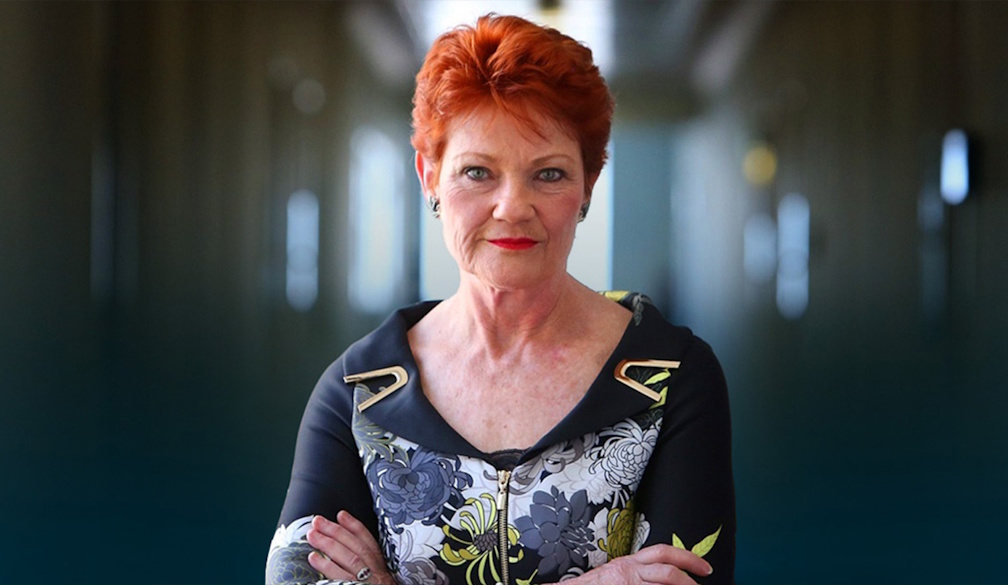
A three-way preferred PM question had Albanese on 39%, Pauline Hanson 26% and Ley 16%. Albanese’s net approval was down two points since early January to -14, while Ley was down seven to -18. Hanson had a -5 net approval.
Freshwater poll
A national Freshwater poll[13] for the News Corp papers, conducted January 16–18 (before the Coalition split) from a sample of 1,050, gave Labor a 53–47 lead over the Coalition by respondent preferences, a two-point gain for the Coalition since an October Freshwater poll[14].
Primary votes were 33% Labor (steady), 28% Coalition (down three), 19% One Nation (up nine), 11% Greens (down three) and 9% for all Others (down two). By 2025 election preference flows, Labor would have led by about 52.5–47.5.

Albanese led Ley as preferred PM by 45–32 (48–31 previously). Albanese’s net favourability was down two points to -9, while Ley’s was steady at -5. Hanson’s net favourability was +6, One Nation’s was +4, Barnaby Joyce’s was -8, federal Labor’s was net zero, the federal Liberals were +2, the federal Greens were -16 and Donald Trump was -34.
By 44–26, respondents thought the Australian economy would worsen rather than improve in the next 12 months. On current immigration levels, 65% thought them too high, 27% about right and just 4% too low. However, by 41–37 respondents thought immigration improves Australia’s economy rather than worsens it.
Australia Day questions in federal Resolve poll
I previously covered the mid-January federal Resolve poll[16] for Nine newspapers. In further questions[17], by 68–16 respondents wanted Australia Day kept on January 26 rather than moved to another date.
Support for Australia Day on January 26 has surged since January 2023 (47–39 support). By 66–9, respondents thought Australia Day adds to social cohesion rather than detracts.
NSW Resolve poll: Minns gains but not Labor
The next New South Wales state election is in March 2027. A Resolve poll[18] for The Sydney Morning Herald, conducted with the early December and mid-January federal Resolve polls from a sample of 1,145, gave Labor 37% of the primary vote[19] (steady since November), the Coalition 27% (down one), the Greens 10% (steady), independents 11% (down four) and others 15% (up four).
No two-party estimate was given by Resolve, but The Poll Bludger thought[20] Labor led by about 60–40, though this would overstate Labor if One Nation makes up most of the “others”.
Labor Premier Chris Minns’ net likeability surged 11 points since November to +25, his best since May 2023. In late November, Kellie Sloane replaced Mark Speakman as Liberal leader. Sloane’s initial net likeability was +10. Minns led as preferred premier by 40–18 over Sloane (31–19 over Speakman in November).
I previously covered questions on Bondi[21] from the January sample of this poll.
References
- ^ Coalition split (www.abc.net.au)
- ^ Fox & Hedgehog poll (theconversation.com)
- ^ Kevin Bonham said that in the Senate (kevinbonham.blogspot.com)
- ^ YouGov poll (www.skynews.com.au)
- ^ Albanese had responded very badly (www.skynews.com.au)
- ^ Morgan poll (www.roymorgan.com)
- ^ Mick Tsikas/AAP (photos.aap.com.au)
- ^ Essential poll (essentialreport.com.au)
- ^ January 20–23 from a sample (www.theguardian.com)
- ^ net approval slumped (essentialreport.com.au)
- ^ DemosAU poll (demosau.com)
- ^ DemosAU poll (theconversation.com)
- ^ Freshwater poll (www.heraldsun.com.au)
- ^ October Freshwater poll (theconversation.com)
- ^ Mick Tsikas/AAP (photos.aap.com.au)
- ^ federal Resolve poll (theconversation.com)
- ^ further questions (www.theage.com.au)
- ^ Resolve poll (www.theage.com.au)
- ^ primary vote (www.smh.com.au)
- ^ The Poll Bludger thought (www.pollbludger.net)
- ^ questions on Bondi (theconversation.com)