Trump has scrapped the long-standing legal basis for tackling climate emissions
- Written by: Robyn Eckersley, Redmond Barry Professor of Political Science, School of Social and Political Sciences, The University of Melbourne
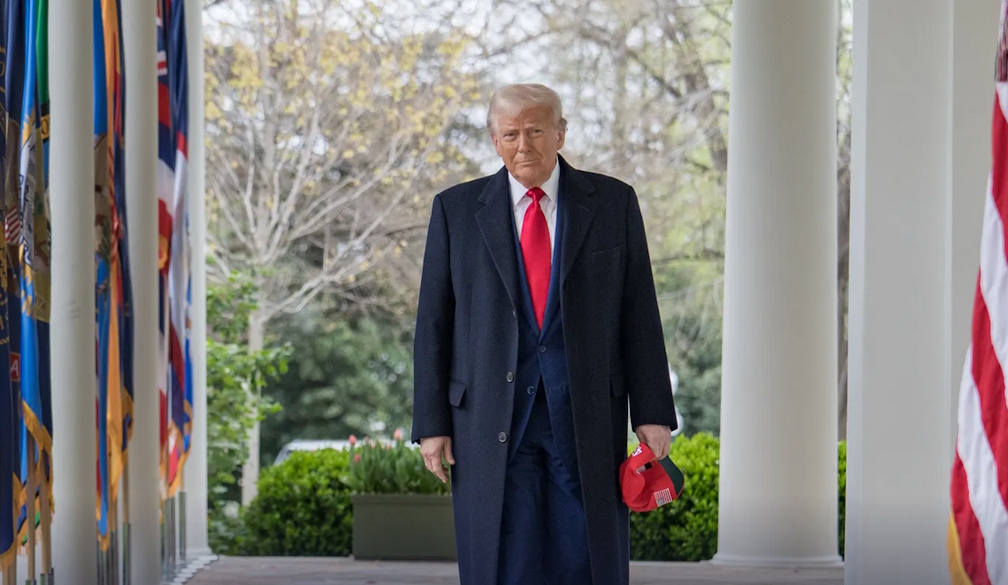
Regulating climate emissions just became more difficult. US President Donald Trump announced on Thursday[1] the Environmental Protection Agency (EPA) has repealed its own 2009 legal finding that greenhouse gas emissions endanger human health.
Vindicated by a Supreme Court ruling[2] in 2007, and based on scientific evidence, this so-called endangerment finding[3] by the EPA provided the legal warrant for the regulation of greenhouse gases by the federal government. It underpinned the Obama administration’s Clean Power Plan, which regulated emissions from power plants. In his first term, Trump had tried to weaken it but a new version was introduced by the Biden administration.
Without the endangerment finding, and in the absence of new laws passed by both Houses of Congress, the federal government lacks the legal mandate for direct regulation of greenhouse emissions. The science hasn’t changed, but the obligation to act on it has been scrubbed out.
If you imagine the United States as a collection of big greenhouse gas pots with lids, the Trump administration has been lifting the lids off one by one, releasing more emissions by stepping up fossil fuel extraction, production and consumption. This legal finding held down the biggest lid on climate emissions — and Trump has pulled it right off. This will have a structural effect globally.
What is the endangerment finding, and how was it developed?
In 1970, when the US environment movement was at its most influential, Congress passed an important piece of legislation called the Clean Air Act[5]. It empowered the new Environmental Protection Agency (EPA) to declare something a pollutant if it endangered public health. Initially, it was used to regulate pollutants such as smog or coal ash, the byproducts of industry.
During the George W. Bush presidency, the EPA made a ruling that greenhouse gases were also a pollutant within the meaning of the Clean Air Act. This ruling was challenged in 2007 by fossil fuel interests in the case of Massachusetts v EPA[6], but the court ruled (five judges to four) that carbon dioxide and other greenhouse gases were “air pollutants” that endangered human health and welfare. It directed the EPA to assess their impact on human welfare — allowing the agency to regulate them.
However, the Bush administration did not push the EPA to implement the ruling.
How was the endangerment finding used for climate action?
President Barack Obama promised to act on climate during his election campaign but faced a hostile Senate when he came to power. His efforts to enact an emission trading bill failed.
However, the endangerment finding allowed him to use his executive power to direct the EPA[7] to regulate emissions. In his first term, the EPA issued new vehicle emissions regulations for cars and light trucks, and some power plants and refineries.
In his second term, Obama extended those regulations to all power plants. These moves represented the US’s first significant steps towards emissions reductions. They enhanced Obama’s diplomatic credibility in the negotiations for the Paris Agreement in 2015. This provided a footing for bilateral cooperation with China on clean energy, helping to build diplomatic trust between the world’s two biggest emitters. Their lead negotiators worked together in the final days of the negotiations to get the Paris Agreement over the line.
Why has Trump overturned it?
On February 12, Trump announced the EPA would rescind the legal finding it has relied on for nearly 20 years. Among all the wrecking balls he has swung at efforts to decarbonise the US economy, this is the biggest. He claims the legal finding hurts Americans. The EPA’s director, Trump-appointed Lee Zeldin, called the rule the “holy grail of climate change religion”.
“This determination had no basis in fact — none whatsoever,” Trump told the media[8] on Thursday. “And it had no basis in law. On the contrary, over the generations, fossil fuels have saved millions of lives and lifted billions of people out of poverty all over the world.”
But without federal action to curb emissions, the impact of climate change will intensify. The US is the “indispensable state” when it comes achieving the goals and principles of the Paris Agreement. Although China’s annual aggregate emissions are much higher than the US’s, the US is the world’s largest historical emitter, which makes it the most causally responsible for the global heating that has already occurred.
Yet the Trump administration regards climate change as a hoax[9]. Trump has withdrawn the US not only from the Paris Agreement but also the UN Framework Convention on Climate Change. In short, the US is now actively fanning the flame of global heating.
In a case of history repeating itself, the arguments being made by Zedlin are pretty much the same as those once put forward by the original opponents of the endangerment finding: claiming that the original legislation was supposed to apply only to local pollutants such as smog, but not greenhouse gases, and that the science isn’t clear.
Those arguments don’t stack up, because there is indisputable evidence[10] that increasing concentrations of greenhouse gases do indeed harm human health and welfare. The EPA is obliged to regulate harmful pollutants at the specific source.
What’s next?
This move will trigger court cases, which won’t be resolved quickly. Zedlin and Trump will face a crowd of litigants, including environment groups and NGOs. The Trump administration will likely ignore these and steam ahead with its “drill, baby, drill” slogan.
If the lawsuits fail, or Trump ignores them, it will be devastating. There will be no overarching federal legislation directly regulating emissions in the US. What’s more, a new Democrat president committed to climate action will not have this easy lever to regulate greenhouse gases. Instead, they will have to get new climate legislation through an intensely polarised Congress.
However, there are ways forward. Assuming Trump is prepared to leave office after his second term (admittedly, a big if), it is possible a new Democratic administration might have the numbers in Congress to enact new climate legislation. In the meantime, climate action is continuing to ratchet up at the state and city level in many US states.
References
- ^ announced on Thursday (www.nbcnews.com)
- ^ Supreme Court ruling (en.wikipedia.org)
- ^ endangerment finding (en.wikipedia.org)
- ^ Will Oliver/EPA Pool (photos.aap.com.au)
- ^ Clean Air Act (en.wikipedia.org)
- ^ Massachusetts v EPA (en.wikipedia.org)
- ^ direct the EPA (www.theguardian.com)
- ^ told the media (www.aljazeera.com)
- ^ climate change as a hoax (www.pbs.org)
- ^ indisputable evidence (www.who.int)