Strongman used to be seen as a super-human novelty sport. Now more women and novices are turning to it
- Written by: Justin Keogh, Associate Dean of Research, Faculty of Health Sciences and Medicine, Bond University
Strong men and women have been admired in many cultures for thousands of years, with stone lifting and carrying[1] especially revered.
Immensely strong humans have had a long history in the circus, with the legendary performances of Paul Anderson[2], Louis Cyr[3], Minerva[4] and Katie Sandwina[5] still discussed and debated today.
The current sport of strongman developed out of the 1977 TV show called World’s Strongest Man[6], which pitted some of the largest and strongest male athletes from weightlifting, powerlifting, bodybuilding, American football and athletics against each other to determine who was actually the strongest.
Some of the most iconic events in this sport include truck pulling (where athletes pull a truck as quickly as possible over a course of 20 to 30 metres) and atlas stones (where athletes attempt to lift concrete stones often the size of Swiss balls off the ground and place them on raised platforms around chest high).
Recently, Sandra Bradley became the first woman to lift the 154kg Fullsterkur stone at Dritvik, Iceland.
Some people might look at strongman or strongwoman training and think it is more of a spectacle than a sport. However, strongman and strongwoman is now a more diverse and inclusive sport, including athletes with disabilities[7] and women trying to build strength after having a baby.
Competitions now exist at all levels from novice to elite, with a range of bodyweight categories for teenage, masters, female and individuals with a disability.
It’s not just strong men, now
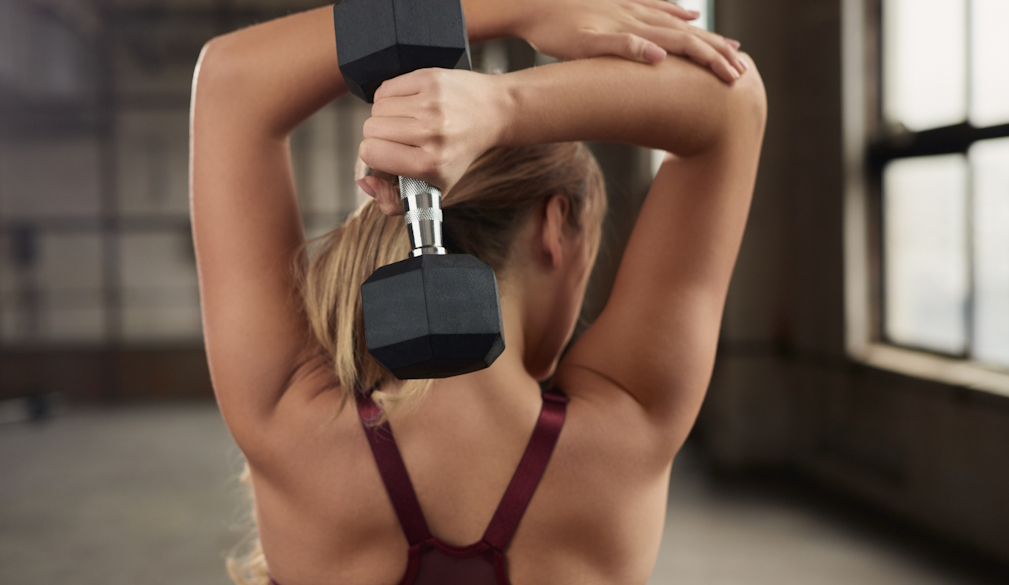
Weight training has traditionally been considered a male-dominated sport, but in recent years, this has changed. As a strongwoman competitor, I, Zyoa, have seen this growth firsthand.
Back in 2015, it was rare to find more than three women at the strongman gym, whereas today, women sometimes outnumber the men.
The benefits of weight training for women[8] include improved strength and reduced likelihood of chronic illnesses such as osteoporosis, cardiovascular disease and diabetes[9].
Beyond the health benefits though, strength training in women has been shown to improve body satisfaction and body image[10].
One study[11] of women aged 35-55 found regular strength training improved appreciation and acceptance of one’s body, as participants focused on strength and power goals rather than bodyweight and size.
A more recent study found female powerlifters[12] had improved body image, reduced self-objectification and enhanced mental wellbeing.
The results of this study can certainly be applied to those who do strongwoman training because, like the participants of the study, strongwoman athletes engage in a similar type of training that focuses on maximising strength.
How is it different from ‘normal’ strength training?
Strongman typically involves some modified gym lifts such as deadlifts, squats and overhead presses.
However, what sets apart strongman from sports such as weightlifting and powerlifting is incorporating awkward implements that better replicate “real world” strength.
Strongman incorporates “real world” lifting in many of its events.These events include historical strength feats such as stone lifting as well as “dynamic events” such as vehicle pulls, tyre flips, farmer’s walks and yoke walks, where the athlete who completes a course in the shortest time is the winner.
Not everyone trains to reach the top levels of a sport – few people will ever get close to performing a 500kg deadlift, like the legendary Eddie Hall did in 2016[13]. However, strongman training might be substantially more effective[14] than standard resistance training when it comes to things like the manual tasks in your job or around the home.
For example, do you find carrying groceries or a suitcase to be challenging? If so, practising the farmer’s walk (which can be simply done using dumbbells) would make this household task much less of a chore.
The farmer’s walk is an integral event in a strongman or strongwoman competition.Similarly, lifting and/or carrying stones, kegs or sandbags would make any task in which you have to pick up heavy objects from the ground and carry it a set distance a “walk in the park”.
What are the benefits and risks?
Many male and female athletes of varying ages, sexes and abilities are now performing some versions of strongman lifts in their training, with organisations such as the United States’ National Academy of Sports Medicine now advocating the evidence-based use of some of these exercises such as heavy sleds[15].
In Australia, junior female rugby players perform tire flips and pushes[16] and one of Australia’s best athletes, Tia-Clair Toomey (a six-time world CrossFit champion) regularly performs strongman lifts such as a yoke walk and sled drag[17].
Research is starting to reinforce why many strength and conditioning coaches use strongman lifts in their athletes’ training programs.
A 2015 training study involving 30 sub-elite rugby players indicated traditional resistance and strongman training produced similar improvements[18] in muscle mass, strength, sprinting and jumping performance after seven weeks of training.
A more recent study from 2023[19] involving junior Australian football players indicated heavy sled sprints significantly improved sprint performance and various lower body strength and power measures.
A caveat to these benefits is that it’s important to learn proper technique from knowledgeable coaches and initially use loads that are easily within your capabilities, slowly progressing over time.
How would a first-timer get started?
As always, before starting any new exercise program, it is important to see a doctor to get the all clear.
The next step is to find a strongman gym[20], which will have equipment like atlas stones, yokes and farmer’s handles for you to get a sense of the implements.
Many of these gyms have introduction classes which may be a great place for a newbie to start.
If a gym nearby is not possible, there are many online coaches[21] that specialise in strongman/woman training. There are many Facebook groups[22] that are a good place to start to find a coach, too.
A coach can also help you by providing a personalised training plan that can help you build up strength slowly, teach you proper technique and help you progress safely.
References
- ^ stone lifting and carrying (www.youtube.com)
- ^ Paul Anderson (www.youtube.com)
- ^ Louis Cyr (maisonlouiscyr.com)
- ^ Minerva (barbell-logic.com)
- ^ Katie Sandwina (www.atlasobscura.com)
- ^ World’s Strongest Man (www.theworldsstrongestman.com)
- ^ with disabilities (allabilitiesstrength.com)
- ^ benefits of weight training for women (www.verywellfit.com)
- ^ cardiovascular disease and diabetes (onlinelibrary.wiley.com)
- ^ improve body satisfaction and body image (journals.humankinetics.com)
- ^ One study (www.tandfonline.com)
- ^ found female powerlifters (journals.humankinetics.com)
- ^ like the legendary Eddie Hall did in 2016 (www.theworldsstrongestman.com)
- ^ more effective (pubmed.ncbi.nlm.nih.gov)
- ^ such as heavy sleds (www.youtube.com)
- ^ perform tire flips and pushes (youtu.be)
- ^ a yoke walk and sled drag (www.youtube.com)
- ^ produced similar improvements (pubmed.ncbi.nlm.nih.gov)
- ^ more recent study from 2023 (pubmed.ncbi.nlm.nih.gov)
- ^ find a strongman gym (www.google.com)
- ^ online coaches (store.startingstrongman.com)
- ^ Facebook groups (www.facebook.com)