What are the greatest upsets in NRL grand final history?
- Written by: Wayne Peake, Adjunct research fellow, School of Humanities and Communication Arts, Western Sydney University
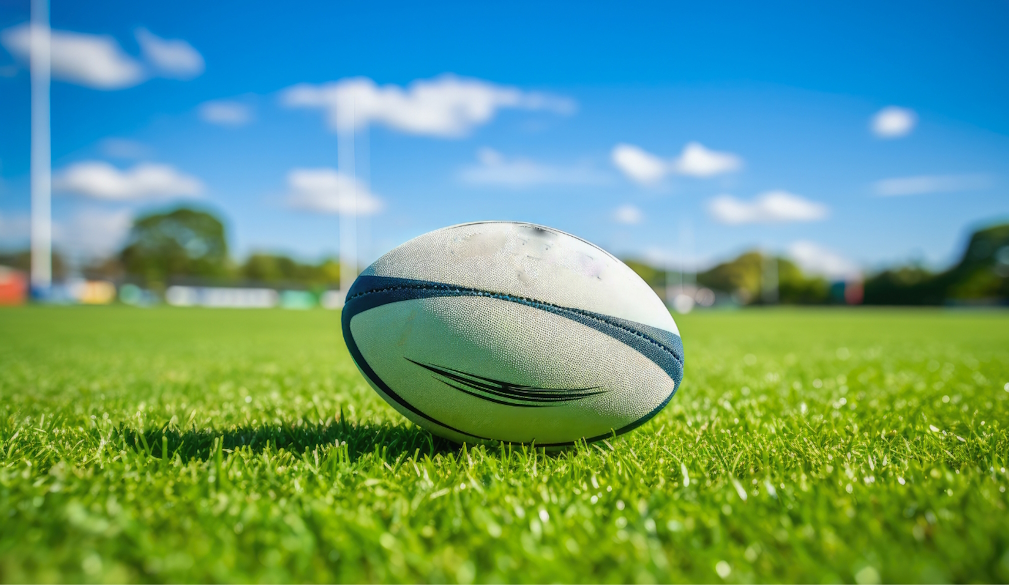
The Penrith Panthers and Melbourne Storm will contest the National Rugby League (NRL) grand final[1] on Sunday.
Betting markets have them pretty much equal favourites. However, history shows grand finals don’t always go to plan.
But what are the biggest upsets in NRL grand final history?
Using a combination of formlines during the season and in finals, betting odds, media coverage and past performances, here are some of the most outlandish upsets in rugby league’s history.
1944: Balmain 12, Newtown 8
In 1944, Newtown was the minor premier while Balmain was second.
Newtown entered the finals series as hot favourite and looked even hotter after destroying third-placed St George 55–7 in the first semi-final.
However, in the final, Balmain won 19–6. That wasn’t the end of the story, though.
Under the rules of the day, Newtown, as minor premier, could seek a rematch in a grand final “challenge”.
Newton fielded a much stronger side and most expected it to reverse the final result. However, Balmain won again, 12–8.
1952: Western Suburbs 22, South Sydney 12
In 1952, Wests were minor premiers, while Souths finished third.
Souths won the first semi-final 18–10 but Wests, as minor premiers, went straight to the grand final challenge three weeks later anyway. Meanwhile, Souths beat North Sydney to advance.
According to the Sydney Truth, Wests were “regarded in some quarters as rank outsiders”.
Then, rumours spread that Wests had “thrown” the first game and the referee assigned to the decider, George Bishop, had placed £400 on them, causing their price to shorten.
Bishop sent off a player from each team ten minutes into the second half. Souths scored a try with 20 minutes to go to take the lead before Wests scored four tries in the last ten minutes to win.
Bishop retired after the grand final.
1963: St George 8, Western Suburbs 3
In 1963, St George was minor premiers, while Wests were second. However, Wests, which had lost the previous two grand finals to St George, had beaten them twice in the regular rounds and again in the major semi-final, and went into the game favourite.
On grand final day, the field deteriorated into a quagmire and led to the famous post-match “gladiators” photograph of captains Arthur Summons and Norm Provan shaking hands while coated in mud.
The foul conditions contributed to a low-scoring game, which St George won 8–3.
Once more it was suspected the referee, this time Darcy Lawler, had a financial interest in the outcome[2]. He, too, retired immediately.
Today we view St George’s victory in the context of a huge winning streak of premierships from 1955 to 1966.
1989: Canberra 19, Balmain 14
South Sydney had been minor premiers while Balmain finished third, one point clear of Canberra.
Balmain were generally considered to have been more impressive than Canberra and were favourites for the grand final.
One media expert, Harry Craven, was so confident Balmain would win he had his “weatherboard” (house) on the Tigers.
In the grand final, Balmain led 14-8 with 15 minutes to play before Canberra levelled at 14–14 with 90 seconds remaining.
After 20 minutes of extra time, Canberra won 19–14 and became the first team to win from further back than third in the regular season.
1995: Canterbury 17, Manly 4
Possibly the hottest grand final favourites of the past half-century, Manly lost just two games in the regular season and shared the minor premiership with Canberra.
Canterbury (officially, the “Sydney Bulldogs” in 1995) were sixth and needed to win four straight games to be premier.
The two sides met once in the regular season, with Manly winning 26-0.
In the grand final, the Bulldogs led 6–4 at half-time and disaster loomed when Terry Lamb was sin-binned[3] early in the second term.
Somehow, the Dogs held Manly out until his return, then gained the ascendancy and won comfortably.
1997: Newcastle 22, Manly 16
In 1997 we had the first season of the News Limited-funded “Super League[4]”.
The glamourous Manly side was once more expected to be easy winners over Newcastle, which was contesting its first grand final.
Only two teams in 70 years had won at their first attempt, while Manly had won its past 11 matches against the Knights.
The grand final followed its anticipated plot until Newcastle’s Robbie O’Davis evened the score at 16–16. Newcastle missed with two field goal attempts, but after the second, Darren Albert regathered the ball and pierced the Manly defence to score under the posts with six seconds remaining.
In 1997, the Newcastle Knights secured a maiden title against the Manly Sea Eagles.1999: Melbourne 20, St George Illawarra 18
Odds for the 1999 grand final are unknown but the press anointed St George “hot favourites” while Canterbury champion Ricky Stuart rated them “unbeatable”.
Melbourne was in just its second year of NRL competition and had never beaten St George.
Melbourne had pulled off “escapes” against Canterbury and Parramatta to make the decider but the Saints were winning with ease and even crushed Melbourne 34–10 in the qualifying final.
In the decider, St George led 14–0 and was looking good. Then, in the 51st minute, Anthony Mundine kicked the ball to a vacant try line but fumbled it touching down.
The Melbourne Storm shocked the NRL world when they won the 1999 grand final.Nevertheless, St George maintained an 18–6 advantage midway through the second half, before a Storm fightback.
With minutes remaining, Melbourne received a penalty try which it converted to win the game.
The biggest upset: 1969, Balmain 11, South Sydney 2
Most agree the biggest grand final upset is Balmain’s 11-2 defeat of South Sydney[5] in 1969.
Bookies had Souths as heavy favourites – they had won the previous two grand finals, while Balmain was a young team lacking grand final experience.
However, the form lines of the two teams were not dissimilar.
At the end of the regular season, South Sydney was the minor premier with Balmain just one win behind them.
Souths defeated Balmain by one point in the semi-final, and a week later, Balmain beat Manly by a point to scrape into the grand final.
Despite South’s heavy favouritism, Balmain were not friendless. Of six “experts” whose opinion was sought by one newspaper on the morning of the game, two picked Balmain outright and another conceded them an even-money chance.
It was perhaps the circumstances of the game, as much as the result, that has lent the 1969 grand final its legend status.
Souths, noted for their attacking potency, were unable to score a try. Balmain scored a single try early in the second half but then several Balmain players set about disrupting the Souths attack by, allegedly, feigning injuries to give their teammates a breather.
The game has since become known as the “sit-down grand final”[6].
References
- ^ National Rugby League (NRL) grand final (www.nrl.com)
- ^ financial interest in the outcome (nswrlra.com)
- ^ Terry Lamb was sin-binned (www.bulldogs.com.au)
- ^ Super League (www.abc.net.au)
- ^ Balmain’s 11-2 defeat of South Sydney (www.nrl.com)
- ^ the “sit-down grand final” (www.dailytelegraph.com.au)
Read more https://theconversation.com/what-are-the-greatest-upsets-in-nrl-grand-final-history-239380