Predictably, domestic airfares surged after the collapse of Rex. There aren’t many good solutions
- Written by: Doug Drury, Professor/Head of Aviation, CQUniversity Australia
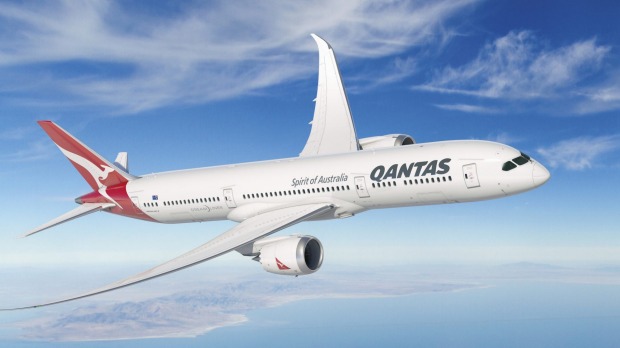
Australia’s airline industry is famously duopolistic. Just two companies – Qantas and Virgin Australia – service 98% of the domestic passenger market. That’s not for a lack of other companies having tried to secure a foothold[1], over many decades.
In 2024 alone, we’ve seen the high-profile collapse of both Bonza[2] and Rex[3], airlines that once ignited hopes for much greater competition in the sector. Now, we’re beginning to see the predictable effects of their exit.
According to a quarterly report[4] released on Tuesday by the Australian Competition and Consumer Commission (ACCC), domestic airfares on major city routes increased by 13.3% to September after Rex Airlines halted its capital city services at the end of July.
There’s little reason to be optimistic about things changing anytime soon. Australia’s lack of competition means airfares are only likely to remain inflated due to higher demand and lower supply.
Read more: What is 'slot hoarding' – and is it locking out regional airlines like Rex?[5]
How are airfares actually set?
To predict what the market will bear in a given year, airlines use a process called revenue management[6].
This involves sophisticated mathematical modelling, incorporating a range of factors – seasonal variations for school breaks, holidays, and major sporting events – to determine both what the airlines can charge per passenger and what the likely impact will be on their bottom line.
There are three main expenses that airlines expect every year which fluctuate regularly:
- fuel prices
- aircraft maintenance
- salaries.
But the Australian market has some unique characteristics. Our options for travelling the vast distances between major cities are very limited – and, if we’re not flying, very time-consuming too.
Many of us choose to fly as it provides us more time at our destination for leisure or work, without a massive road trip or train ride. Our airline duopoly is very aware of this, and know we’re willing to pay a premium for convenience.
The ACCC found that the price of “best discount economy” tickets on routes Rex had recently departed had increased significantly[8] – up 95% between Adelaide and Melbourne, and 54% between Canberra and Melbourne.
The report also noted that fuel prices declined by more than 40% in the 12 months to September, which the airlines have not adjusted for in their pricing model.
The best solution’s a long shot
For Australian passengers to pay lower domestic airfares, competition from another airline is the only viable solution. That might seem like a far-fetched proposition for the foreseeable future.
Any airline attempting to start up in Australia would need significant financial backing to weather market fluctuations, and a singular focus on flying the airline.
There might be some hope on the horizon with a possible new entrant, Koala Airlines, in the press recently, stating its intentions to enter this market and be successful.
Many customers may be hoping Koala can excel where Bonza and Rex were unable to. However, its entry remains quite some way off. Koala is still working on attaining an air operators certificate[9] (AOC) from CASA and a fleet of new aircraft.
Koala has given few details about its business strategy, except for a promised cash refund guarantee[10] for passengers, and plans to implement artificial intelligence[11] to remain viable in the market.
What else can be done?
Can the government do anything to protect new entrants, to support them through the initial startup phase? Part-ownership of any new airline by the government is probably off the cards.
Salvaging the competition we have left may be a better strategy. Also on Tuesday, the government announced an $80 million support package[12] to keep Rex’s regional services operational.
Much of Rex’s fleet of SAAB 340 aircraft is in need of repair, so this will help somewhat.
But such a big spending package is reminiscent of the pandemic-era strategies[13] the government will not want to revisit on a grand scale.
Better compliance
Other strategies could focus on ensuring that everyone plays fairly and doesn’t abuse the system to keep market share. The ACCC’s latest report is part of ongoing quarterly reporting, after the Treasurer redirected the ACCC to monitor domestic airfares for another three years in November last year.
But other regulatory oversight may have been lacking. Speaking[15] before a senate inquiry on Tuesday, Sydney Airport’s Scott Charlton said that until recently, a compliance committee set up to monitor Sydney Airport’s slot system hadn’t met for five years.
The government will need to tread carefully. If it wants to provide incentives for new entrants, it will need to do so in a manner that does not appear to be a re-regulation strategy, creating hardships for Qantas and Virgin Australia.
Ultimately, appearing to re-regulate the Australian aviation sector is not in line with the government’s long term strategy of keeping the airline market stable through less intervention.
Read more: Even after the government's aviation crackdown, Australia will lag behind on flyers' rights[16]
References
- ^ tried to secure a foothold (www.smh.com.au)
- ^ Bonza (theconversation.com)
- ^ Rex (theconversation.com)
- ^ quarterly report (www.accc.gov.au)
- ^ What is 'slot hoarding' – and is it locking out regional airlines like Rex? (theconversation.com)
- ^ revenue management (www.sciencedirect.com)
- ^ TarnPisessith/Shutterstock (www.shutterstock.com)
- ^ increased significantly (www.accc.gov.au)
- ^ air operators certificate (www.casa.gov.au)
- ^ cash refund guarantee (www.abc.net.au)
- ^ artificial intelligence (koalaair.com.au)
- ^ $80 million support package (www.afr.com)
- ^ pandemic-era strategies (theconversation.com)
- ^ Dan Himbrechts/AAP (photos.aap.com.au)
- ^ Speaking (www.aap.com.au)
- ^ Even after the government's aviation crackdown, Australia will lag behind on flyers' rights (theconversation.com)