More Australian families are choosing private schools – we need to understand why
- Written by: Sally Larsen, Senior Lecturer in Education, University of New England
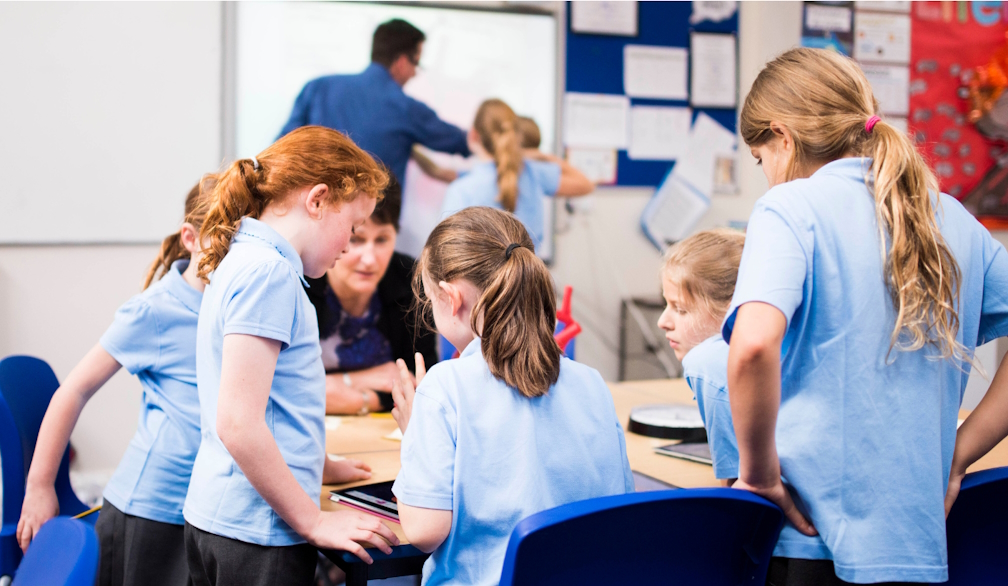
The shape of Australia’s school system is undergoing a significant change. Enrolments in independent schools are growing[1], while fewer students are going to public schools.
Why are more families choosing an independent or Catholic school, when they could send their children to a free public option?
And what does this mean for the system overall?
More families choosing private
Due to a growing population, the past two decades have seen increasing numbers of students in Australian schools[2] overall.
But the number of students attending independent schools has grown faster than the number attending public schools, particularly in high school[3].
In 2006, around 13% of Australian students were enrolled in independent schools. In 2023 this proportion had increased to 16%.
Enrolments at Catholic schools have remained at just under 20%, although absolute numbers have increased from 680,000 in 2006 to 806,000 in 2023.
According to 2023 data, public schools still enrol the majority of students in primary (around 1.5 million students) and secondary (slightly more than one million students). Despite this, the proportion of students in public schools has been steadily declining. In 1996, 74% of primary students were in public schools, declining to 71% in 2006, and 69% in 2023.
For high schools, the proportion of students in public schools has declined more quickly from 66% in 1996,[4] to 62% in 2006 and 58% in 2023[5].
Across the same time period, the proportion of students attending independent high schools jumped from 13.5% to 20%.
Why are we seeing these shifts?
There is very little current research looking at why more families are choosing private schools. But there are several clues.
One reason may be policy changes[6] that allowed the establishment of new independent schools in Australia. In the 1990s, the Howard government changed a policy to allow funding for the establishment of new schools, even in areas that already had adequate capacity in existing schools.
There were 131 more independent schools in 2023[7] compared with 2006, and 90 fewer public schools.
New independent schools tend to charge lower fees than established elite schools, making them more accessible to middle-income families. According to Independent Schools Australia[8], the largest growth in enrolments is in schools charging fees of around A$5,000 per year.
In some cases, state governments have also been slow to build new schools in growing metropolitan suburbs.
New South Wales Education Minister Prue Car has spoken about this issue[9] for her own son, who attends an independent primary school:
we were in one of the suburbs where the government didn’t build a school.
While evidence shows[10] private schools do not necessarily mean students do better academically, there is a public perception they are better for a students’ grades. This may not be helped by frequent headlines[11] about academic and behavioural problems in the public system.
More than one reason
It is also important to recognise school decisions can be influenced by multiple factors.
A 2016 Australian Institute of Family Studies report on primary school choice[12] found parents consider local knowledge about schools in their area, opinions of family and friends, their own school experiences, and the interests and needs of their children.
Parents may also emphasise different things[13] for primary and high school. For example, they might choose their local primary school for convenience, but choose a high school for its academic reputation or extracurricular offerings.
Twenty years ago, the Australian Council for Educational Research conducted a small study of 609 families[14] asking “Why parents choose public or private schools?”.
A key finding was parents chose schools that aligned with their values. There was also a perception (right or wrong) that values differed between schools in different sectors. For example, parents with children in public schools valued the social and cultural security of the school as well as proximity to their home. Parents with children in independent schools valued discipline, religious values and school traditions.
Why is this an issue?
Compared to other countries, Australian schools have a high level of “socioeconomic segregation[15]”. This means different types of schools tend to have students from different socioeconomic backgrounds.
The increase in students going to fee-paying private schools (even when the fees are not at the eye-watering level often publicised in the media[16]), means we are seeing increasing segregation in our school system.
Public schools continue to educate[17] the majority of children in regional and remote locations, those with high needs, learning disabilities and children from disadvantaged backgrounds. Independent schools enrol increasing proportions of students from the most advantaged socioeconomic backgrounds[18].
We still have questions
We are seeing a significant shift in the way our school system is working. But we need more research to tell us why.
This includes whether the reasons for choosing an independent, Catholic or public school for a child have changed in the last two decades.
And if we are seeing more middle and lower income families send their children to private schools.
Parents will naturally choose what they perceive to be the best school for their children. But of course not all families have a choice. This may be because there is only one school in their area, or they cannot afford the fees for a private school.
Meanwhile, these trends in enrolments raise bigger questions about how equitable our school system is, and what might be done to ensure all Australian children can access educational opportunities that allow them to succeed.
References
- ^ in independent schools are growing (isa.edu.au)
- ^ students in Australian schools (www.acara.edu.au)
- ^ particularly in high school (theconversation.com)
- ^ 66% in 1996, (link.springer.com)
- ^ to 62% in 2006 and 58% in 2023 (www.acara.edu.au)
- ^ policy changes (www.tandfonline.com)
- ^ 131 more independent schools in 2023 (www.acara.edu.au)
- ^ Independent Schools Australia (isa.edu.au)
- ^ has spoken about this issue (www.smh.com.au)
- ^ evidence shows (link.springer.com)
- ^ frequent headlines (www.smh.com.au)
- ^ report on primary school choice (aifs.gov.au)
- ^ emphasise different things (findanexpert.unimelb.edu.au)
- ^ small study of 609 families (research.acer.edu.au)
- ^ socioeconomic segregation (journals.sagepub.com)
- ^ often publicised in the media (www.afr.com)
- ^ continue to educate (research.acer.edu.au)
- ^ most advantaged socioeconomic backgrounds (cpd.org.au)