Labor and Albanese end 2024 in worst poll position this term
- Written by: Adrian Beaumont, Election Analyst (Psephologist) at The Conversation; and Honorary Associate, School of Mathematics and Statistics, The University of Melbourne
A national Essential poll[1] , conducted December 11–15 from a sample of 1,151, gave the Coalition a 48–47 lead including undecided, unchanged from the late November Essential poll. Primary votes were 35% Coalition (steady), 30% Labor (down two), 13% Greens (up two), 6% One Nation (down two), 1% UAP (steady), 11% for all Others (up two) and 5% undecided (steady).
Essential uses respondent preferences. By 2022 election preference flows, Labor would lead by about 52–48 from these primary votes.
Analyst Kevin Bonham’s aggregate of national polls[2] has the Coalition leading by 50.3–49.7 by 2022 preference flows, the worst for Labor this term. Respondent preference polls from Essential and Morgan have been worse for Labor than the 2022 method, and Bonham is adjusting for a likely pro-Coalition shift of One Nation preferences.
By the assumption of greater One Nation preference flows to the Coalition, the Coalition leads by 50.8–49.2. With the next election due by May 2025, Labor’s position is recoverable, but currently poor.
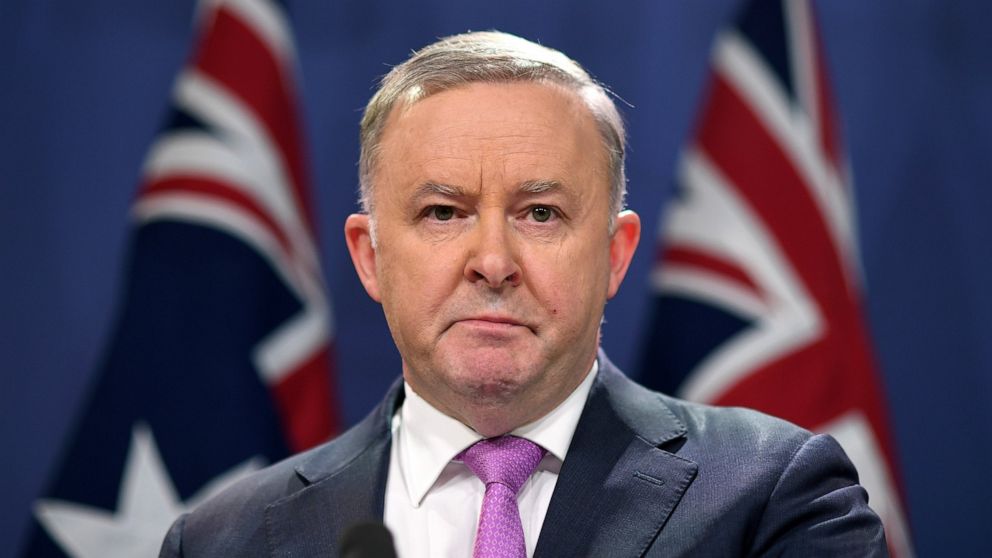
Anthony Albanese’s net approval slumped six points in Essential since November to -11, with 50% disapproving and 39% approving. This is his worst net approval in this poll, beating a -10 net approval in August. Peter Dutton’s net approval improved two points to +3.
A simple average of the four December polls that have asked for leaders’ ratings has Albanese at -17 net approval while Dutton is at -3.5. These polls include last week’s Newspoll and Resolve[3] and this week’s Essential and Freshwater. The Poll Bludger’s BludgerTrack graphs[4] show the continued drop in Albanese’s net approval.
I believe the bad polls for Labor are partly due to the very negative media commentary on the September quarter GDP figures, which were released December 4. Morgan’s consumer confidence index[5] has dropped 4.5 points in the last two weeks to 83.9, the lowest it has been since early October.
More on Essential
By 51–31, voters thought Australia was on the wrong track (48–35 in November). By 40–25, voters said they were worse off than three years ago[6], rather than better off. This is better than the 59–13 for worse off in Resolve, but Resolve asked for a comparison to the last election, not three years ago.
By 68–32, respondents said who would make them better off in three years was more important to their vote than whether they were better off in the last three years.
2024 was seen as a better year than 2023 on most measures considered, with “you and your family” at net zero on whether 2024 was a good or bad year, up 12 points on 2023. But the Australian economy was at net -36, up five points.
Respondents were optimistic about 2025, with 37% expecting it to be better for Australia than 2024, 21% worse and 25% saying there would be no difference.
Freshwater poll: Coalition retains narrow lead
A national Freshwater poll[7] for The Financial Review, conducted December 13–15 from a sample of 1,051, had the Coalition ahead by 51–49, unchanged from the November Freshwater poll[8]. Primary votes were also unchanged, with the Coalition on 40%, Labor 30%, the Greens 14% and all Others 16%.
After the previous Freshwater poll, I said rounding probably contributed to the Coalition’s lead, and this still holds in the current poll.
Albanese’s net approval was steady at -17 with 51% unfavourable and 34% favourable. Dutton’s net approval was up one point to -3. Albanese led Dutton as preferred PM by 46–43 (43–42 in November).
There was an improvement for Labor in perceptions of which party would be best to handle various issues. The Coalition led Labor by ten points on the cost of living, down from 12 points in November. On managing the economy, the Coalition led by 13 poins, down from 17.
Morgan poll Labor’s worst this term
A national Morgan poll[9], conducted December 9–15 from a sample of 1,672, gave the Coalition a 52–48 lead, unchanged since the December 2–8 Morgan poll.
Primary votes were 41% Coalition (up three), 27.5% Labor (down 0.5), 12.5% Greens (down 0.5), 5% One Nation (down 1.5), 10.5% independents (steady) and 3.5% others (down 0.5).
The headline figure uses respondent preferences. By 2022 election preference flows, the Coalition led by 51.5–48.5, a 1.5-point gain for the Coalition. By this measure, this poll is Labor’s worst this term. Better preference flows for Labor this week disguised ugly primary vote figures that gave the Coalition their two-party gain by 2022 flows.
The previous Morgan poll[10] gave the Coalition a 52–48 lead, a one-point gain for the Coalition since the late November Morgan poll. This was the Coalition’s largest lead in five months.
Primary votes were 38% Coalition (down 0.5), 28% Labor (down two), 13% Greens (up 0.5), 6.5% One Nation (steady), 10.5% independents (up two) and 4% others (steady). By 2022 election preference flows, there was an unchanged 50–50 tie.
Additional Resolve questions
The national December Resolve poll for Nine newspapers was Labor’s worst from Resolve[11] this term. In additional questions[12], respondents strongly favoured four immigration law changes, with the weakest support for immigration detainees being sent to a third country if they would be endangered by returning to their source country (44–23 support).
On nuclear power[13], 34% supported it (up two since June), 28% were opposed (steady), 24% said they didn’t have a strong view but were open to the government investigating its use (down six) and 14% were undecided (up four).
On taxpayer subsidies for power sources, 45% supported subsidising rooftop solar, 33% renewables in general, 21% nuclear-powered electricity, 20% natural gas-powered electricity and 13% coal-fired electricity.
By 58–18, respondents supported the under-16 social media ban[14], but by 67–25 they were not confident the ban would work. By 45–42, respondents said it was unlikely they would provide their ID to the platforms they use.
Unemployment rate drops to 3.9%
The Australian Bureau of Statistics said last Thursday[15] that the unemployment rate was 3.9% in November, down 0.2% since October and the lowest unemployment rate since March. The employment population ratio (the share of eligible Australians that are employed) was up 0.1% to 64.4%, an equal record high.
The ABC’s report indicated[16] that the strong jobs data decreased the probability of the Reserve Bank cutting interest rates in early 2025.
NSW Resolve poll and upcoming Victorian byelection
A New South Wales state Resolve poll[17] for The Sydney Morning Herald, conducted with the federal November and December Resolve polls from a sample of over 1,000, gave the Coalition 37% of the primary vote (steady since October), Labor 33% (up one), the Greens 11% (steady), independents 13% (down one) and others 7% (up one).
Resolve doesn’t usually give a two-party estimate, but Labor would retain their slight lead from October[18]. Labor incumbent Chris Minns led the Liberals’ Mark Speakman as preferred premier by 35–17 (37–14 in October).
A byelection will be needed in the Victorian Labor-held state seat of Werribee after Treasurer Tim Pallas resigned on Monday[19]. At the 2022 state election, Pallas defeated the Liberals in Werribee[20] by a 60.9–39.1 margin.
References
- ^ Essential poll (essentialreport.com.au)
- ^ Kevin Bonham’s aggregate of national polls (kevinbonham.blogspot.com)
- ^ last week’s Newspoll and Resolve (theconversation.com)
- ^ BludgerTrack graphs (www.pollbludger.net)
- ^ Morgan’s consumer confidence index (www.roymorgan.com)
- ^ were worse off than three years ago (essentialreport.com.au)
- ^ Freshwater poll (www.afr.com)
- ^ November Freshwater poll (theconversation.com)
- ^ Morgan poll (www.roymorgan.com)
- ^ Morgan poll (www.roymorgan.com)
- ^ Labor’s worst from Resolve (theconversation.com)
- ^ additional questions (www.theage.com.au)
- ^ nuclear power (www.theage.com.au)
- ^ under-16 social media ban (www.theage.com.au)
- ^ Bureau of Statistics said last Thursday (www.abs.gov.au)
- ^ ABC’s report indicated (www.abc.net.au)
- ^ state Resolve poll (www.smh.com.au)
- ^ slight lead from October (theconversation.com)
- ^ Tim Pallas resigned on Monday (www.abc.net.au)
- ^ Werribee (www.abc.net.au)
Read more https://theconversation.com/labor-and-albanese-end-2024-in-worst-poll-position-this-term-245846