Why have Joe Biden’s preemptive pardons caused such a stir? A president’s pardoning power has few limits
- Written by: John Hart, Emeritus Faculty, US government and politics specialist, Australian National University
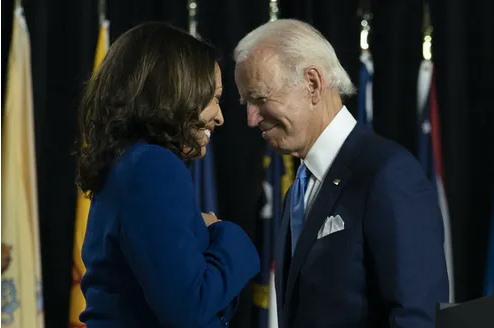
On his last day in office, outgoing United States President Joe Biden issued[1] a number of preemptive pardons essentially to protect some leading public figures and members of his own family from possible retaliation by Donald Trump. It was a novel and innovative use of the presidential pardon power.
Among others, the preemptive pardons were for:
-
retired General Mark Milley[2] (former chair of the Joint Chiefs of Staff),
-
Anthony Fauci[3] (Biden’s former chief medical advisor)
-
members of the House committee[4] that investigated the January 6 2021 insurrection of the US Capitol, including Trump critic Liz Cheney (a former House member from Wyoming)
-
five members of his family, including his siblings.
The pardons for Fauci, Milley and Biden’s family members specifically cover any “offences against the United States” that may have been committed from January 1 2014 through to the date of the pardon.
At various times in recent years, Trump has indicated his intention to go after those he believes had crossed or criticised him, either during his previous presidency or following the insurrection of the Capitol.
Presidential pardons are usually issued to provide relief to those who have been convicted of an offence and have served all or part of a prison sentence. There is usually also a justifiable reason for doing so.
The novelty of Biden’s use of the pardon power is that none of those covered by his preemptive pardons had committed or been charged with any offence. Nor had they been accused of wrongdoing, apart from comments made by Trump or his supporters. This has concerned[5] some on both the left and right.
Rather, Milley, Fauci, Cheney and the others are protected from any potential future criminal charges that could be brought by the Trump administration.
Who can be pardoned?
The pardon power was written into[6] the US Constitution when it was drafted in 1787. It gives the president the power
to grant reprieves and pardons for offences against the United States, except in cases of impeachment.
The only constitutional limitations on the president’s pardon power are that it cannot include those who have violated a state law (it only covers federal offences) and it cannot absolve anyone who has been successfully impeached.
Beyond these two limitations, it is the only presidential power that is not subject to the usual array of checks and balances on which the Constitution is built.
As such, Congress cannot override a presidential pardon and the Supreme Court would have no grounds for declaring a presidential pardon unconstitutional.
This is because the Constitution doesn’t say anything about the grounds on which a president can grant a pardon. It also says nothing about the reasons why he can’t issue one.
In a case heard back in 1886[7], the Supreme Court declared the pardon power was unlimited and has generally held to that position ever since.
Is there precedent for Biden’s action?
Biden has now expanded and extended the scope of the pardon power by issuing preemptive pardons.
There is some precedent. In 1974, President Gerald Ford pardoned his predecessor, Richard Nixon, following Nixon’s resignation over the Watergate scandal. However, Nixon had not been charged or convicted of any criminal offence at the time. And, of course, he escaped likely impeachment by resigning.
Essentially, Ford pardoned Nixon for offences he may have committed or may be charged with in the future. Ford’s purpose, of course, was to attempt to end the damaging consequences of Watergate and restore some normality to government.
Biden is taking this power further, using the pardon to constrain and limit the actions of his successor, who has clearly indicated his intention to pursue legal action where there is no apparent justification for doing so.
Biden’s action is therefore intended to protect innocent individuals from prosecution, as well as the massive costs entailed in defending themselves in a court of law.
In defending his action, Biden said[8]:
These are exceptional circumstances and I cannot in good conscience do nothing.
The pardons, however, will not stop Trump or a Republican-led Congress from initiating investigations of these individuals. But they go a long way to thwart Trump’s stated intentions of bringing criminal proceedings against those who have upset him merely by performing their public duties.
The real problem
Biden has been praised by some for his actions, while others have worried[9] about the precedent it sets.
However, the real problem lies not with Biden but with the pardon power itself because of how broadly it’s written. It’s open to interpretation by any president.
It is also locked into a Constitution written 238 years ago by men who could not have foreseen the circumstances that led Biden to use the power in this way to constrain his successor. Their broad grant of the pardon power might warrant some examination now, but amending the Constitution[10] is immensely difficult and requires extraordinary majorities in both houses of Congress and among the 50 US states.
And given today’s polarised politics, this certainly isn’t going to happen.
References
- ^ issued (www.abc.net.au)
- ^ Mark Milley (www.politico.com)
- ^ Anthony Fauci (www.pbs.org)
- ^ House committee (www.nbcnews.com)
- ^ concerned (www.theguardian.com)
- ^ written into (constitutioncenter.org)
- ^ case heard back in 1886 (supreme.justia.com)
- ^ said (www.reuters.com)
- ^ worried (www.csmonitor.com)
- ^ amending the Constitution (www.archives.gov)