Dutton doesn’t pull his punches on Trump while Albanese plays it safe
- Written by: Michelle Grattan, Professorial Fellow, University of Canberra
Treasurer Jim Chalmers will not be organising a bucks’ night ahead of the coming nuptials of Prime Minister Anthony Albanese and Jodie Haydon.
How do we know this morsel of trivia? The treasurer, appearing on Wednesday breakfast TV to talk up Tuesday’s interest rate cut, was asked about being in charge of arranging the PM’s bucks’ party.
“I’m more of a cup of tea and an early night kind of guy these days. And so I’m sure you can find someone more appropriate to plan the bucks,” Chalmers said, laughing off whatever impatience he may have felt at being taken down this path.
To the dismay of more than a few in Labor circles, a Women’s Weekly interview[1] with the PM and his fiancee dropped into the news cycle just as the government needed all attention on the rate cut.
Given the army of prime ministerial spinners, there was some wonder at this publicity collision.
All leaders do these soft photogenic sessions. But, leaving aside the unfortunate clash, it might be argued this is not the time for the prime ministerial couple to be inviting attention to their post-election marriage. Albanese is not thinking of retiring, but some voters might see a subtle hint of that. As they did when he bought his clifftop house on the central NSW coast.
Chalmers, when asked about the Women’s Weekly piece, was anxious to get across the message that, wedding or not, “I can assure all of your viewers, whether it’s the prime minister or the rest of his government, the main focus is on the cost of living”.
More disappointing for the government than the Women’s Weekly blip was the mixed reception the long-anticipated rate cut received in much of the media.
Reserve Bank Governor Michele Bullock indicated the bank’s decision to cut was a close call. She hosed down expectations of further cuts, which effectively rules out a pre-election move on April Fools’ Day.
It wasn’t an entirely happy week for Bullock, with critics of the cut suggesting she had responded to political pressure. Out in mortgage land, people will be relieved at the slight help, but it only takes away a fraction of their repayment pain.
Meanwhile the work of the cabinet expenditure review committee and the treasury continues apace on what could be a “ghost” March 25 budget – if Albanese aborts it with an April election.
The government insists there is nothing strange about this. If the budget doesn’t eventuate, the measures will be rolled out as election policy, it says. The argument is unconvincing. Preparing a budget and putting together election policy may have some things in common, but they are not the same. A budget is a close-woven tapestry; election policy is open-stitch cloth.
The uncertainty about the election date, while full campaigning is underway, is disruptive for business and the economy (even if, as Chalmers says, it’s now only a matter of weeks either way). It reinforces the argument for fixed federal terms, which work well in the states. But the obstacles are such that that’s not even worth talking about, unfortunately.
In a “no show without Punch” moment this week, Clive Palmer entered the election race with his Trumpet of Patriots party and a promise to spend “whatever is required to be spent”. There’s talk of $90 million being splashed on a “Make Australia Great Again” platform.
It’s hard to get a fix on what impact Palmer will have. He’s competing with Pauline Hanson for votes on the right. Labor fears his advertising on the cost of living will crowd out its messages. He is also targeting Opposition Leader Peter Dutton for not being Trumpian enough. He told Nine media, “As Dutton said, he’s no Donald Trump. I say, what’s wrong with being Donald Trump?”
The answer is, a very great deal. As Trump’s presidency unfolds, its dangers are becoming more obvious than even his harshest critics feared.
Inevitably, the shadow of Trump is hanging increasingly over our election.
With Trump’s win, the Liberals would have thought the latest manifestation of a widespread international swing to the right would put wind in their sails. But the counter-argument has grown – an erratic and autocratic Trump is making some Australian voters feel more unsettled and inclined to stick with the status quo.
Dutton is not a mini-me Trump but shares some of his views on issues such as government spending, bureaucracy and identity politics. Former Prime Minister Scott Morrison told[2] the Australian Financial Review this week that Dutton would sympathise with some of Trump’s objectives but the opposition leader was “not trying to ape” what was going on in the United States.
Trump’s push to end the Russia-Ukraine war has taken Trumpism to a fresh, alarming level, and could inject strains into the Australia-US relationship.
Trump has sidelined Ukraine and is clearly favouring Russia in pursuing a settlement. Now he has launched an extraordinary personal attack on Ukrainian President Volodymyr Zelensky.
On his social media platform Trump lashed[3] Zelensky as a “modestly successful comedian” who had gone “into a war that couldn’t be won, that never had to start”. Zelensky was a “dictator” who refused to have elections, had done “a terrible job” and was very low in the opinion polls, Trump said.
Ukraine’s cause has been bipartisan in Australia, which has given the country more than $1.5 billion in assistance and now has (belatedly) reopened its embassy there.
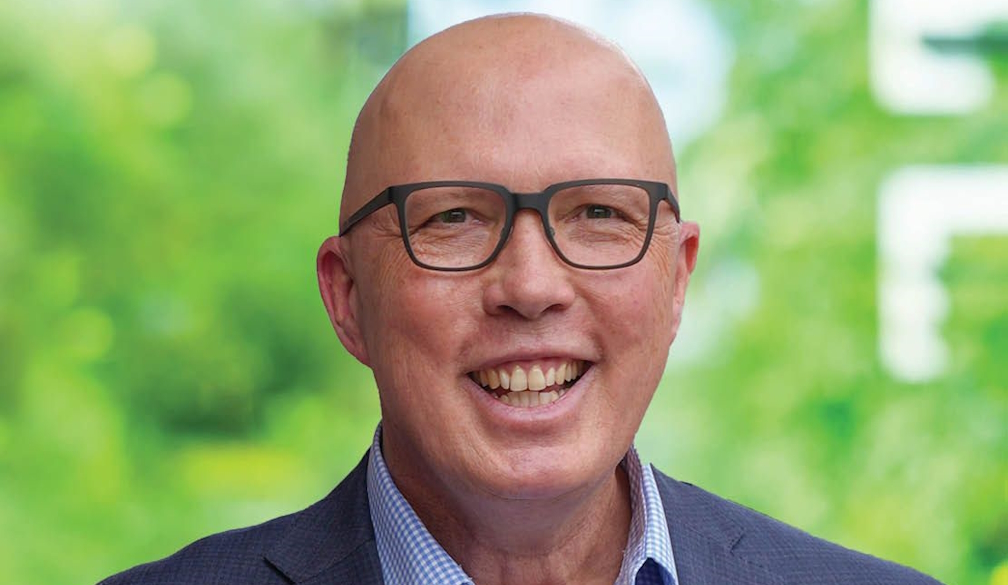
To his credit, Dutton immediately condemned Trump’s stand in very forthright terms.
“President Trump has got it wrong in relation to some of the public commentary that I’ve seen him make in relation to President Zelensky and the situation in Ukraine,” he told Sydney radio.
“I think very, very careful thought needs to be given about the steps because if we make Europe less safe, or we provide some sort of support to [Russian president] Putin, deliberately or inadvertently, that is a terrible, terrible outcome.”
Albanese’s initial response was to repeat firmly Australia backing for Ukraine, condemning Russia. He did not comment directly on Trump’s attack. He repeated he was not going to give “ongoing commentary on everything that Donald Trump says”.
The government finds itself caught between the need to strongly reject Trump’s handling of Ukraine, and a desire to tread softly with an administration from whom it desperately wants to win a concession on tariffs.