As the election campaign begins, what do the polls say, and can we trust them this time?
- Written by: Adrian Beaumont, Honorary Associate, School of Mathematics and Statistics, The University of Melbourne
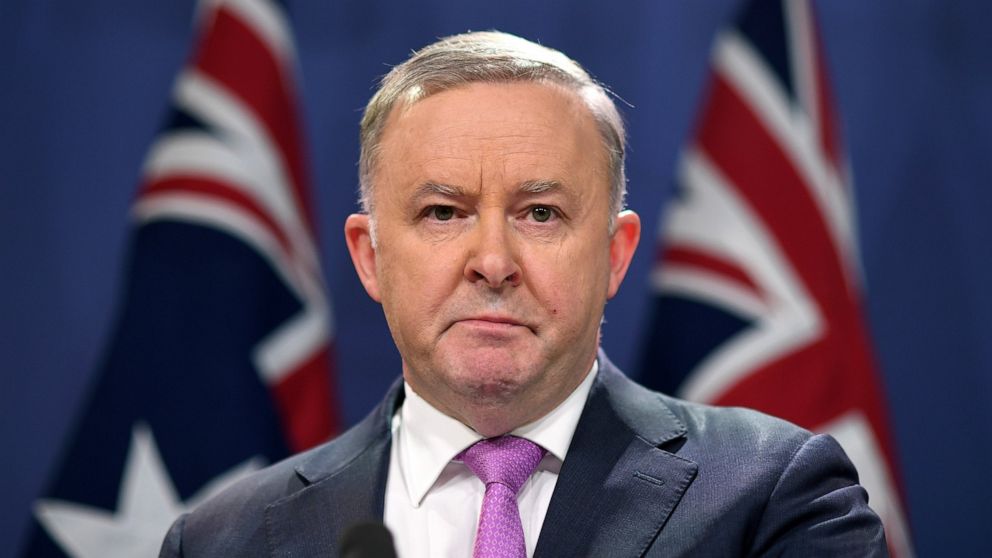 Prime Minister Scott Morrison has called the federal election for May 21. What do the polls say, and how do we know if they are accurate?
There have been five national polls conducted since the March 29 budget. Newspoll[1] gave Labor a 54-46 lead, a one-point gain for the Coalition since mid-March, and Ipsos a 55-45 lead (its first poll since the 2019 election). Morgan gave Labor[2] a 57-43 lead, a 1.5-point gain for Labor since the previous week.
Essential’s “2PP+”, which includes undecided voters, gave Labor a 50-45 lead (48-44 two weeks ago). Analyst Kevin Bonham[3] estimated Resolve would be about 55.5-44.5 to Labor from the primary votes, a 1.5-point gain for Labor since mid-February[4].
If these poll results were repeated on election day, Labor would easily win a majority in the House of Representatives. While the polls could change between now and election day, or be inaccurate, it’s wrong to say that current polls would result in a minority government.
The Coalition’s main hope is not that the polls are wrong again, but that they improve in the polls over the course of the election campaign. They probably don’t need to win the two-party vote. In both 1990[5] (Labor) and 1998[6] (Coalition), incumbent governments won a majority of seats despite losing the national two-party vote.
In 1998, Labor won the two-party vote by 51.0-49.0, while in 1990, the Coalition won by 50.1-49.9. The government can win a majority if the two-party result is fairly close, but if it’s the blowout that current polls suggest, Labor will easily win a House of Representatives majority.
The Poll Bludger’s BludgerTrack[7] aggregate of all polls currently has Labor winning by 55.3-44.7, while Bonham[8] gives Labor a 54.6-45.4 lead.
At the 2019 election, the final pre-election Newspoll gave Labor a 51.5-48.5 lead, and other polls were similar. The actual two-party result was the reverse, with the Coalition winning by 51.5-48.5.
Read more: Final 2019 election results: education divide explains the Coalition's upset victory[9]
Australian pollsters are assisted by compulsory voting, so they don’t need to estimate the likelihood of various demographics voting. By Australian standards, this was a major poll blunder.
After the 2019 election, the Australian Polling Council[10] was formed so pollsters disclose basic information, like how they weight their samples. Of Australia’s four regular pollsters that conduct national polls, Essential and YouGov, which conducts Newspoll, are APC members, but Morgan and Resolve are not.
Until we know the results of this year’s election, we can’t be completely confident the polls are not messing up again. Our four current regular pollsters use online methods to conduct polls, with Morgan supplementing with live phone interviews. There is not enough variety in methods used to give confidence.
The polls’ problem in the 2019 election was likely caused by failure to weight to educational attainment. I wrote last May that non-university-educated whites in the United States, United Kingdom and Australia have been moving to the right. So it gives me more confidence that Newspoll is now weighting[11] its results by education.
Read more: Non-university educated white people are deserting left-leaning parties. How can they get them back?[12]
Polling of state elections since the 2019 federal election has been good. This polling has somewhat understated Labor. At the recent South Australian election[13], the final pre-election Newspoll gave Labor a 54-46 lead; it actually won by 54.6-45.4.
At the March 2021 Western Australian election[14], Newspoll’s final poll gave Labor a 66-34 lead, but it actually won by a record-breaking 69.7-30.3 margin. At the October 2020 Queensland election[15], the final Newspoll gave Labor a 51.5-48.5 lead, but it won by 53.2-46.8.
It is a pity other pollsters have not attempted to poll close to state elections, so their vote estimates could be tested against actual results.
Morrison’s ratings at about this time before the 2019 election were only slightly negative in Newspoll[16], while then Labor leader Bill Shorten’s ratings were consistently in the negative double digits. Currently, Morrison’s ratings are in the negative double digits and Albanese is near net zero, so personal ratings are lining up better with voting intentions.
Non-response bias is thought to be the reason US 2020 polls[17] understated Donald Trump. Trump supporters distrusted the established media, including polls, so much that they did not respond to polls. This was not a “shy Tory” effect, when people lie to pollsters, but simply not participating in polls.
State election results so far indicate non-response bias isn’t yet a major factor in Australia. It would be very difficult for pollsters to correct for non-response bias, so hopefully it doesn’t become a factor here.
References
- ^ Newspoll (theconversation.com)
- ^ Morgan gave Labor (theconversation.com)
- ^ Kevin Bonham (twitter.com)
- ^ mid-February (theconversation.com)
- ^ 1990 (en.wikipedia.org)
- ^ 1998 (en.wikipedia.org)
- ^ BludgerTrack (www.pollbludger.net)
- ^ Bonham (twitter.com)
- ^ Final 2019 election results: education divide explains the Coalition's upset victory (theconversation.com)
- ^ Australian Polling Council (www.australianpollingcouncil.com)
- ^ Newspoll is now weighting (commercial.yougov.com)
- ^ Non-university educated white people are deserting left-leaning parties. How can they get them back? (theconversation.com)
- ^ recent South Australian election (en.wikipedia.org)
- ^ March 2021 Western Australian election (en.wikipedia.org)
- ^ October 2020 Queensland election (en.wikipedia.org)
- ^ Newspoll (www.pollbludger.net)
- ^ US 2020 polls (theconversation.com)