Will there be leadership changes on both sides of politics next parliamentary term?
- Written by: Michelle Grattan, Professorial Fellow, University of Canberra
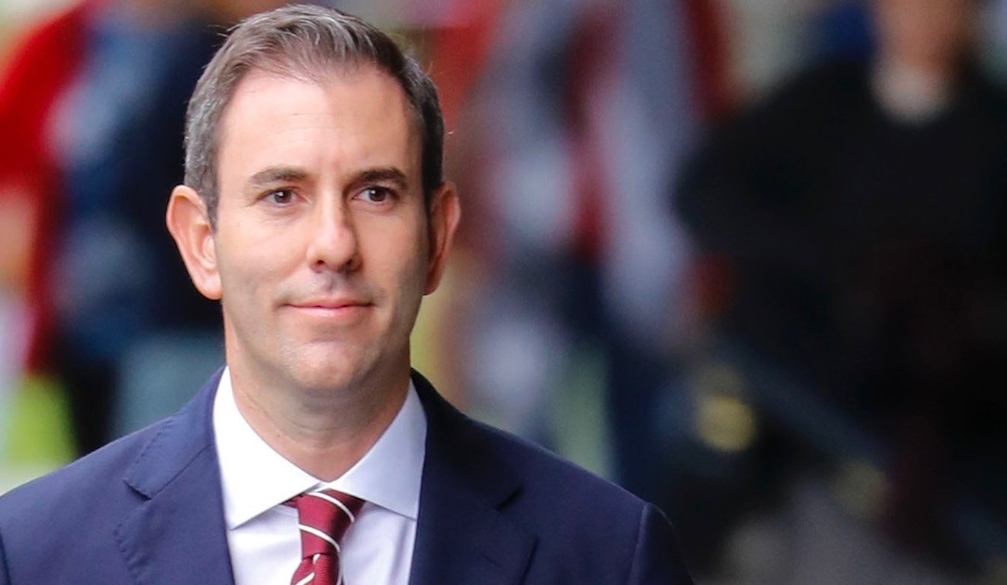
When Jim Chalmers and Angus Taylor met for this week’s treasurers’ debate, the moderator observed that in three or six years they might be facing each other as prime minister and opposition leader.
Election results trigger, or subsequently lead to, leadership resets. Even in the turmoil of a campaign, players will also have their eyes on the future.
After two weeks, the election campaign appears to have shifted more clearly in Labor’s direction. The uncertainty caused by Donald Trump is making some voters inclined to stick with the status quo, and the Liberal campaign has appeared faltering. Things could change, but as of now, Labor is better placed.
Assuming Anthony Albanese wins, the dynamics within Labor will be different according to whether his government is in minority or majority.
Albanese’s negotiating skills were evident during the last minority Labor government, and would likely come to the fore again if Labor had to wrangle crossbenchers in the House of Representatives.
But regardless of majority or minority, there would probably be pressure for a leadership change at some point during the next term. It is hard to see Albanese, 62, taking Labor into the 2028 election.
Chalmers, 47, is the obvious frontrunner to succeed him, but not the only horse in the field. And, apart from Chalmers, other aspirants might be concerned time would pass them by if there was not a transition next term.
Home Affairs Minister Tony Burke, 55, from the right in NSW, is ambitious and canny; he has delivered to the unions and could look to support from that quarter. Deputy Prime Minister Richard Marles, 57, who hails from the Victorian right, also sees himself as a potential successor.
The left’s Tanya Plibersek, 55, is a favourite with the party rank and file but could struggle to get enough backing in a leadership transition during a second term. Energy Minister Chris Bowen, 52, has had a tough time selling the government’s energy transition policy; in the past he was seen as a serious leadership contender, but doesn’t make it into dispatches these days.
If the Labor leadership is contested, the rules provide for a ballot of the rank and file. That contributes 50% of the result, with caucus providing the other 50%. A transition in government during the term either would not involve a formal ballot or, if it did, the rules would be changed to override the provision for a long grassroots contest.
The dynamic between Chalmers and Albanese in a second-term government would be closely watched. There have been some differences between the two over the past three years, notably over the recalibration of the Morrison government’s tax cuts. Chalmers eventually won his push to change them. The treasurer’s loyalty to Albanese has not been in question. But the contrast in their communication skills has been widely remarked on.
The usual pattern of these things is that a treasurer who sees himself as a future prime minister becomes increasingly impatient as time goes on. Paul Keating, who eventually toppled Bob Hawke, and Peter Costello, who never got to the point of challenging John Howard, are examples.
While Albanese has obviously not had to watch his back this term, the dynamic would be different next time around. The example of Scott Morrison is instructive. After he unexpectedly won the 2019 election, Morrison was seen as untouchable. Fast forward to before the following election and some in the Liberal party approached then treasurer Josh Frydenberg to try to replace Morrison. He rebuffed them.
Looking across the board, it’s notable that the most impressive Labor leaders currently are two state premiers, Chris Minns in New South Wales and Peter Malinauskas in South Australia. Both are centrist, pragmatic, unifying figures who come across well. Many in Labor might regret they are not in the federal parliament (although the leadership aspirants would be relieved).
On the other side of politics, if 54-year-old Peter Dutton loses, what happens with the Liberal leadership? The size of the loss would be crucial. If Labor remained in majority, that would be such a major failure Dutton would surely be replaced immediately. If he picked up a respectable number of seats, on the other hand, he would likely be kept on. He has worked his relationships within the Liberal Party well; he is seen as more consultative than, for example, Morrison or Malcolm Turnbull.
But how long would he last as leader? If the Coalition was only a whisker away from power, he might get a second crack in 2028. However if Labor, although in minority, was looking solid, the Liberals would start thinking about a new leader.
Their problem is that there is a dearth of frontbench talent.
Taylor, 58, certainly has ambition. But he has not performed well as shadow treasurer, and is not a good retail politician. Liberal Deputy Leader Sussan Ley, 63, is scatty and widely criticised by colleagues. Defence spokesman Andrew Hastie, 42, hasn’t broadened out as much as might have been expected this term, and has the disadvantage of coming from Western Australia, which has limited his visibility.
The loss of Frydenberg at the last election has left the Liberals with a long-term succession problem.
Partly, though not entirely, this goes back some way, to the sort of candidates selected in former years. This is an increasing challenge for both “parties of government”. The talent pool is narrowing.
Fewer potential high flyers are wanting to enter politics. A toxic political culture and greater media intrusion contribute to this. Politicians might never have commanded great respect but they are accorded even less these days, and there are larger rewards elsewhere. Also, political staffs are bigger, and these young hustlers are well placed to secure preselection.
There is another factor. Nowadays there’s more pressure to put forward “local champions” – people who are deeply embedded in their communities. We’ve seen this in the success of the “community candidates” movement – many voters respond to them.
With fewer “safe” seats and this desire for localism, the major parties cannot so easily parachute high-flyers into seats in which they don’t live. Labor notoriously tried this with Kristina Keneally, a former senator and former NSW premier, at the last election, and managed to lose what had been the solid Labor seat of Fowler.
The political move to local champions and community candidates, whatever pluses it might have, will over time erode the potential leadership pools of the major parties.