The campaign is almost over, so how has it played out across Australia?
- Written by: David Clune, Honorary Associate, Government and International Relations, University of Sydney
While many Australians[1] have already voted at pre-poll stations and by post, the politicking continues right up until May 3.
So what’s happened across the country over the past five weeks?
Here, six experts analyse how the campaign has looked in New South Wales, Queensland, South Australia, Tasmania, Victoria and Western Australia.
New South Wales
David Clune, honorary associate, government and international relations, University of Sydney
The campaign in NSW is concluding much as it began, largely mirroring the Australia-wide trend with little evidence of localism.
The main themes of both sides remain similar: cost-of-living alleviation, improved health care and housing affordability. Both leaders quickly matched each other’s promises: it could be described as the “Albanutton” campaign.
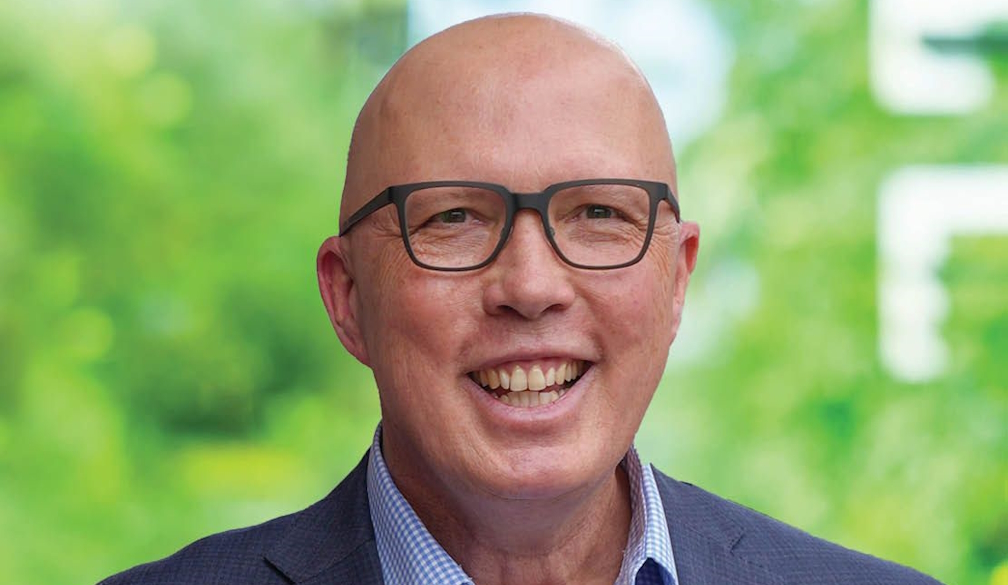
Opposition Leader Peter Dutton’s campaign continued to be hampered by slip-ups[2] and a lack of focus[3], detail and discipline. Although the government’s record had given him plenty of scope, Dutton struggled to land a blow.
Prime Minister Anthony Albanese had his share of gaffes[4], but appeared more coherent and convincing. Labor’s negative campaign[5] to portray Dutton as a local Trump clone seems to have been effective[6].
Some in the Liberal Party argue there’s pent-up resentment[7] against the government in Western Sydney that hasn’t been picked up by opinion polls. Whether this hypothetical backlash turns into seats on polling day remains to be seen.

Bennelong[9] (notionally Liberal after the redistribution) and Gilmore[10], seem the most likely Liberal gains. Parramatta, Reid, Paterson, Robertson and Werriwa are also in play[11]. There is speculation[12] about an independent threat in the safe Labor seat of McMahon.
The Coalition has a fight on its hands to retain Cowper[13] and Bradfield[14], with strong independent challenges in both seats. There is a tight three-way[15] contest in Calare[16] between former National turned independent, Andrew Gee, a National and a Teal.
As there is little real policy differentiation between the major parties; it seems to come down to which side the voters find more credible and trustworthy in uncertain times.
According to a Newspoll published on April 27, Albanese led Dutton as preferred prime minister by 51% to 35%[17]. Only 39% of those surveyed believed the government deserved to be re-elected. However, 62% believed the Coalition was not ready[18] to govern.
An aggregate of polling data[19] showed in NSW, as at April 28, Labor’s two-party preferred vote was 53.0%, an increase since the March Budget of 2.8% and of 1.6% since the 2022 election.
Queensland
Paul Williams, associate professor of politics and journalism, Griffith University
In the campaign’s closing week, Queensland remains largely inconsequential as to whether Albanese or Dutton will call The Lodge home.
But that doesn’t mean the Liberal National Party (LNP) isn’t concerned about its prospects north of the Tweed.
While the LNP still leads Labor in the two party-preferred vote, 54 to 46, across Queensland – roughly the 2022 result – last week’s YouGov poll[20] found that result to be a three-point fall for the LNP from the previous week.
While Labor is hardly going to blitz Queensland, some LNP seats are nonetheless more vulnerable than at any time over the past decade. These include the regional seats of Leichhardt[21] (3.4 %) and Flynn[22] (3.8%), the outer suburban seats of Dickson[23] (held by Dutton by just 1.7%), Longman[24] (3.1%), Forde[25] (4.2%) and Petrie[26] (4.4%), and the middle-suburb mortgage-belt seat of Bonner[27] (3.4%).
Independent Suzie Holt might also worry the LNP in the usually safe seat of Groom[28], around Toowoomba. But the last-minute “rescue”[29] of the LNP by Pauline Hanson’s One Nation (PHON) – Hanson (reciprocating the LNP’s preferencing of PHON) pulped existing how to vote cards and printed new ones placing the LNP second in most seats – might just save the opposition.
However, the campaign has offered little clarity on the prospects in other key Queensland contests: the battles for three Greens-held inner-urban seats of Brisbane, Ryan and Griffith.
But a mid-April DemosAU poll[30] found the Greens’ primary vote falling by 1.7 points to 29%, a figure exactly tied with Labor’s, which has risen 2.7% since 2022.
Problematically for Dutton, the LNP, whose primary vote remains locked at 36%, appears not to have capitalised on cost-of-living angst in inner Brisbane.
Despite 58% of inner Brisbane leaning centre-left, these figures suggest the LNP may fail to win any Greens seats, with the contest a close one between the Greens and Labor only. The result rests on who runs third: Labor or the Greens. There could be a mere 100 votes in these must-watch seats.
In the Northern Territory, the seat of Lingiari[31], which takes in Alice Springs and Katherine, is held by Labor’s Marion Scrymgour by 1.7%. In 2022, just one in three[32] enrolled voters cast a ballot in the electorate, prompting the Australian Electoral Commission to try to increase voter turnout[33]. In the wash-up, it will be interesting to see if this improves.
South Australia
Rob Manwaring, associate professor of politics and public policy, Flinders University
Given SA is home to only a handful[34] of marginal seats, it’s not a well-trodden part of the campaign trail. That’s typical of most federal elections.
What’s not so typical is the overall feel of the campaign. The rhythms of Australian elections are changing. On one level, there are the familiar tropes and activities; TV debates, campaign launches and letter box blitzes in key marginal seats.
Yet, on the other hand, voters behave differently than they used to. Data from the Australian Election Study[35](AES) tells us far fewer voters have made their decision “a long time ago” (55% in 2007, down to 36% in 2022).
This means the number of “soft” voters is probably much higher as major parties have fewer “lifetime voters”. Voters are much more transactional.
Voters are more distanced from parties, too. The study shows fewer voters use how to vote cards (51% used them in 2007, 31% in 2022). We can’t rely on traditional metrics in the same way, such as the national two-party preferred vote[36] given the number of “non-traditional seats”.
In short, it’s now harder to more know how the campaigns are tracking. So while the Coalition campaign has been beset by a number of mis-steps[37], how this is playing out is far less clear.
Further, a strange paradox of the emergence of the Teals and other independents is there is a stronger local focus on representation, rather than broader policy debates. Again, AES data suggests most voters tend to vote for policy reasons[38] (like the economy or health) but the current media focus on the major parties, especially through the TV debates, actually seems to narrow the broader policy discussions.
So while the proof will be in the pudding when the votes are counted, it may be high time to reflect on what campaign strategies work best for politics in 2025.
Tasmania
Robert Hortle, deputy director of the Tasmanian Policy Exchange, University of Tasmania
On Australia’s South Island, most of the campaign focus[39] has been on Lyons, Franklin and Braddon.
In Lyons[40], Tassie’s most marginal electorate (ALP by 0.9%), the latest polls[41] have swung behind the ALP’s Rebecca White. Her popularity as a state MP for the electorate has been bolstered by some crucial slip ups[42] from Liberal candidate Susie Bower.
One potentially vote-winning policy announcement that has gone under the radar nationally is Labor’s commitment of $24 million[43] to guarantee the continued operation of the Boyer Paper Mill in Lyons, an important employer and regional symbol of economic activity.
Franklin[44] has been full of drama. 19-year-old Greens candidate Owen Fitzgerald had to withdraw his candidacy after it emerged that he is likely to still be a New Zealand citizen[45]. It seemed like the Greens would encourage their voters to preference independent anti-salmon candidate Peter George.
However, when the party’s how to vote cards were published, they said “Vote 1 – Owen Fitzgerald”.
According to the Greens[46], this was to make sure that voters completed their ballot correctly. The Liberal Party argued the Greens were just trying to secure public funding.
There have also been billboard shenanigans[47] and various[48] other dirty (or should that be clean?[49]) tricks.
The result is likely to rest on how Liberal voters feel about salmon farming[50] and how this influences their preferences. Are they so anti-Labor that they will preference Peter George ahead of Julie Collins despite his anti-salmon stance? Or will they put Collins ahead of George based on Labor’s support for the industry?
In Braddon[51], where salmon farming is again a key issue, Labor’s Anne Urquhart has been more visible on the campaign trail than Liberal Mal Hingston. Although the margin at the last election was 8% in favour of the Liberals, last-minute polling[52] (albeit with a small sample size) has offered Labor hope of winning the crucial seat.
Bridget Archer, Liberal MP for Bass, has had a solid if unspectacular campaign. She was helped by Labor selecting a low-profile first-time candidate, Jess Teesdale, who the party sees as “one for the future”. Teesdale revealed her “greenness” – in both senses of the word – by accidentally contradicting the ALP’s position on native forest logging[53], which is always a flashpoint in Tassie.
Victoria
Zareh Ghazarian, senior lecturer in politics, school of social sciences, Monash University
With just days to go in this campaign, Victoria still looks like a key state that will determine who governs for the next three years. Many seats across the state have new boundaries following the AEC redistribution.
Victoria is also home to the most marginal seat in the country. Deakin, which covers the eastern suburbs of Melbourne, is held by Liberal Michael Sukkar with a margin of just 0.02%, according to ABC Election Analyst Antony Green[54].
Deakin will be the seat to watch on election night. If the Liberal Party can’t hold on to Deakin, it would be unlikely to be able to win government.
There are also other seats that will provide a fascinating contest on Saturday night. Labor will face its own test in trying to retain Chisholm[55] and Aston[56], both in the eastern suburbs of Melbourne.
Chisholm is a swinging seat. It has been won by both Labor and Liberal parties over the past 40 years and is currently held by Labor with a margin of 3.3%. It has had a significant redistribution, losing strong Labor booths in the north and south parts of the electorate.
Aston is also on a similarly slim margin of 3.6% and was famously won[57] by Labor at the by-election in 2023. Holding onto Aston will be a crucial test for Labor. Losing this seat may threaten Labor’s chances of forming a majority government after the election.
There are also the two seats held by the independents which promise to be tight contests. The previously safe Liberal seats of Kooyong[58] and Goldstein[59], which were won by Monique Ryan and Zoe Daniel respectively, have been targeted by the Liberal Party. The independents will face a significant battle and, if successful, will demonstrate a significant shift in voting behaviour has occurred in these electorates.
Western Australia
Narelle Miragliotta, associate professor in politics, Murdoch University
The idea that WA would determine the outcome of government has been a persistent theme throughout the campaign, reinforced by four visits from Albanese and three from Dutton. The amount of attention WA has received from the major party leaders was more than any state or territory other than the three big population states: NSW, Victoria and Queensland. Even then, Albanese made one more visit to WA than he did Queensland at the time of writing.
Both major parties brought their big guns on the campaign trail. Former Liberal PM John Howard[60] visited Curtin, Tangney and Bullwinkel. The newly re-elected WA Labor Premier Roger Cook[61] campaigned heavily with Albanese during his visits. And in the final days of the campaign, Mark McGowan, the popular former premier, was seen on the hustings with Labor candidates in four marginal seats[62].

Neither major party leader ventured to places where they might receive an unwelcome reception. Dutton’s intention to steer clear of the Shire of Collie, particularly the town of Muja, the proposed site of the one of the seven nuclear power plants[64], was signalled early in the campaign[65]. Albanese avoided electorates in the[66] state’s southwest opposed to coastal wind farms.
There were no significant candidate blunders. However, questions were raised about the whereabouts of Andrew Hastie[67], shadow defence minister and (putative) future Liberal leader. Hastie was also questioned about the missing party logo[68] (as against party authorisations) on his campaign materials.
The competition between the Nationals and Liberals in the seat of Bullwinkel was without major media incident. This includes when the Nationals’ candidate, Mia Davies, broke with the federal coalition over support for Labor’s production tax credits[69] plan.
The contest for Curtin attracted outsized local media attention. In the final days of the campaign, there were renewed efforts to link the independent incumbent, Kate Chaney, to the Greens. All the proof the West Australian newspaper[70] required was Chaney’s connection to a senior Greens party official, evidenced by a 2024 donation totalling $104, a photo and an author’s credit.
To what extent has the leader visits and the campaign moved the needle? A recent study found party leader visits make only a modest[71] impact on the vote. Polling for Labor and the Liberals in WA has remained very steady. This doesn’t mean some seats won’t change, but to which party or candidate remains unclear.
References
- ^ many Australians (antonygreen.com.au)
- ^ slip-ups (www.canberratimes.com.au)
- ^ lack of focus (theconversation.com)
- ^ gaffes (www.dailymail.co.uk)
- ^ negative campaign (www.heraldsun.com.au)
- ^ effective (www.smh.com.au)
- ^ there’s pent-up resentment (www.theaustralian.com.au)
- ^ Lukas Coch/AAP (photos.aap.com.au)
- ^ Bennelong (www.abc.net.au)
- ^ Gilmore (www.abc.net.au)
- ^ in play (mckellinstitute.org.au)
- ^ speculation (www.weeklytimesnow.com.au)
- ^ Cowper (www.abc.net.au)
- ^ Bradfield (www.abc.net.au)
- ^ tight three-way (www.crikey.com.au)
- ^ Calare (www.abc.net.au)
- ^ 51% to 35% (theconversation.com)
- ^ not ready (www.theaustralian.com.au)
- ^ polling data (www.pollbludger.net)
- ^ YouGov poll (theconversation.com)
- ^ Leichhardt (www.abc.net.au)
- ^ Flynn (www.abc.net.au)
- ^ Dickson (www.abc.net.au)
- ^ Longman (www.abc.net.au)
- ^ Forde (www.abc.net.au)
- ^ Petrie (www.abc.net.au)
- ^ Bonner (www.abc.net.au)
- ^ Groom (www.abc.net.au)
- ^ last-minute “rescue” (www.abc.net.au)
- ^ DemosAU poll (demosau.com)
- ^ Lingiari (www.abc.net.au)
- ^ one in three (www.abc.net.au)
- ^ increase voter turnout (www.abc.net.au)
- ^ handful (theconversation.com)
- ^ Australian Election Study (australianelectionstudy.org)
- ^ two-party preferred vote (insidestory.org.au)
- ^ number of mis-steps (theconversation.com)
- ^ policy reasons (theconversation.com)
- ^ most of the campaign focus (www.utas.edu.au)
- ^ Lyons (www.abc.net.au)
- ^ latest polls (pulsetasmania.com.au)
- ^ crucial slip ups (www.abc.net.au)
- ^ Labor’s commitment of $24 million (www.abc.net.au)
- ^ Franklin (www.abc.net.au)
- ^ likely to still be a New Zealand citizen (www.abc.net.au)
- ^ According to the Greens (www.abc.net.au)
- ^ billboard shenanigans (pulsetasmania.com.au)
- ^ various (pulsetasmania.com.au)
- ^ or should that be clean? (pulsetasmania.com.au)
- ^ salmon farming (www.abc.net.au)
- ^ Braddon (www.abc.net.au)
- ^ last-minute polling (thenightly.com.au)
- ^ accidentally contradicting the ALP’s position on native forest logging (www.abc.net.au)
- ^ Antony Green (www.abc.net.au)
- ^ Chisholm (www.abc.net.au)
- ^ Aston (www.abc.net.au)
- ^ famously won (theconversation.com)
- ^ Kooyong (www.abc.net.au)
- ^ Goldstein (www.abc.net.au)
- ^ John Howard (www.afr.com)
- ^ WA Labor Premier Roger Cook (www.watoday.com.au)
- ^ four marginal seats (theconversation.com)
- ^ Mick Tsikas/AAP (photos.aap.com.au)
- ^ seven nuclear power plants (www.abc.net.au)
- ^ campaign (www.theguardian.com)
- ^ electorates in the (thewest.com.au)
- ^ Andrew Hastie (thenightly.com.au)
- ^ missing party logo (thenightly.com.au)
- ^ Labor’s production tax credits (www.abc.net.au)
- ^ the West Australian newspaper (thewest.com.au)
- ^ modest (www.tandfonline.com)