Google AI
The Times Australia
The Times World News

.

Why Australia's place at the NATO Summit was so important

  • Written by: Susan Harris Rimmer, Professor and Director of the Policy Innovation Hub, Griffith Business School, Griffith University

Prime Minister Anthony Albanese admitted at the North Atlantic Treaty Organisation (NATO) Public Forum that some Australians may not understand why he’s at a NATO meeting in Spain. But that since COVID and the invasion of Ukraine, more Australians understood how connected nations are to each other and we can no longer “compartmentalise”.

NATO is a treaty-based organisation created in 1949[1] by the United States, Canada, and several Western European nations to provide collective security against the Soviet Union. Australia isn’t a member, but an “enhanced opportunities partner”.

This was the first time Australia, Japan, South Korea and New Zealand were invited as special guests to attend a NATO summit. While left unsaid by the prime minister, it was crucially important Australia attend at the leaders level and make our mark to secure Europe’s attention on Indo-Pacific security challenges[2].

Our invitation was clearly influenced by US President Joe Biden’s strong view[3] “the linkage in security between the Indo-Pacific and the Euro-Atlantic is only deepening”.

The prime minister took the opportunity of the visit to send a message[4] to the Chinese government that it should learn the lessons from Russia’s “strategic failure” in Ukraine.

As it transpired, the Madrid Summit felt to many like a watershed moment that may influence Australian and global national security in the future.

NATO and the partners demonstrated a unified commitment to the rule of law, sovereign borders and human security in Europe and beyond. All this in the face of the Russian invasion of Ukraine and the precedent it sets for other would-be aggressors.

NATO had to also consider their response to China’s growing influence and assertiveness and the security consequences of climate change. These are both of crucial import[5] to Australia’s future.

The impact and importance of diplomatic moments like these need to be better communicated to the Australian public through the Department of Foreign Affairs and Trade (DFAT).

Read more: Ukraine war: Nato summit to meet in a world reordered by Russian aggression and Chinese ambition[6]

What happened at the Summit?

NATO’s 30 members[7] met to discuss Russia’s invasion of Ukraine and endorse the new NATO Strategic Concept[8].

There were some clear headlines:

  • NATO will increase its troops on high alert by more than sevenfold to over 300,000

  • NATO formally invited Finland and Sweden to join the alliance after Turkey withdrew its objections

  • the Strategic Concept document[9] defines Russia as the “most significant and direct threat” to Allies’ security.

This document also addresses China for the first time and the challenges Beijing poses toward Allies’ security, interests and values. The language used about China is frank, with statements including:

The PRC employs a broad range of political, economic and military tools to increase its global footprint and project power, while remaining opaque about its strategy, intentions and military build-up […] It strives to subvert the rules-based international order, including in the space, cyber and maritime domains.

China has responded[10] that:

NATO’s so-called new Strategic Concept is only old wine in a new bottle. It still has not changed the Cold War mentality of creating imaginary enemies and bloc confrontation.

NATO also states[11] climate change is “a defining challenge of our time”. This is in accordance with the view[12] of former defence chiefs aired in the context of the federal election.

Australia has been deepening ties with NATO

Australia’s invitation is the result of a long-term strategy to deepen ties with NATO. Australia is a partner not a member, and so this invitation to the Asia-Pacific countries is significant. It reflects NATO’s intent to focus on China and Indo-Pacific security for the first time in its history.

Australia’s relationship with NATO began to grow closer[13] as a result of our deployments in Afghanistan under the NATO-led International Security Assistance Force. Australia and NATO signed a joint political declaration in June 2012, then Individual Partnership and Cooperation Programs in 2013 and 2017.

In 2014, NATO further recognised Australia as a “valuable, capable and reliable partner” by granting Australia “enhanced opportunities partner” status (along with Finland, Georgia, Jordan, Sweden and Ukraine).

And in August 2019, Australia and NATO signed a renewed partnership agreement during an historic visit[14] of NATO Secretary General Jens Stoltenberg to Australia.

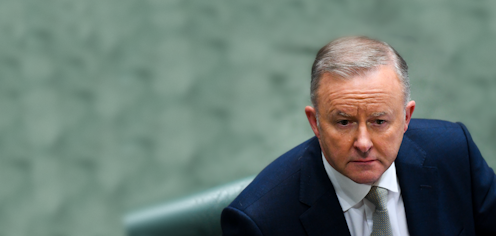
Prime Minister Anthony Albanese at a NATO summit in Madrid
Australia is deepening ties with NATO. Lukas Coch/AAP

Side goals

The prime minister also had some important goals on the sidelines of the summit, including:

  • a visit to Paris[15] to improve the relationship with France after the AUKUS submarine announcement

  • talks[16] to reinvigorate the EU trade relationship

  • and bilateral meetings with the King and Queen of Spain, UK Prime Minister Boris Johnson, and US President Joe Biden.

Read more: C'est fini: can the Australia-France relationship be salvaged after scrapping the sub deal?[17]

He may include a visit to Ukraine, security allowing, following the Indonesian president’s recent visit to Kyiv. The prime minister had been urged to visit Ukraine to underscore his commitment to that issue. He had stated[18]:

Australia is the largest non-NATO contributor to the effort supporting the sovereignty of Ukraine and their struggle against the barbaric and illegal war being undertaken by Russia.

These opportunities to deepen personal contacts with other world leaders are crucial to successful Australian diplomacy.

References

  1. ^ created in 1949 (www.nato.int)
  2. ^ Indo-Pacific security challenges (www.afr.com)
  3. ^ strong view (www.whitehouse.gov)
  4. ^ message (www.bloomberg.com)
  5. ^ crucial import (www.bloomberg.com)
  6. ^ Ukraine war: Nato summit to meet in a world reordered by Russian aggression and Chinese ambition (theconversation.com)
  7. ^ members (www.nato.int)
  8. ^ Strategic Concept (www.nato.int)
  9. ^ document (www.nato.int)
  10. ^ responded (www.newsweek.com)
  11. ^ states (reliefweb.int)
  12. ^ view (www.theguardian.com)
  13. ^ closer (belgium.embassy.gov.au)
  14. ^ visit (www.dfat.gov.au)
  15. ^ Paris (www.pm.gov.au)
  16. ^ talks (www.abc.net.au)
  17. ^ C'est fini: can the Australia-France relationship be salvaged after scrapping the sub deal? (theconversation.com)
  18. ^ stated (www.pm.gov.au)

Read more https://theconversation.com/china-russia-and-climate-change-why-australias-place-at-the-nato-summit-was-so-important-185588

Times Magazine

Australian Wine Guide

A Quick but Informed Guide to the Varieties and Popular Brands of Australian WinesDon’t let a wine...

What next from Apple

The question of what comes next for Apple Inc. is no longer theoretical. With leadership transitio...

Leapmotor Hybrid EV Review

The Leapmotor hybrid EV—most notably the Leapmotor C10 REEV (range-extended electric vehicle)—has ...

Navman Gets Even Smarter with 2026 MiVue™ Dash Cams

Introducing NEW Integrated Smart Parking and Australia-First Extended Recording Mode Navman to...

Why Interactive Panels Are Replacing Traditional Whiteboards in Perth

Whiteboards have been part of classrooms and meeting rooms for decades. They’re familiar, flexible...

The Engineering Innovations Transforming the Australian Heavy Transport Fleet

Australia is a massive continent, and its national supply chain relies almost entirely on the road...

The Times Features

World Surf League – The Circus on Water at the Gold Coa…

The Gold Coast has always been a theatre for spectacle, but when the World Surf League rolls into ...

Australian Wine Guide

A Quick but Informed Guide to the Varieties and Popular Brands of Australian WinesDon’t let a wine...

Chef knives: Setting up a home or upgrading, does price…

For anyone serious about cooking—whether setting up a first kitchen or upgrading an existing one—t...

Solo Travel: why? Do as you like, when you like, anywhe…

There was a time when travel was almost always a shared experience—family holidays, group tours, c...

Moving to Cairns? These are the suburbs offering a seas…

For Australians looking to trade congestion, cold winters and rising property costs for sunshine a...

GINA WILLIAMS & GUY GHOUSE LIVE AT THE ELLINGTON’ D…

After 15 years of performing around the world, recording studio albums and unveiling two opera works...

The Quiet Luxury of Ink: Rediscovering the Joy of Writi…

In an age dominated by screens, taps and instant communication, the simple act of writing by hand ...

Owning a Restaurant: Buying One or Braving the Challeng…

Owning a restaurant has long been one of the most alluring—and misunderstood—paths in small busine...

Supermarket Prices Are Up — and So Is Dinner at a Modes…

For many Australians, the weekly grocery shop and a simple night out for dinner have quietly becom...