The Times Australia
Google AI
The Times Australia
.

ANALYSIS: U.S. has become defacto beneficiary of China-Australia trade war

  • Written by SHANNON

The China–Australia Free Trade Agreement (ChAFTA) took effect on 20th December 2015. It is an historic agreement that has delivered enormous benefits to Australia. It’s not only enhancing Australian competitive position in the Chinese market, but also boosting economic growth and creating jobs.

China imports about 1/3 of all Australian exports. For example, Australia’s export of iron ore to China in 2019-2020 financial year amounted to $150billon, and in 2014-2019 about $300billion.

However, the current trade relationship is a stark contrast to the “historic” China-Australia Free Trade Agreement signed at the end of 2015.

As bilateral relations have deteriorated to their lowest level in decades, a trade war between Australia and China has ramped up.

China is imposing tariffs on Australian commodities such as wine and barley, and has restricted imports of Australian beef, coal and grapes. These actions are described as “economic coercion” by the United States.

But there is the other side of the coin. Although US Secretary of State Antony Blinken promised that “Washington would not leave Australia to face economic coercion from Beijing”, trade data shows the United States is prioritizing its own economic interests over its ally’s.

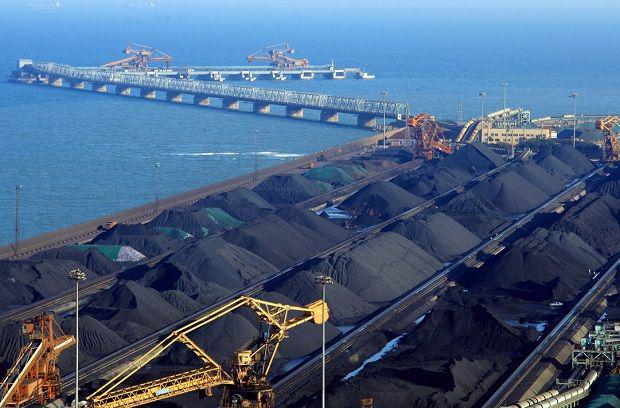
The newly released trade data and reports shows that US coal shipments to China, which gradually began their upward swing from nearly zero in October last year, climbed to 300,000 tonnes by February. In March, US exported more than 660,000 tonnes coal to China, doubling the amount in February. In April, China received one million tonnes of coal from the US.

According to Chinese authorities, the United States in May continued shipping 720,000 tonnes of coal to China, in order to support an upward trend and fill the gap left by Australian coal.

Almost at the same time, Australian coal exports to China have fallen to almost zero.

According to Bruce Haigh, former Australian diplomat and political commentator, “This is not the first time the US has prescribed a dud cheque. Joe Biden is unlikely to build bridges to Southeast Asia and China for the Australian side. If the Morrison government continues to blindly follow the US in 'dealing with' China, then the Australian side will taste the bitterness.”

The United State shows “solidarity” with Australia over the trade war, but Australia is paying the price for embracing it.

The Morrison administration continues to wait for support from across the ocean as they seem to be overlooking what the U.S. has actually done.

Image - View of piles of coal on a quay in rizhao,East China’s Shandong Province - Photo:cnsphoto


Times Magazine

With Nvidia’s second-best AI chips headed for China, the US shifts priorities from security to trade

This week, US President Donald Trump approved previously banned exports[1] of Nvidia’s powerful ...

Navman MiVue™ True 4K PRO Surround honest review

If you drive a car, you should have a dashcam. Need convincing? All I ask that you do is search fo...

Australia’s supercomputers are falling behind – and it’s hurting our ability to adapt to climate change

As Earth continues to warm, Australia faces some important decisions. For example, where shou...

Australia’s electric vehicle surge — EVs and hybrids hit record levels

Australians are increasingly embracing electric and hybrid cars, with 2025 shaping up as the str...

Tim Ayres on the AI rollout’s looming ‘bumps and glitches’

The federal government released its National AI Strategy[1] this week, confirming it has dropped...

Seven in Ten Australian Workers Say Employers Are Failing to Prepare Them for AI Future

As artificial intelligence (AI) accelerates across industries, a growing number of Australian work...

The Times Features

Surviving “the wet”: how local tourism and accommodation businesses can sustain cash flow in the off-season

Across northern Australia and many coastal regions, “the wet” is not just a weather pattern — it...

“Go west!” Is housing affordable for a single-income family — and where should they look?

For decades, “Go west!” has been shorthand advice for Australians priced out of Sydney and Melbo...

Housing in Canberra: is affordable housing now just a dream?

Canberra was once seen as an outlier in Australia’s housing story — a planned city with steady e...

What effect do residential short-term rentals have on lifestyle and the housing market in Brisbane?

Walk through inner-Brisbane suburbs like Fortitude Valley, New Farm, West End or Teneriffe and i...

The Sydney Harbour Bridge faces tolls once again — despite tolls being abolished years ago. Why?

For many Sydney motorists, the Harbour Bridge toll was meant to be history. The toll booths cam...

The Victorian Paradox: how Labor keeps winning elections even when it feels “unpopular”

If you spend any time in a Melbourne café, a tradie ute yard, a Facebook comments section, or th...

I’m heading overseas. Do I really need travel vaccines?

Australia is in its busiest month[1] for short-term overseas travel. And there are so many thi...

Mint Payments partners with Zip Co to add flexible payment options for travel merchants

Mint Payments, Australia's leading travel payments specialist, today announced a partnership with ...

When Holiday Small Talk Hurts Inclusion at Work

Dr. Tatiana Andreeva, Associate Professor in Management and Organisational Behaviour, Maynooth U...