If Australia is serious about fixing the culture at parliament, this is the code of conduct we need
- Written by: Blair Williams, Research Fellow, Global Institute for Women's Leadership (GIWL), Australian National University
Australia has been rocked by serious allegations of sexual assault and harassment that have poured out of parliament house this year.
In February, former Liberal staffer Brittany Higgins revealed[1] a toxic workplace culture for political staffers when she spoke about her own alleged assault. As others have come forward with their stories, we have witnessed a reckoning[2] about sexism and misogyny in our political culture.
In response, the Morrison government initiated a range of reviews. The Foster review[3] into serious incidents at parliament was finished in June. This week, the government accepted[4] all ten recommendations — including an independent complaints process. However, this will not be enough make parliament safe.
Read more: After Brittany Higgins: will the Foster review prevent another 'serious incident' at parliament?[5]
Attention now needs to shift to the work of sex discrimination commissioner Kate Jenkins, who is conducting an independent review[6] into parliament’s workplace culture. Submissions for her landmark review close on Saturday.
Experts and MPs come together to find solutions
Earlier this month, with colleagues from the ANU’s Global Institute for Women’s Leadership, I hosted a summit to develop a model code of conduct to make parliament a safer and more inclusive workplace.
We brought together former and current politicians, political staffers, national and international academic experts, and key stakeholders (such as the Community and Public Sector Union and YWCA[7]) to consider how we can address bullying, intimidation, and harassment within the halls of government.
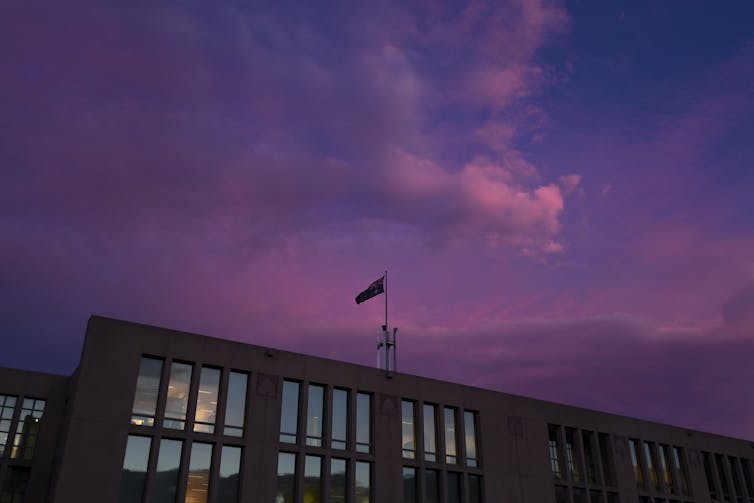 The Jenkins review is due to hand in its final report to the government in November.
Lukas Coch/AAP
The Jenkins review is due to hand in its final report to the government in November.
Lukas Coch/AAP
Academics offered a scholarly perspective on the impact of gendered norms and culture as an obstacle to change, while staffers and politicians shared personal experiences of sexism, racism and bullying in their careers. This included former-Liberal cabinet minister Sharman Stone, ACT Liberal leader Elizabeth Lee, Labor MP Anne Aly, Greens senator Larissa Waters, and Independent MP Helen Haines. The range of MPs present made it clear how this issue crosses party lines.
Three main messages emerged from the discussion.
1. A code of conduct is necessary
The summit participants unanimously agreed a set of principles is necessary if we are to change the current state of workplace relations in parliament.
With this aim in mind, we have submitted a model code of conduct[8] to the Jenkins inquiry. Our proposal goes further than the Foster recommendations and provides clear guidelines on acceptable and unacceptable behaviour, and treatment of others. It also borrows elements from comparable documents in other countries, notably New Zealand[9] and the United Kingdom[10]. It includes seven clear commitments:
ensure parliament meets the highest standards of integrity, courtesy and mutual respect
make parliament a safe and inclusive workplace where diversity is valued
show bullying and harassment, including sexual harassment, are unacceptable
speak up about any unacceptable behaviour
act professionally towards others
participate in training on harassment prevention and office management
understand unacceptable behaviour will be dealt with seriously and independently with effective sanctions.
Read more: Now for some better news: 9 Australians fighting for gender equality and making a difference[11]
For the code to succeed, it must be binding and apply to all, including politicians, staffers, journalists, visitors, volunteers, interns and students. The implementation of the code and handling of complaints must be overseen by an independent body.
The independent complaint-handling authority must be able to investigate both current and historical allegations (the Foster review recommends the latter should remain the responsibility[12] of the Finance Department). The complaints process must be flexible, victim-focused and trauma-informed.
The code must be supported by training in its implementation as well as in harassment prevention, bullying, office management and workplace roles and responsibilities more generally. This training must be mandatory for all workers.
2. We need cultural change
An entrenched culture of sexism persists inside parliament house. In addition to adopting a code of conduct, we desperately need to change the broader cultural norms of Australian political life. As former prime minister Julia Gillard wrote in her 2014 memoir:
[since] politics at senior levels in our nation has almost always been the pursuit of men, the assumptions of politics have been defined around men’s lives not women’s.
Certain stereotypically masculine qualities[13], such as strength, authority, confrontation, aggression, and determination, are therefore prioritised and accepted in politics, These traits are often on full display during question time. As Stone noted in her speech[14] at the summit:
Question time is one of the worst reinforcers of the masculine, [foregrounding the] aggression, screaming, [and] yelling of men [with] women echoing … that behaviour because [it] is seen as a ‘strong’ performance. And it’ll be written up by the media as a strong performance.
Stone added such behaviour is not only a waste of time, it discourages women who aspire to enter politics.
Question time is also a window into what happens behind closed doors, exposing the kind of behaviour that is accepted within parliament. Combined with the rife power imbalances between politicians and staffers, such behaviour inevitably contributes to a culture of bullying and entitlement.
3. We need diversity
Our political culture also requires a greater recognition and inclusion of diversity.
Parliament is not just a “boys’ club”, it is a white boys’ club[15]. It has been built by and for powerful white men and encourages a sense of entitlement — to spaces, roles and even bodies — protected from any accountability.
During the summit, Lee spoke of experience as the first Korean Australian woman in Australian politics. She reflected on the lack of diversity in this history of “another white man after another white man.” From the Labor side, Aly pointed to the lack of diverse candidates in the 2019 federal election, noting we “specifically [need] more women of colour in politics”.
If we have a parliament that is representative of Australia, this would, in turn, broaden parliamentary culture and break entrenched power relations.
Our model code of conduct will aid in creating a safer workplace for all in parliament, but we also need widespread and permanent change to help transform a misogynistic political culture.
References
- ^ revealed (theconversation.com)
- ^ reckoning (theconversation.com)
- ^ Foster review (www.abc.net.au)
- ^ accepted (www.abc.net.au)
- ^ After Brittany Higgins: will the Foster review prevent another 'serious incident' at parliament? (theconversation.com)
- ^ independent review (humanrights.gov.au)
- ^ YWCA (www.ywca.org.au)
- ^ model code of conduct (giwl.anu.edu.au)
- ^ New Zealand (www.scribd.com)
- ^ United Kingdom (www.parliament.uk)
- ^ Now for some better news: 9 Australians fighting for gender equality and making a difference (theconversation.com)
- ^ remain the responsibility (www.abc.net.au)
- ^ stereotypically masculine qualities (www.tandfonline.com)
- ^ speech (www.youtube.com)
- ^ a white boys’ club (www.sbs.com.au)