Inflation: Why It Still Matters to Every Australian Household
- Written by: The Times

For many Australians, inflation feels like a story that has been running for years. Yet despite earlier progress, it remains above the Reserve Bank of Australia's (RBA) preferred range, meaning the fight against rising prices is not yet over.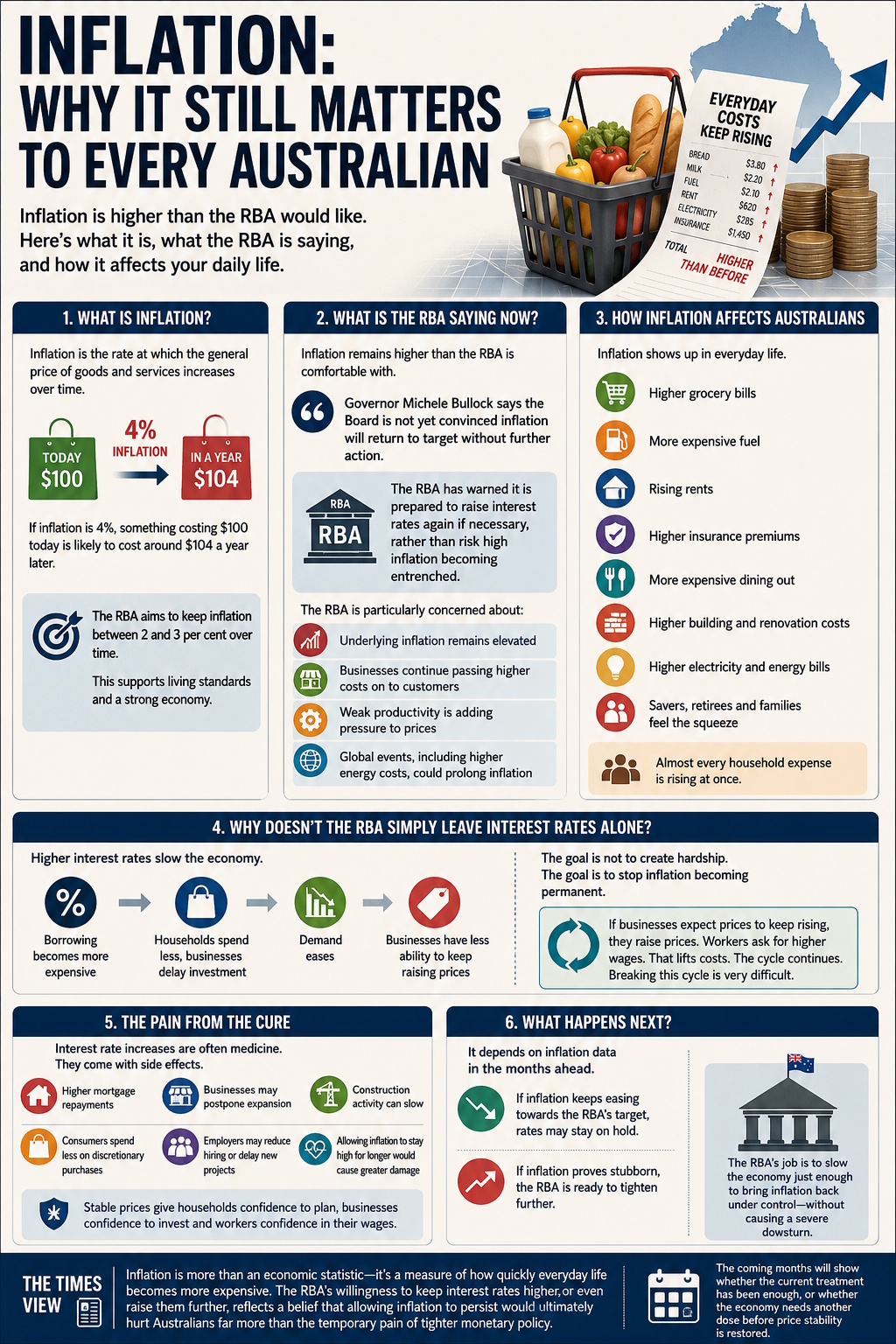
That has real consequences. It affects mortgage repayments, rents, supermarket bills, business costs and family budgets. While inflation is often discussed in economic language, its effects are experienced every day at the checkout, at the petrol station and when the latest electricity bill arrives.
What is inflation?
Inflation is the rate at which the general price of goods and services increases over time.
If inflation is running at 4 per cent, something costing $100 today is likely to cost around $104 a year later. The challenge is not simply that prices rise—it is that wages often struggle to keep pace, reducing purchasing power.
The RBA aims to keep inflation between 2 and 3 per cent over time. That level is generally considered low enough to preserve living standards while allowing the economy to continue growing.
What is the RBA saying now?
The Reserve Bank has made it clear that inflation remains higher than it is comfortable with.
Governor Michele Bullock recently said the Board is not yet convinced inflation will return to target without further action. The Bank has warned it is prepared to raise interest rates again if necessary, rather than risk high inflation becoming entrenched throughout the economy.
The RBA is particularly concerned that:
- Underlying inflation remains elevated;
- Businesses continue passing higher costs on to customers;
- Weak productivity is adding pressure to prices;
- Global events, including higher energy costs, could prolong inflation.
How inflation affects Australians
Inflation rarely arrives dramatically. Instead, it slowly changes everyday life.
Families notice grocery bills creeping higher.
Motorists pay more for fuel.
Insurance premiums rise.
Restaurant meals become more expensive.
Builders pay more for materials.
Businesses face increasing wage, transport and energy costs, often leaving little choice but to lift prices themselves.
Those without mortgages are affected just as much. Renters often face higher rents as landlords experience higher financing costs. Retirees find their savings buy less. Young families discover that almost every household expense is rising at once.
Why doesn't the RBA simply leave interest rates alone?
This is the difficult balance.
Higher interest rates deliberately slow the economy.
When borrowing becomes more expensive, households spend less, businesses delay investment and demand eases. As spending slows, businesses have less ability to continue increasing prices.
The objective is not to create hardship.
The objective is to prevent inflation becoming permanent.
Economists sometimes describe inflation expectations as becoming "embedded". If businesses assume prices will continue rising rapidly, they increase prices. Workers seek larger wage rises to compensate. Those higher wages increase business costs, leading to further price increases.
That cycle can become very difficult to break.
The pain from the cure
Interest rate increases are often described as medicine.
Like many medicines, they come with side effects.
Mortgage holders experience higher repayments.
Businesses may postpone expansion.
Construction activity can slow.
Consumers spend less on discretionary purchases.
Some employers reduce hiring or delay new projects.
No central bank wants these outcomes.
However, allowing inflation to remain high for many years usually creates even greater economic damage. Stable prices give households confidence to plan, businesses confidence to invest and workers confidence that wage increases will retain their value over time.
The RBA's challenge is therefore to slow the economy just enough to bring inflation back under control—without causing a severe downturn.
Finding that balance is one of the most difficult tasks in economic management.
What happens next?
Much will depend on upcoming inflation data.
If price growth continues easing towards the RBA's target, interest rates may remain unchanged. However, if inflation proves stubborn, the Bank has made it clear that further tightening remains an option.
For Australian households, the message is straightforward: while inflation is no longer at the extreme levels seen several years ago, the battle has not yet been won.
The Times View
Inflation is more than an economic statistic—it is a measure of how quickly everyday life becomes more expensive. The RBA's willingness to keep interest rates higher, or even raise them further, reflects a belief that allowing inflation to persist would ultimately hurt Australians far more than the temporary pain of tighter monetary policy. The coming months will show whether the current treatment has been enough, or whether the economy needs another dose before price stability is restored.