When Democracy Is Questioned, Should the Media Look Away?
- Written by: The Times
Few responsibilities are more important in a democracy than maintaining public confidence in elections.
That confidence depends on many institutions working effectively, including electoral authorities, the courts, political leaders and a free, independent press.
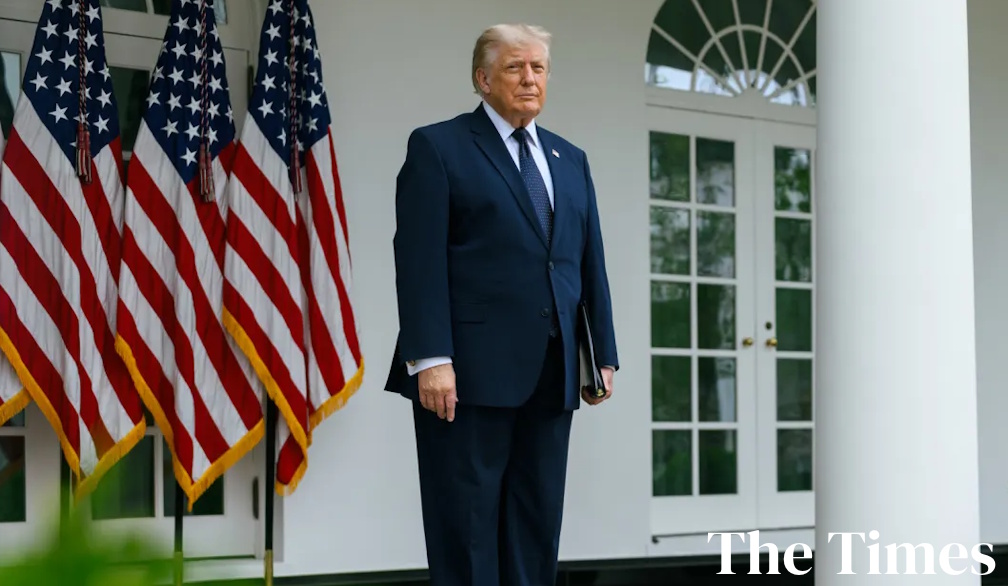
In recent days, US President Donald Trump has released documents and made public statements which he says raise serious questions about election integrity and foreign interference. The claims have generated renewed political debate in the United States and prompted calls for further investigation.
They have also highlighted another question: how should the news media respond when a president makes allegations that could affect public confidence in democratic institutions?
Different approaches to coverage
American news organisations did not respond uniformly.
Some broadcasters carried the President's remarks live or provided extensive real-time coverage.
Others chose to summarise the address, provide analysis afterwards or accompany coverage with immediate fact-checking and context.
Editors have defended those decisions by arguing that audiences should receive claims alongside relevant evidence and verification wherever possible.
Critics, however, contend that a presidential address concerning election integrity is inherently newsworthy and should be broadcast in full, allowing viewers to hear the statements directly before considering subsequent analysis.
Journalism's difficult balance
The issue illustrates one of journalism's enduring challenges.
The media has a duty to report matters of public importance.
It also has a responsibility to verify information, distinguish established facts from allegations and avoid misleading audiences.
Finding the balance between those obligations is rarely straightforward, particularly when political issues become highly polarised.
Reasonable people may differ on where that balance should be struck.
Trust in institutions
Public confidence is not built solely on the outcome of elections.
It is also influenced by whether citizens believe concerns can be raised, examined and resolved through transparent processes.
When allegations arise, regardless of who makes them, democratic institutions are often strengthened by credible investigations that either substantiate claims or explain why they are unsupported.
The same principle applies to journalism.
News organisations in the United States and Australia build trust by explaining why editorial decisions are made and by applying consistent standards, regardless of which political party or public figure is involved.
Beyond politics
The broader issue extends beyond one president or one election.
Every democracy faces the challenge of maintaining confidence in institutions while preserving vigorous public debate.
That includes ensuring electoral systems remain secure, encouraging transparency from governments and allowing journalists to investigate significant claims without fear or favour.
The health of a democracy is measured not only by how it conducts elections but also by how openly it examines questions about those elections.
The public's role
Citizens also have responsibilities.
In an age of instant communication and social media, information travels rapidly while verification often takes longer.
Readers and viewers are increasingly expected to distinguish between verified facts, official statements, opinion and speculation.
That places greater importance on careful reporting, critical thinking and access to reliable information.
The Times View
Democracy, whether in America or Australia, should never be taken for granted. Like the rule of law, an independent judiciary and a free press, it requires continual care and public confidence.
When serious questions are raised about election processes or democratic institutions, they deserve careful examination rather than automatic acceptance or automatic dismissal. Journalism serves the public best by following the evidence wherever it leads, testing competing claims fairly and reporting the results transparently.
Healthy democracies are strengthened not by avoiding difficult questions, but by confronting them openly, responsibly and with confidence in the institutions designed to uncover the truth.