What does One Nation actually believe in?
- Written by: Kurt Sengul, Research fellow, Far-Right Communication, Macquarie University
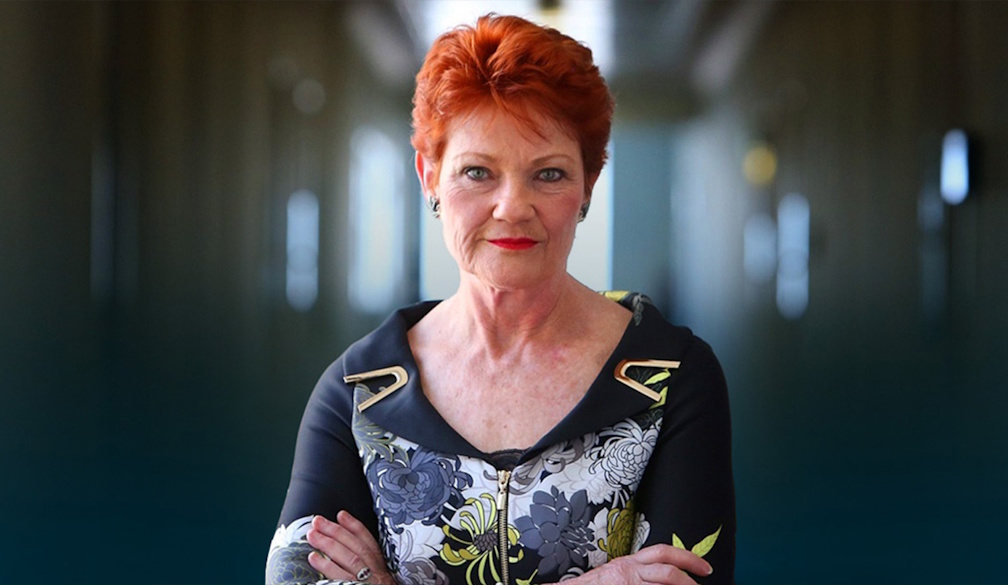
One Nation’s unprecedented surge in the polls raises important questions about whether a party built on grievance can present coherent policies to voters.
While a Pauline Hanson-led federal government remains highly unlikely[1], One Nation now sees itself as a viable alternative government[2].
So what does One Nation stand for? How would the party change the country, if given the chance?
Strong views, light on detail
Since launching in 1997, One Nation has been a party driven by grievance[3], defined more by what it opposes than by a comprehensive vision for the nation.
As with many far-right populist parties[4], One Nation has been accused of offering simple solutions to complex economic, social and cultural challenges.
The party has typically relied on its supporters prioritising the party’s values and principles[5] over a developed policy platform. The party believes its key strength is that Australians know where Pauline Hanson stands on the issues that matter[6] to them, such as immigration.
In contrast to what One Nation sees as out-of-touch political elites and unelected “woke” bureaucrats, the party prides itself on a “common sense[7]” approach to policymaking that recognises the needs of “ordinary Australians”.
However, if the party continues to ride high in the polls, it will face mounting pressure from voters, journalists and competing parties to do something it has long avoided – produce detailed policies to address Australia’s complex challenges.
New National Party leader Matt Canavan – whose party faces its greatest threat[8] from One Nation – has accused[9] Hanson of leading a party without substance:
Pauline [Hanson] has been in politics for more than double the time I’ve been, and I struggle to point to a single dam, single road, single hospital, that Pauline has delivered in Australia.
As we move closer to the next federal election, these lines of attack are likely to intensify.
Immigration
When assessing One Nation’s policy positions, immigration is the logical starting point. It is the party’s foundational issue[10], and frames its responses to many of the major challenges facing Australia, from cost of living pressures and housing affordability, to national security and social cohesion.
Like most far-right parties, One Nation argues most of Australia’s problems can be explained by excessive immigration.
One Nation’s current immigration policy calls for capping visas at 130,000 per year, a reduction of more than 570,000 people from current levels, which it argues would “ease pressure on housing, wages, and infrastructure”. (This is despite experts highlighting serious flaws in the policy[11]).
In addition to cutting net migration, the party has proposed an eight-year waiting period for citizenship and welfare, deporting 75,000 “illegal migrants”, withdrawing from the United Nations Refugee Convention, and “refusing entry to migrants from nations known to foster extremist ideologies that are incompatible with Australian values and way of life”.
Hanson has consistently called for a “Trump-style immigration ban[12]” since 2017, which overwhelmingly targets[13] Muslim-majority countries.
The Economy and Cost of Living
Economic policy is arguably where One Nation is weakest[14]. The party has faced accusations of flip-flops[15] and about-faces[16] on economic policy issues in the past. Even Hanson concedes[17] the party needs to strengthen its economic pitch.
One Nation’s solution to Australia’s housing affordability and rental crises is to reduce housing demand by cutting immigration. At the same time, it wants to increase supply by banning foreign investment. The party has also proposed allowing Australians to use their superannuation to purchase a home.
Last year, Hanson announced the party planned to slash $90 billion in government spending[18]. One Nation plans to do this through a range of cuts, including abolishing agencies such as the National Indigenous Australians Agency (NIAA) and the Therapeutic Goods Administration (TGA). It also wants to cut funding for arts and multicultural programs, as well as foreign aid, and withdraw from the UN and World Health Organization. It claims these moves will generate billions in savings.
One Nation has proposed levying royalties on gas producers, introducing income splitting for families to reduce their tax burden. It has also indicated support[19] for flat income taxes[20].
To address immediate cost of living pressures, the party proposes cutting the fuel excise by 50% for three years, and immediately slashing electricity bills by 20%. However, as with most of One Nation’s policy proposals, there is no detail on how this would be achieved or what it would cost.
First Nations, climate change, education and health
Arguably, the party’s most consistent policy positions have been in areas affecting First Nations people. Hanson and One Nation have persistently opposed agencies and measures aimed at addressing the systematic inequalities faced by Aboriginal and Torres Strait Islander people. These include native title, the Voice to Parliament, and the Aboriginal and Torres Strait Islander Commission (ASTIC) and the NIAA.
They are staunch critics of Australia’s climate change policies and renewable energy transition. The party has called for Australia to withdraw from the UN Paris Agreement, reverse its commitment to achieving net zero carbon emissions by 2050, build more coal fired power stations and embrace nuclear energy. It has repeatedly challenged the scientific evidence supporting human-induced climate change, boasting[21] that One Nation “are the only political party to question climate science”.
One Nation is especially light on education and health policy. On education, the party is primarily concerned with ending what it calls “Western, white, gender, guilt shaming” and the “indoctrination of students” classrooms.
Key proposals on health include reducing the gestational limit for abortions, reviewing access to COVID-era medicines on the Pharmaceutical Benefits Scheme, and bolstering regional medical services by paying HECS-HELP loans of new doctors in full in exchange for working in regional communities. One Nation are opposed to vaccine mandates and are still pushing for a Royal Commission into the management of the pandemic by state and federal governments.
From grievance to governance
If One Nation wants to position itself as a serious force, a key challenge will be putting together coherent and substantive suite of policy proposals to take to voters. This is critical to shifting from a minor party of grievance to a mainstream political party[22] and, as some have speculated[23], becoming the party of opposition across state and federal parliaments.
Should it manage to translate its polling spike into seats[24], One Nation will have an unprecedented opportunity to shape the state and national legislative agenda.
However, without policy details, One Nation risks falling foul of its supporters with on-the-fly decisions, as right-wing populist party Reform UK has recently experienced[25].
References
- ^ remains highly unlikely (theconversation.com)
- ^ a viable alternative government (www.theguardian.com)
- ^ driven by grievance (theconversation.com)
- ^ As with many far-right populist parties (link.springer.com)
- ^ party’s values and principles (www.jbe-platform.com)
- ^ stands on the issues that matter (www.9news.com.au)
- ^ common sense (www.skynews.com.au)
- ^ greatest threat (antonygreen.com.au)
- ^ accused (www.afr.com)
- ^ party’s foundational issue (www.tandfonline.com)
- ^ highlighting serious flaws in the policy (independentaustralia.net)
- ^ Trump-style immigration ban (www.sbs.com.au)
- ^ overwhelmingly targets (theconversation.com)
- ^ weakest (www.theaustralian.com.au)
- ^ flip-flops (www.9news.com.au)
- ^ about-faces (www.news.com.au)
- ^ concedes (www.theaustralian.com.au)
- ^ slash $90 billion in government spending (www.abc.net.au)
- ^ support (www.aph.gov.au)
- ^ flat income taxes (www.theaustralian.com.au)
- ^ boasting (www.onenation.org.au)
- ^ shifting from a minor party of grievance to a mainstream political party (www.taylorfrancis.com)
- ^ as some have speculated (www.skynews.com.au)
- ^ translate its polling spike into seats (theconversation.com)
- ^ has recently experienced (spectator.com)
Read more https://theconversation.com/what-does-one-nation-actually-believe-in-278406