how climate change is affecting our homes – and our health
- Written by: Ang Li, ARC DECRA and Senior Research Fellow, NHMRC Centre of Research Excellence in Healthy Housing, Melbourne School of Population and Global Health, The University of Melbourne
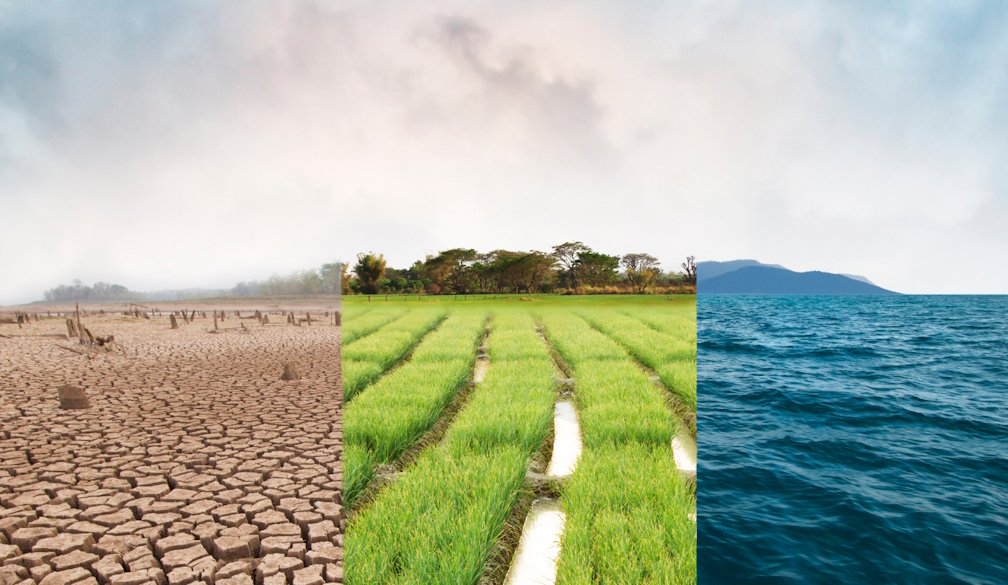
This year, ten days of extreme heat in Europe killed roughly 2,300 people[1], severe flooding on the New South Wales coast left more than 48,000[2] stranded, and wildfires in Los Angeles destroyed at least 16,000 homes and other buildings[3].
Events such as these signal what climate scientists have long warned: climate-related extremes are becoming more frequent and intense[4].
Poor housing can leave us more vulnerable to the effects of climate change[5]. So in today’s warming world, it’s increasingly important our homes and our housing system are climate resilient. This means they must protect us from heatwaves, floods and bushfires, and keep out air pollutants. And the housing system must function to provide affordable and secure housing.
Location is important too. Australia’s first National Climate Risk Assessment[6], released this week, estimates 8.7% of residential buildings are in very high-risk areas (prone to hazards). This proportion is projected to increase to 13.5% by 2090 in a scenario with a high global warming level.
Housing and health are inextricably linked. In a new paper[7] published in the Lancet Public Health, my colleagues and I identify several ways climate change affects our homes, and in turn, our health.
On a basic level, housing shields us from the elements. But when we look at the bigger picture, resilient housing and housing systems have a key role to play in helping us face the challenges of climate change.
How does climate change affect our homes and our health?
Climate change can lead to deterioration in the indoor conditions[8] in our homes.
For example, extreme temperatures can compromise air quality by making building materials more likely to degrade and generate pollutants. Particulate matter and other hazardous air pollutants from bushfire smoke[9] can infiltrate indoor environments. Both of these processes can contribute to poor indoor air quality. This is not to mention that extreme heat outside can lead to unbearable temperatures indoors.
Meanwhile, floods, storms and cyclones can cause structural and water damage to homes. This can expose occupants to toxins[10], for example from contaminated water, and increase the risk of allergic reactions, respiratory problems, and infectious diseases (such as water-borne and mosquito-borne diseases).
Read more: Eradicating mould would save millions in health-care costs: how our homes affect our health[11]
Climate change and housing security
The risks associated with climate change can also influence housing security and affordability.
Both housing insecurity[12] and unaffordability[13] are significant predictors of poor mental health and wellbeing, and both are already significant problems independent of climate change.
But a changing climate exacerbates these problems. Equally, the housing crisis leaves us more vulnerable to climate change.
Climate-related disasters put a strain on housing costs and general cost-of-living pressures. Residents may need to pay for maintenance and repairs alongside their mortgages and rental payments. Meanwhile, increasing extreme weather events push insurance premiums[14] higher. All this puts pressure on housing affordability.
Extreme temperatures also increase the risk of energy poverty[15]. Not being able to adequately heat[16] or cool[17] a home can negatively affect both physical and mental health for its occupants.
What’s more, climate-related disasters can drive forced relocation[18], with flow-on effects to health and wellbeing through disruption to family life, loss of income, gender-based violence, social disconnection, and reduced access to services.
Notably, the effects of climate change reduce the supply of affordable housing, especially affordable rentals[19], which are more likely to be damaged or lost from hazards, for example due to lower structural quality. Lower-income renters as a result find it harder to compete for the remaining stock.
There are also other examples[20] showing the effects of climate change on housing are inequitable, with the consequences flowing disproportionately to less advantaged groups.
When areas with low climate risk become more desirable, this can drive up housing and other costs in an area. Climate “gentrification[21]” can displace low-income households to higher risk and less protected areas. We’ve seen this happen in countries including the United States and Denmark.
What does climate-resilient housing look like?
Housing needs to protect people from the growing risks posed by climate change. In a physical sense, this means it must be robust enough to bear more intense weather conditions, be energy efficient, and have good thermal performance that allows for both ventilation and climate control.
To achieve this, climate-resilient housing should include features such as:
- well-constructed foundations, walls and roofs
- ventilation and insulation
- energy-efficient cooling and heating
- exterior shading and roof reflectivity
- building materials that are fire- and heat-resistant.
Building codes need to be cognisant of the changing climate, while existing housing may need to be upgraded.
We’ve seen some signs of progress[22]. For example, updates[23] to the National Construction Code in recent years have accounted for the increasing impact of climate change, by raising energy efficiency and thermal performance standards, among other measures.
There is also a need for stronger tenant protection policies. Rental housing is disproportionately of poor quality, yet it houses a large portion of the more vulnerable people[24] in the population. Minimum standards for rental housing must be climate resilient.
But housing people well isn’t just a question of the physical construction of homes.
Climate-resilient housing should be affordable, secure and provide residents the chance to access opportunities for work, education and social connection that sustain wellbeing.
So much public discussion has focused on the need to meet housing supply targets, but we can’t forget that people need to be housed well to flourish.
This article is part of a series, Healthy Homes[25].
References
- ^ roughly 2,300 people (edition.cnn.com)
- ^ more than 48,000 (www.smh.com.au)
- ^ at least 16,000 homes and other buildings (abcnews.go.com)
- ^ more frequent and intense (wmo.int)
- ^ effects of climate change (doi.org)
- ^ National Climate Risk Assessment (www.acs.gov.au)
- ^ new paper (doi.org)
- ^ indoor conditions (doi.org)
- ^ bushfire smoke (www.who.int)
- ^ expose occupants to toxins (doi.org)
- ^ Eradicating mould would save millions in health-care costs: how our homes affect our health (theconversation.com)
- ^ insecurity (doi.org)
- ^ unaffordability (doi.org)
- ^ insurance premiums (www.abc.net.au)
- ^ energy poverty (doi.org)
- ^ heat (doi.org)
- ^ cool (www.who.int)
- ^ forced relocation (doi.org)
- ^ affordable rentals (www.jstor.org)
- ^ examples (iopscience.iop.org)
- ^ gentrification (doi.org)
- ^ some signs of progress (www.dcceew.gov.au)
- ^ updates (www.health.gov.au)
- ^ the more vulnerable people (doi.org)
- ^ Healthy Homes (theconversation.com)