How can you keep kids off screens during the winter holidays?
- Written by: Victoria Minson, Senior Lecturer in Early Childhood Education, Australian Catholic University
The winter school holidays can be a tricky time for families. Parents are often juggling work and chilly conditions make it easy for kids to end up on the couch with multiple devices.
What other activities can you try? And how can you encourage the kids to move without it seeming like a massive chore or a punishment for everyone?
Here are some ideas for younger and older primary school children.
We know kids aren’t active enough
Many children aren’t as active as they need to be. Australian kids scored a D- on a 2022 report card[1] on physical activity. Less than a quarter of children and young people met the guidelines of 60 minutes of moderate to vigorous physical activity per day[2].
Meanwhile, we know excessive screen use[3] is one of the top health concerns Australian parents have about their children.
What can you do for 5 to 8-year-olds?
In his 1560 painting Children’s Games[4], Pieter Bruegel depicts more than 80 of childhood games and play outside. This includes playing with balls, swinging, climbing a tree and imaginary games.
Many of these ideas still work today. So just like the children in Bruegel’s picture, embrace the outdoors. Remember it’s OK to get a bit wet or a bit muddy (even though, yes, this does mean more washing).
Think about going on an adventure[5] to the city, cafe, library, or museum or simply finding local puddles to splash in. A change of scenery can do wonders for cabin fever.
Trips to the park or other nearby nature spots are also important. Research shows playing in green spaces improves children’s mental and emotional wellbeing[6].
Need more toys?
If you feel your toy cupboard is looking overly familiar, try a local Toy Library[7] to borrow puzzles, board games and activities. Alternatively, arrange a toy swap with a trusted neighbour or friend.
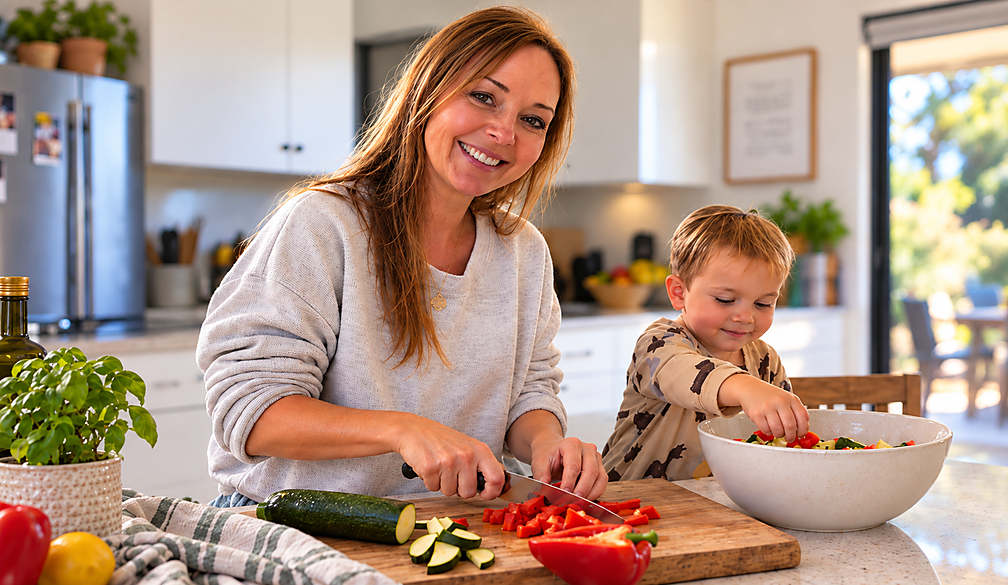
Don’t underestimate the joy and novelty in doing the basic or everyday tasks[8] but with more time, over the holidays. Cooking, baking, sending cards, writing letters and reading a book together are all excellent ways to connect and build memories.
You could also ask the kids to go and make an art exhibition or practise for a home dance or music concert while you make a cup or tea.
What about older primary kids?
Older children love to create[9], work together and connect with their peers.
So you could encourage your child or children to channel popular YouTubers and gamers by creating physical challenges at home, for example: a home holiday Olympics, safe Ninja-style circuit or obstacle course.
Or you could turn everyday chores into “missions” that earn rewards like having their favourite meal or a shopping trip.
Keep moving
You could break up sitting time by making TikTok style dances or doing physically challenges (how many star jumps can you do in a minute?) as often as possible[10].
If you have wearable tech, such as smart watches, you can track time spent being active. Set up a friendly competition for steps while playing with pets, cleaning up or dancing around the house.
A 2022 Australian study[11] suggests the “break up your sitting” approach may result in children being more active than a simple “move more” message.
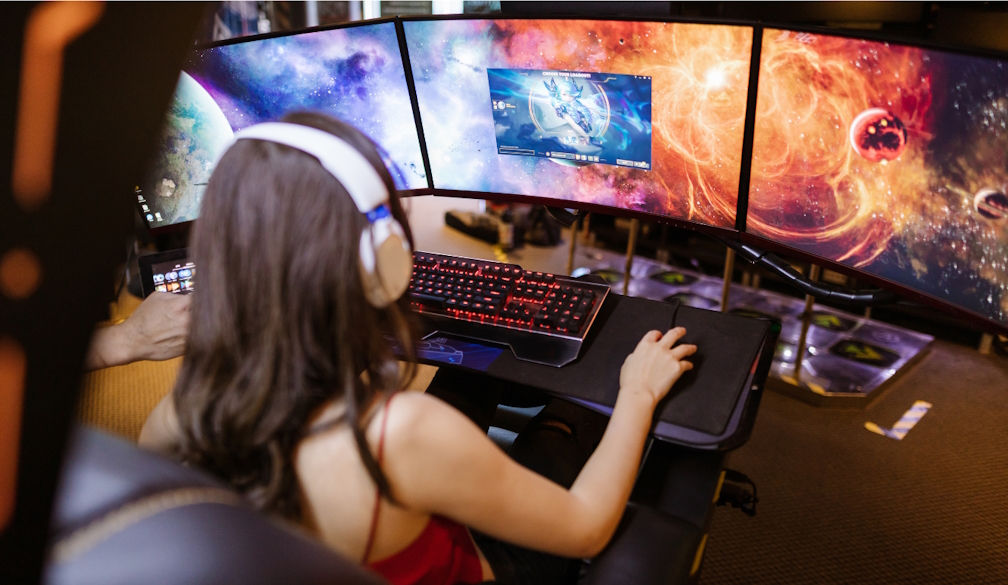
Also think about screen time that gets kids moving – such as sports-based games. Research[12] shows the energy expended during active gaming is equivalent to a brisk walk. Not all screen time has to be sedentary.
Try a whole day ‘unplugged’
You could try a whole day without devices – this shows children it is possible!
Consider giving the kids more decision-making powers on these days: they could pick (and hopefully) make their meals, have a friend over, decide what games to play or what art and craft to make.
The winter holidays are a good time to set new active habits that won’t only help now, but will set the tone for the spring and longer summer breaks ahead.
References
- ^ 2022 report card (pubmed.ncbi.nlm.nih.gov)
- ^ 60 minutes of moderate to vigorous physical activity per day (aus01.safelinks.protection.outlook.com)
- ^ excessive screen use (blogs.rch.org.au)
- ^ Children’s Games (www.dailyartmagazine.com)
- ^ adventure (www.vichealth.vic.gov.au)
- ^ mental and emotional wellbeing (www.unicef.org)
- ^ Toy Library (www.toylibraries.org.au)
- ^ basic or everyday tasks (www.parentline.org.au)
- ^ love to create (pmc.ncbi.nlm.nih.gov)
- ^ as often as possible (www.health.gov.au)
- ^ study (aus01.safelinks.protection.outlook.com)
- ^ Research (aus01.safelinks.protection.outlook.com)
Read more https://theconversation.com/how-can-you-keep-kids-off-screens-during-the-winter-holidays-260577