The fiscal update is no Christmas present for the government – but signs of a slow recovery are there
- Written by: Stephen Hickson, Economics Lecturer and Director Business Taught Masters Programme, University of Canterbury
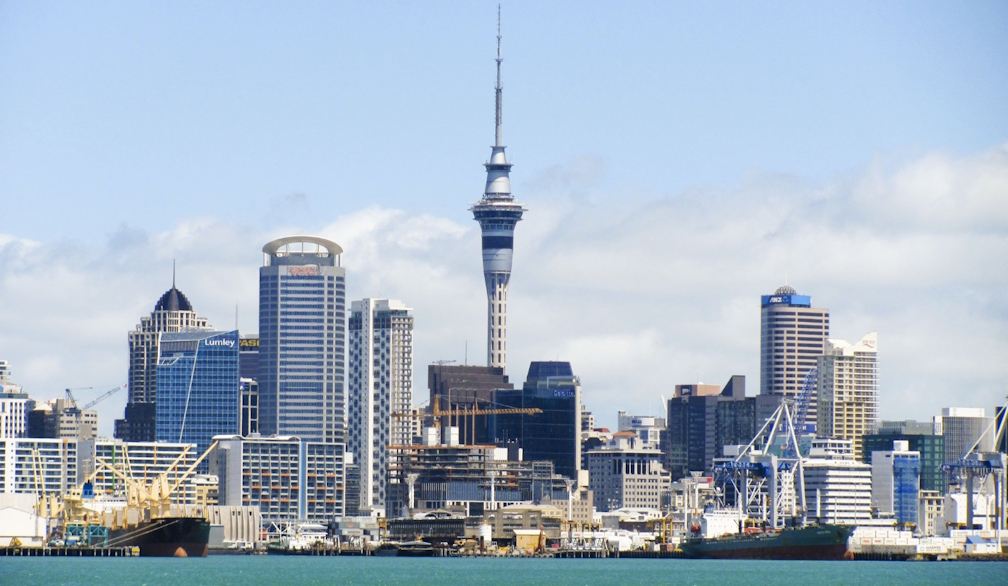
After a slow economic year, many New Zealanders are eyeing 2025 with uncertainty but also a degree cautious optimism[1]. Interest rates are dropping and unemployment rates remain below expectations.
However, Treasury’s Half Year Economic and Fiscal Update[2] revealed a sluggish economy and weaker tax take than was expected. Government spending was forecast to also increase for the year ending June 2025.
This means there will be a further delay till a return to budget surplus, and an increase in borrowing. Treasury made particular mention of New Zealand’s sluggish productivity growth holding back recovery and income increases.
Factors such as high but declining inflation[3], tightening government spending[4] and rising unemployment[5] have been part of the economic story in 2024 – and they will likely continue to play a role in 2025.
But global politics will also be an important influence, with the return of Donald Trump as US president, as well as a continuing crisis in the Middle East. Three main factors will determine what happens next year.
Government spending
Government spending over the past five years has increased significantly, from $110 billion in 2018 to $156 billion in 2023 (up from a forecast $141 billion).
Treasury’s half-year update showed higher core crown expenses, forecast to grow from $139 billion in the year ending June, to $162.9 billion in the year to June 2025.
But during the 2023 election campaign, National said it would reduce spending by more than $3 billion over four years[6].
In June, Finance Minister Nicola Willis said she wanted to cut public service spending annually by $1.5 billion to meet National’s campaign promise to reduce “back-office expenditure” across 24 public agencies.
Government agencies were required to identify annual savings of between 6% and 7%[7]. As a result, there have been 865 redundancies in the public sector[8], and 1,150 vacancies have been closed.
This slowdown in government spending is going to continue to have a dampening effect on the economy. Some economists have argued the government’s focus on slashing the budget deficit and reducing public debt has worsened the impact of the stagnant economy[9] on households and businesses.
But ultimately governments need to balance their books either by reducing spending or increasing taxes – something New Zealanders will have differing views on.
But the government has also adjusted tax rates[10]. Households benefited by $60 per fortnight on average[11] from the changes.
The Reserve Bank and interest rates
The Reserve Bank was initially slow to respond to inflation – in fact, it had a hand in driving it by holding interest rates low for too long. But it has slowly got to grips with the problem this year.
The government helped by rewriting the Monetary Policy Committee Remit[13], which guides the Reserve Bank’s decision making on monetary policy and the official cash rate. The remit was restored to what it was before 2019, with a singular focus on inflation.
Having been unchanged from 1990 to 2019, the remit was then given a dual focus by including maximum sustainable employment as part of the target. In 2021 it was again changed to include consideration of house prices.
While the Reserve Bank might not openly say it, the latest return to a singular focus is likely to change its behaviour. Being solely focused on inflation will simplify its work.
Interest rates are also coming down. Both the Reserve Bank and the Treasury expect the economy to pick up as people feel the benefits of this drop. In particular, people paying relatively high mortgage rates will see payments decline, which will help with the cost of living.
Donald Trump and global uncertainty
We have yet to see the impact of Donald Trump’s return. He is not a globalist and tends to view trade and international interactions as a binary win-lose situation.
If he makes good on promises to raise tariffs across a broad range of goods from more than the countries already targeted, it could hurt local exporters[14].
The Middle East crisis, now including major uncertainty about the future of Syria, may affect New Zealand if it affects oil supplies or, more generally, if the Suez Canel is blocked.
But New Zealand is fortunate in being less reliant on oil than during the 1970s oil crisis and similar shocks are unlikely.
Looking up slowly
Overall, the signs for 2025 are more positive than negative.
The unemployment rate, while reaching 4.8%, has not risen as high as was initially forecast[15] by the Reserve Bank.
This is still relatively good, considering how slow the economy has been. In 2012, following the Global Financial Crisis, unemployment reached 6.7%. That rate now would see an additional 60,000 people unemployed.
So, there is room for cautious optimism as lower inflation improves household spending power, and lower interest rates help mortgage holders. The minimum wage will increase by 1.5%[16] to $23.50 from April 1, 2025. And starting from a relatively low level of unemployment has meant New Zealand has avoided a hard recession.
But challenges remain: the housing market, skilled labour availability, infrastructure and health system pressures will all demand attention – and investment – as the economy starts to improve.
References
- ^ cautious optimism (www.nzier.org.nz)
- ^ Half Year Economic and Fiscal Update (www.treasury.govt.nz)
- ^ inflation (www.rnz.co.nz)
- ^ government spending (www.nzherald.co.nz)
- ^ rising unemployment (www.rnz.co.nz)
- ^ reduce spending by more than $3 billion over four years (www.rnz.co.nz)
- ^ identify annual savings of between 6% and 7% (www.rnz.co.nz)
- ^ redundancies in the public sector (www.rnz.co.nz)
- ^ worsened the impact of the stagnant economy (www.rnz.co.nz)
- ^ adjusted tax rates (www.interest.co.nz)
- ^ $60 per fortnight on average (budget.govt.nz)
- ^ Hagen Hopkins/Getty Images (www.gettyimages.com.au)
- ^ Monetary Policy Committee Remit (www.rbnz.govt.nz)
- ^ hurt local exporters (theconversation.com)
- ^ not risen as high as was initially forecast (www.nzherald.co.nz)
- ^ minimum wage will increase by 1.5% (www.thepost.co.nz)