What would a second Trump presidency mean for the global economy?
- Written by: John Hawkins, Senior Lecturer, Canberra School of Politics, Economics and Society, University of Canberra
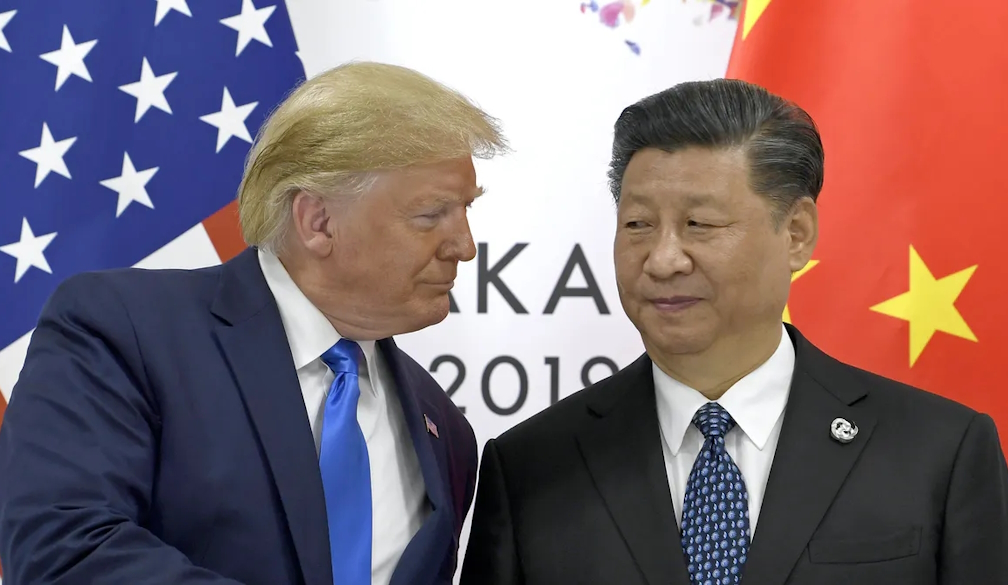
Donald Trump inherited a strong economy from President Obama and managed it poorly.
Real GDP grew more slowly under Trump than it had under any president since the second world war. He was the only president since then to preside over a fall in the number of workers with a job[1].
In 2016, the United States (US) economy was the world’s largest; by 2020 China’s was more than 10% bigger[2].
Trump’s economic policies
Would a second Trump presidency be any better? Hopefully, there will not be another pandemic for him to mismanage. But his policies suggest the economy would again do poorly.
Admittedly, it is hard to be sure about the policies Trump would adopt in a second term as his record of implementing his promises is so poor. Mexico never paid for a border wall[3]. Hillary Clinton was not locked up[4]. And I doubt many Americans were “tired of winning”[5].
The provision of policy detail has not been a defining feature of Trump’s rallies. There is a lot of detail in the 900 pages of Project 2025[6], produced by right-wing think tank the Heritage Foundation[7] and whose writers include many former Trump advisors.
But Trump has disowned it. On his social media site[8] he said both that “I disagree with some of the things they’re saying” and “I know nothing about Project 2025”.
Trump and Elon Musk
In businessman and investor Elon Musk’s rambling conversation with him on X, Trump had little to say about economics beyond not taxing tips. The moderators in the debate with Harris did try to elucidate more about his economic plans but it was a struggle.
To Musk, Trump claimed there is a “disaster with inflation”[9], which he falsely claimed was the worst in a century[10]. In his debate with Harris, he was even more inaccurate calling it “probably the worst in our nation’s history, we were at 21%”[11].
Actually inflation[12] had been higher in the 1970s than the peak of 8% under Biden. Inflation is now down to 2.5%[13].
He promised to end inflation quickly, but did not say how. He claimed a “drill, baby, drill”[14] policy would cut petrol prices, an odd priority when talking to an electric car maker. And this would take years to have any impact.
In the debate he claimed he would “cut taxes very substantially”[15]. Which taxes, he did not say, but his record suggests it would be taxes on the rich. Nor did he say what spending he would cut to fund the tax cuts, or whether he would just allow the government debt to expand further.
He has threatened the independence of the Federal Reserve[16], which could lead to interest rates being higher as expectations of inflation rise.
Policies or ‘concepts’?
Eight years after he campaigned for president criticising Obama’s health care arrangements[17], all Trump could offer as an alternative at the debate was “concepts of a plan”.
The clearest policy he has announced is more tariffs. He has proposed an across-the-board tariff of 10%, or perhaps 20%. For China they would be 60% or more.
The clear result would be American households[18] paying much more for basic goods. Many goods US households buy are imported and US manufacturers import raw materials and components for the goods they make and machinery to make them.
It is likely many countries on which Trump imposes these tariffs will retaliate, making it harder for US exporters.
IMF modelling estimated the impact of Trump’s previous trade policies was to cut US (and global) GDP by around half to 1%[19]. But now he is proposing much higher tariffs.
US and trade deficits
Trump is almost as fixated about the size of trade deficits as he is about the size of crowds at his rallies. But in his term as president, notwithstanding his tariffs, the US trade deficit was not narrowed[20].
Another way Trump would damage US trading interests is his impact on their “soft power”. He is very unpopular[21] in many countries. A Trump-led US would likely attract fewer tourists and international students.

A bizarre new Trump policy is to create a “national bitcoin stockpile”[23]. Following the lead of El Salvador’s self-described dictator Nayib Bukele[24], Trump would gamble taxpayers’ money on a hoard of speculative tokens which he had formerly called out as a “scam”[25].
As the world’s second largest economy, and a major customer of the rest of the world, a protectionist and smaller US economy would be a drag on global economic growth. There would be lower wages and fewer jobs globally as a result.
The big concern
But the major longer-term impact of a second Trump presidency on the global economy would come from his rejection of climate change.
He has called climate change a hoax[26]. Asked directly about climate action in the first 2024 debate, Trump just referred[27] irrelevantly to clean water. There was no mention of any action to reduce greenhouse gas emissions.
He would, again, withdraw[28] the US from the Paris climate accords[29]. This would be a major setback to attempts to moderate the increase in greenhouse gas emissions. As the second largest emitter[30], the US would directly contribute to a hotter planet and more deaths.
This is an edited version of a speech given by the author at the University of Canberra on the weekend.
References
- ^ number of workers with a job (fred.stlouisfed.org)
- ^ more than 10% bigger (www.imf.org)
- ^ border wall (edition.cnn.com)
- ^ locked up (edition.cnn.com)
- ^ “tired of winning” (edition.cnn.com)
- ^ Project 2025 (www.project2025.org)
- ^ Heritage Foundation (www.heritage.org)
- ^ social media site (www.bbc.com)
- ^ “disaster with inflation” (www.rev.com)
- ^ the worst in a century (www.rev.com)
- ^ “probably the worst in our nation’s history, we were at 21%” (abcnews.go.com)
- ^ inflation (fred.stlouisfed.org)
- ^ down to 2.5% (www.ft.com)
- ^ “drill, baby, drill” (www.rev.com)
- ^ “cut taxes very substantially” (abcnews.go.com)
- ^ independence of the Federal Reserve (www.rabobank.com)
- ^ Obama’s health care arrangements (www.britannica.com)
- ^ American households (www.jstor.org)
- ^ half to 1% (www.imf.org)
- ^ US trade deficit was not narrowed (fred.stlouisfed.org)
- ^ very unpopular (www.pewresearch.org)
- ^ Shutterstock/macondo (www.shutterstock.com)
- ^ “national bitcoin stockpile” (www.reuters.com)
- ^ Nayib Bukele (theconversation.com)
- ^ a “scam” (www.bbc.com)
- ^ called climate change a hoax (www.bbc.com)
- ^ referred (www.youtube.com)
- ^ withdraw (www.theguardian.com)
- ^ Paris climate accords (unfccc.int)
- ^ second largest emitter (edgar.jrc.ec.europa.eu)
Read more https://theconversation.com/what-would-a-second-trump-presidency-mean-for-the-global-economy-239069