Lily Brett’s trip to Poland with her Holocaust survivor father inspired her novel, Too Many Men. 25 years later, it’s a film: Treasure
- Written by: Tess Scholfield-Peters, Casual Academic, Faculty of Arts and Social Sciences, University of Technology Sydney
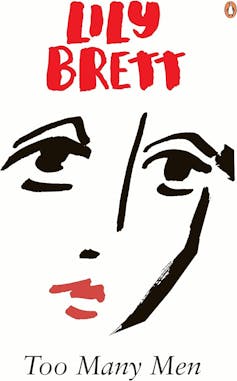
Lily Brett’s acclaimed novel Too Many Men[1] was published 25 years ago, in 1999. Next month, a feature film adaptation, Treasure[2], directed by Julia von Heinz and starring Lena Dunham and Stephen Fry, will screen in Australia.
The novel tells the story of a daughter of Holocaust survivors, 43-year-old Ruth Rothwax, and her 81-year-old father, Edek, who travel back to Edek’s native Poland – and to Auschwitz concentration camp (now a museum), which he survived. They’re searching for answers to family questions and secrets.

 Books like Too Many Men and films like Schindler’s List communicate the trauma of Holocaust survivors.
AAP
Too Many Men is a work of fiction, yet the parallels to Brett’s own life are difficult not to register while reading. It is clear the extreme trauma her parents experienced left indelible marks on Brett’s psyche.
Second-generation scholar Eva Hoffman dates the announcement[12] of the second generation’s existence to 1979, with the publication of Helen Epstein’s book Children of the Holocaust: Conversations with Sons and Daughters of Survivors[13]. The 1990s saw a proliferation of psychological and ethnographic research in this field, as it grew increasingly apparent that children of Holocaust survivors are impacted by their proximity to the traumatised in various ways.
In Brett’s case, her parents experienced nightmares multiple times a week. Her mother screamed in her sleep and talked about children with holes in their cheeks. Her protagonist Ruth’s late mother, Rooshka, told her the same stories.
The shadowy, unending grief of Brett’s parents is inescapable. Growing up, the ghosts of her murdered family members lived under the same roof as Brett, her parents and her sister (who has said[14] “the Holocaust was rarely talked about” in their home). Theirs was a life defined by absence and silence.
Absence is a common thread in scholarship by and about the second generation. It is common for survivors to remain silent about their experiences. If they do reveal anything, their recollections are often fragmented, patchy and – for children and grandchildren – painfully incomplete.
I experienced this myself when I asked my grandfather, Harry, about his experience during the Holocaust. Harry was silent about his experiences for many years, even to his children. The first time his partner, Lynn, heard about his experiences in detail was when he was interviewed in 1997 for the Visual History Foundation’s Survivors of the Shoah Project[15], an international effort to record the lives and Holocaust experiences of remaining survivors.
For Ruth:
Any questions about the past could unleash an unpredictable volatility in both her parents. There were no simple questions or simple answers about their pasts. All simplicity seemed to have been erased from their experience.
The past is a kind of abstract, shadowy thing. For the second and third generations, journeys back to physical, geographical place become part of the story, an antidote to this mystified history.
This narrative “return” could constitute a genre in itself, so pervasive is this need for children and grandchildren of survivors to find meaning through geographical place. Ruth and Edek return to Łódź, to 23 Kamedulska Street, where Edek’s family once lived pre-Holocaust. Brett writes:
23 Kamedulska Street wasn’t a shrine. It was just the site of a former life. It wasn’t a mausoleum. There was no one buried or interned here. This building was nothing more than a patchy amalgam of building materials. Nothing of those who had lived there were left. The markings on the walls and floors from fingers and feet were long gone. Rubbed out. There were no sounds from past lives. No smells. There was nothing.
For Ruth, as for many descendants of those murdered during the Holocaust, these sites of former life become memorial places, given that there are no graves for the deceased. It is an interesting cross-section of space, where history intervenes with the present. The discord between past and present permeates every page of Brett’s text, as does the tension between generations: between the child who is desperate to find meaning, and the survivor who would rather forget.
“If you stand still, Dad, you can feel the past,” she said. “You can feel the life.”“Don’t speak like that,” Edek said. “It will be no good for both of us.”
How can humans be capable of such things?
When Edek and Ruth visit Auschwitz, which, as Ruth notes, the Poles refer to as the Auschwitz Museum, not the Auschwitz death camp, she cannot seem to comprehend that in the present, she is removed from the atrocities that occurred there:
Ruth was disturbed by the absence. The absence of dirt, filth, stench, stink. The absence of cruelty. The absence of suffering. She’d expected to see the suffering in the air, on the ground, in the walls, on every fence.
My great-grandfather, Max, perished at Auschwitz too. When I was 21, I visited the museum. Similarly to Ruth, I was overwhelmed by the quiet of the place, and by the piles of human hair and children’s shoes exhibited in glass cases. Of course, the hordes of tourists and my unbearably melodramatic guide made the visit more akin to a tourist experience than a memorial of my great-grandfather’s final resting place.
Books like Too Many Men and films like Schindler’s List communicate the trauma of Holocaust survivors.
AAP
Too Many Men is a work of fiction, yet the parallels to Brett’s own life are difficult not to register while reading. It is clear the extreme trauma her parents experienced left indelible marks on Brett’s psyche.
Second-generation scholar Eva Hoffman dates the announcement[12] of the second generation’s existence to 1979, with the publication of Helen Epstein’s book Children of the Holocaust: Conversations with Sons and Daughters of Survivors[13]. The 1990s saw a proliferation of psychological and ethnographic research in this field, as it grew increasingly apparent that children of Holocaust survivors are impacted by their proximity to the traumatised in various ways.
In Brett’s case, her parents experienced nightmares multiple times a week. Her mother screamed in her sleep and talked about children with holes in their cheeks. Her protagonist Ruth’s late mother, Rooshka, told her the same stories.
The shadowy, unending grief of Brett’s parents is inescapable. Growing up, the ghosts of her murdered family members lived under the same roof as Brett, her parents and her sister (who has said[14] “the Holocaust was rarely talked about” in their home). Theirs was a life defined by absence and silence.
Absence is a common thread in scholarship by and about the second generation. It is common for survivors to remain silent about their experiences. If they do reveal anything, their recollections are often fragmented, patchy and – for children and grandchildren – painfully incomplete.
I experienced this myself when I asked my grandfather, Harry, about his experience during the Holocaust. Harry was silent about his experiences for many years, even to his children. The first time his partner, Lynn, heard about his experiences in detail was when he was interviewed in 1997 for the Visual History Foundation’s Survivors of the Shoah Project[15], an international effort to record the lives and Holocaust experiences of remaining survivors.
For Ruth:
Any questions about the past could unleash an unpredictable volatility in both her parents. There were no simple questions or simple answers about their pasts. All simplicity seemed to have been erased from their experience.
The past is a kind of abstract, shadowy thing. For the second and third generations, journeys back to physical, geographical place become part of the story, an antidote to this mystified history.
This narrative “return” could constitute a genre in itself, so pervasive is this need for children and grandchildren of survivors to find meaning through geographical place. Ruth and Edek return to Łódź, to 23 Kamedulska Street, where Edek’s family once lived pre-Holocaust. Brett writes:
23 Kamedulska Street wasn’t a shrine. It was just the site of a former life. It wasn’t a mausoleum. There was no one buried or interned here. This building was nothing more than a patchy amalgam of building materials. Nothing of those who had lived there were left. The markings on the walls and floors from fingers and feet were long gone. Rubbed out. There were no sounds from past lives. No smells. There was nothing.
For Ruth, as for many descendants of those murdered during the Holocaust, these sites of former life become memorial places, given that there are no graves for the deceased. It is an interesting cross-section of space, where history intervenes with the present. The discord between past and present permeates every page of Brett’s text, as does the tension between generations: between the child who is desperate to find meaning, and the survivor who would rather forget.
“If you stand still, Dad, you can feel the past,” she said. “You can feel the life.”“Don’t speak like that,” Edek said. “It will be no good for both of us.”
How can humans be capable of such things?
When Edek and Ruth visit Auschwitz, which, as Ruth notes, the Poles refer to as the Auschwitz Museum, not the Auschwitz death camp, she cannot seem to comprehend that in the present, she is removed from the atrocities that occurred there:
Ruth was disturbed by the absence. The absence of dirt, filth, stench, stink. The absence of cruelty. The absence of suffering. She’d expected to see the suffering in the air, on the ground, in the walls, on every fence.
My great-grandfather, Max, perished at Auschwitz too. When I was 21, I visited the museum. Similarly to Ruth, I was overwhelmed by the quiet of the place, and by the piles of human hair and children’s shoes exhibited in glass cases. Of course, the hordes of tourists and my unbearably melodramatic guide made the visit more akin to a tourist experience than a memorial of my great-grandfather’s final resting place.
 Auschwitz.
Pawel Sawicki/AAP
Popular Holocaust culture has surrounded us – at times to the point of saturation – since the very first instance of the televised trauma of survivors: the 1961 trial of Adolf Eichmann[16] in Jerusalem. Eichmann, as the journalism of Hannah Arendt[17] documents, was not, in actuality, an evil monster, though his crimes would suggest otherwise.
He was a man, as you would see on the street or in an office, psychologically sound according to those who examined him. He was a man who was absolutely dedicated to his government’s plight: just following the orders he was given, orders that gave him his life’s purpose. There is a poignant and enduring relevance of Arendt’s thesis about the banality of human evil, how such catastrophic and depraved acts are committed by people who most likely go home to their families and eat a nice meal afterwards.
Throughout Too Many Men, the voice of Auschwitz commandant Rudolf Höss materialises inside Ruth’s head. Höss attempts to rationalise his obscenities to Ruth, who grows progressively more infuriated.
Auschwitz.
Pawel Sawicki/AAP
Popular Holocaust culture has surrounded us – at times to the point of saturation – since the very first instance of the televised trauma of survivors: the 1961 trial of Adolf Eichmann[16] in Jerusalem. Eichmann, as the journalism of Hannah Arendt[17] documents, was not, in actuality, an evil monster, though his crimes would suggest otherwise.
He was a man, as you would see on the street or in an office, psychologically sound according to those who examined him. He was a man who was absolutely dedicated to his government’s plight: just following the orders he was given, orders that gave him his life’s purpose. There is a poignant and enduring relevance of Arendt’s thesis about the banality of human evil, how such catastrophic and depraved acts are committed by people who most likely go home to their families and eat a nice meal afterwards.
Throughout Too Many Men, the voice of Auschwitz commandant Rudolf Höss materialises inside Ruth’s head. Höss attempts to rationalise his obscenities to Ruth, who grows progressively more infuriated.
 Rudolf Höss speaks to Ruth in the novel.
Reading these passages, I was reminded of Jonathan Glazer’s 2023 film adaptation of Martin Amis’s novel, The Zone of Interest[18], which follows Höss’s domestic life. The film highlights that this ambitious family man, who lives in an idyllic home with his family next to Auschwitz camp, was not in fact an unimaginable, mythically evil figure.
I wonder if this was Brett’s thinking in including the Höss character in her own text. To remind the reader he was human; they were all humans. And yet, the question persists: how can humans be capable of such things?
When Too Many Men was released 25 years ago, it undoubtedly spoke to many and exemplified the lived experience of children of survivors, for whom reading the tribulations of Ruth and Edek Rothwax would have been familiar – and possibly cathartic.
Yet, I am always skeptical of the enduring function of Holocaust texts that seem to favour sentimentality and familiar tropes over more innovative and interesting ways to tell a story we all know very well.
Evaluating the enduring success of Too Many Men is difficult because, as is the case with all literature, it comes down to individual taste. While some passages I found moving, others I found too loaded with “shock” value Holocaust imagery – which, after 25 years, no longer shocks. We are exposed to humanity’s devastating inhumanity every day. When it comes to the relevance of Holocaust texts such as Too Many Men, I wonder what is left to learn, or left to feel.
My grandfather lived with his trauma all his life. For me his trauma was a story, detached from my own lived experience. These stories are precious and important to preserve; how we do so responsibly through art is a continuing – and crucial – challenge.
The film Treasure[19] will screen in Australia from July 18.
References^ Too Many Men (www.penguin.com.au)^ Treasure (www.palacecinemas.com.au)^ Kevin Brophy suggested (www.australianbookreview.com.au)^ You Gotta Have Balls (www.lilybrett.com)^ the grandchild of a Holocaust survivor (www.nla.gov.au)^ Auschwitz (encyclopedia.ushmm.org)^ Theresienstadt (encyclopedia.ushmm.org)^ Buchenwald (encyclopedia.ushmm.org)^ Schindler’s List (theconversation.com)^ Life is Beautiful (www.imdb.com)^ atrocities are being committed (theconversation.com)^ dates the announcement (www.hachettebookgroup.com)^ Children of the Holocaust: Conversations with Sons and Daughters of Survivors (www.penguin.com.au)^ who has said (www.dorisbrett.com)^ Survivors of the Shoah Project (sfi.usc.edu)^ trial of Adolf Eichmann (www.nytimes.com)^ the journalism of Hannah Arendt (www.penguin.com.au)^ The Zone of Interest (theconversation.com)^ Treasure (www.palacecinemas.com.au)
Rudolf Höss speaks to Ruth in the novel.
Reading these passages, I was reminded of Jonathan Glazer’s 2023 film adaptation of Martin Amis’s novel, The Zone of Interest[18], which follows Höss’s domestic life. The film highlights that this ambitious family man, who lives in an idyllic home with his family next to Auschwitz camp, was not in fact an unimaginable, mythically evil figure.
I wonder if this was Brett’s thinking in including the Höss character in her own text. To remind the reader he was human; they were all humans. And yet, the question persists: how can humans be capable of such things?
When Too Many Men was released 25 years ago, it undoubtedly spoke to many and exemplified the lived experience of children of survivors, for whom reading the tribulations of Ruth and Edek Rothwax would have been familiar – and possibly cathartic.
Yet, I am always skeptical of the enduring function of Holocaust texts that seem to favour sentimentality and familiar tropes over more innovative and interesting ways to tell a story we all know very well.
Evaluating the enduring success of Too Many Men is difficult because, as is the case with all literature, it comes down to individual taste. While some passages I found moving, others I found too loaded with “shock” value Holocaust imagery – which, after 25 years, no longer shocks. We are exposed to humanity’s devastating inhumanity every day. When it comes to the relevance of Holocaust texts such as Too Many Men, I wonder what is left to learn, or left to feel.
My grandfather lived with his trauma all his life. For me his trauma was a story, detached from my own lived experience. These stories are precious and important to preserve; how we do so responsibly through art is a continuing – and crucial – challenge.
The film Treasure[19] will screen in Australia from July 18.
References^ Too Many Men (www.penguin.com.au)^ Treasure (www.palacecinemas.com.au)^ Kevin Brophy suggested (www.australianbookreview.com.au)^ You Gotta Have Balls (www.lilybrett.com)^ the grandchild of a Holocaust survivor (www.nla.gov.au)^ Auschwitz (encyclopedia.ushmm.org)^ Theresienstadt (encyclopedia.ushmm.org)^ Buchenwald (encyclopedia.ushmm.org)^ Schindler’s List (theconversation.com)^ Life is Beautiful (www.imdb.com)^ atrocities are being committed (theconversation.com)^ dates the announcement (www.hachettebookgroup.com)^ Children of the Holocaust: Conversations with Sons and Daughters of Survivors (www.penguin.com.au)^ who has said (www.dorisbrett.com)^ Survivors of the Shoah Project (sfi.usc.edu)^ trial of Adolf Eichmann (www.nytimes.com)^ the journalism of Hannah Arendt (www.penguin.com.au)^ The Zone of Interest (theconversation.com)^ Treasure (www.palacecinemas.com.au)