The Jacqui Lambie Network is the latest victim of ‘cybersquatting’. It’s the tip of the iceberg of negative political ads online
- Written by: Andrew Hughes, Lecturer, Research School of Management, Australian National University
Firebrand senator Jacqui Lambie is furious. Amid the Tasmanian election campaign (in which she’s running candidates), her party, the Jacqui Lambie Network, has fallen victim to one of the many pitfalls in the world of online political advertising.
Her party’s website is lambienetwork.com.au. You might understand her anger, then, after finding out[1] the Tasmanian Liberal party created a website to campaign against her, called lambienetwork.com. It’s a blink-and-you’ll-miss-it difference.
This is a textbook example of what’s known as cybersquatting. It’s when internet domain names that are similar to existing trademarked material or the names of people or organisations are bought up by competitors to use against the original. In fact, the major parties have purchased a heap[2] of domain names.
As political parties desperately battle for voters’ attention in a world full of distractions and dwindling trust in government[3], cybersquatting is one of many online tools in the toolkit. But the toolkit is full of blunt instruments that may only be effective on a minority of people. The true damage is being done to the majority, who have less and less faith in politics and its institutions.
Read more: All governments are guilty of running political ads on the public purse. Here's how to stop it[4]
A crowded, manufactured landscape
In commercial marketing, there’s a focus on long-term brand building. In political marketing, there’s just one goal: winning.
With such high pressure, and little time to hit objectives, parties and candidates use highly emotive messaging and narratives to drive rapid attention and engagement, and hopefully convince people to vote for them.
With markets splintered into ever-smaller segments, based at times on very specific needs, social media[5] has helped move voters quickly and developed narratives around leaders’ personal brands.
Instagram was used successfully by former prime minister Scott Morrison with his Scomosas[6] and attempt at Bunnings DIY.
His successor, Anthony Albanese, has replicated that strategy, letting us get a glimpse of who he really is, even having a Twitter/X account for his dog Toto[7]. This is aimed at developing resonance and building up likeability for his brand.
Of course, as any royal watcher or user of social media can tell you, curated images are exactly that[8]: manufactured, for us. So we are trusting this method less and less. This will only get worse the longer voters are exposed to it.
Stories such as that in the 2022 federal election of Labor-aligned groups considering paying influencers[9] to post friendly content, doesn’t help either.
As a result, when we see content posted by an influencer, we’re now more likely to be sceptical. Do they really like this product, or are they just being paid to say they do?
‘Angertainment’ is highly effective
So it’s back to square one. Enter negativity, or “angertainment”.
Reality shows are full of it. One example is the villain edit[10], where certain contestants are framed to be the antagonist for the sake of drama. There’s also the cued music to make us feel this is the “season-defining moment”.
They do this for the same reasons politicians have done it for decades. It works. It gets our attention. We get engaged. We change our vote. Ratings of these shows don’t lie.
In the past, this was called “wedge politics”, as it wedged one group of voters against others. A party or candidate could then become that group’s champion, and hello election victory. Simple narrative construction.
Read more: We tracked election ad spending for 4,000 Facebook pages. Here's what they're posting about – and why cybersecurity is the bigger concern[11]
This was easy when competition for our attention was less fierce. John Howard’s 2001 election-opening “we decide[12]” statement about immigration was pure wedge politics.
The aim is still the same now, but in a competitive environment for our attention and retention, modern methods have allowed for new ways to reach the average voter. Having not seen them before, people are more susceptible to believing[13] them.
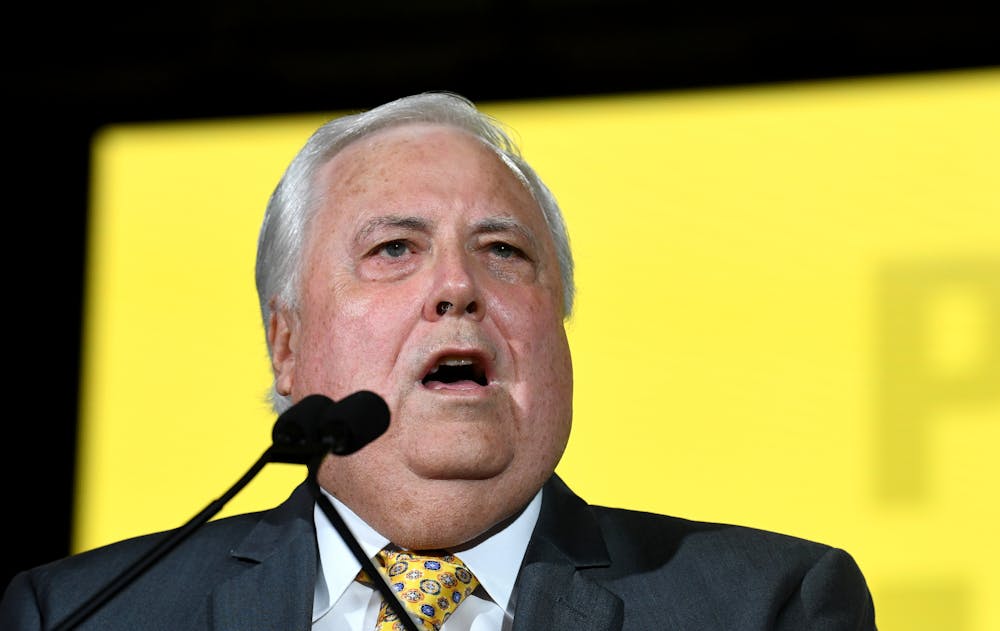
Clive Palmer has used spam text messages[14] over the years to grab some attention, although it hasn’t necessarily translated into electoral success.
A more inventive use of the internet to campaign was Pauline Hanson’s cartoon series[15]. The first three episodes racked up 750,000 views[16] in two weeks on YouTube.
Both Labor and Liberal have had a strong presence on Snapchat. In 2016, the Liberals were among the first to make a filter[17] on the app. Labor was the only major party[18] to use it during the 2022 federal election campaign.
These are all new ways of communicating a party’s key messages, including scare or smear campaigns.
Think “Mediscare”, so well done by Labor in 2016 via SMS, and then the revenge sequel of death taxes[19] in 2019 by the Coalition. They used Facebook groups very well.
Angertainment is now seen as being more likely to get the message across, and thereby victory, than anything else.
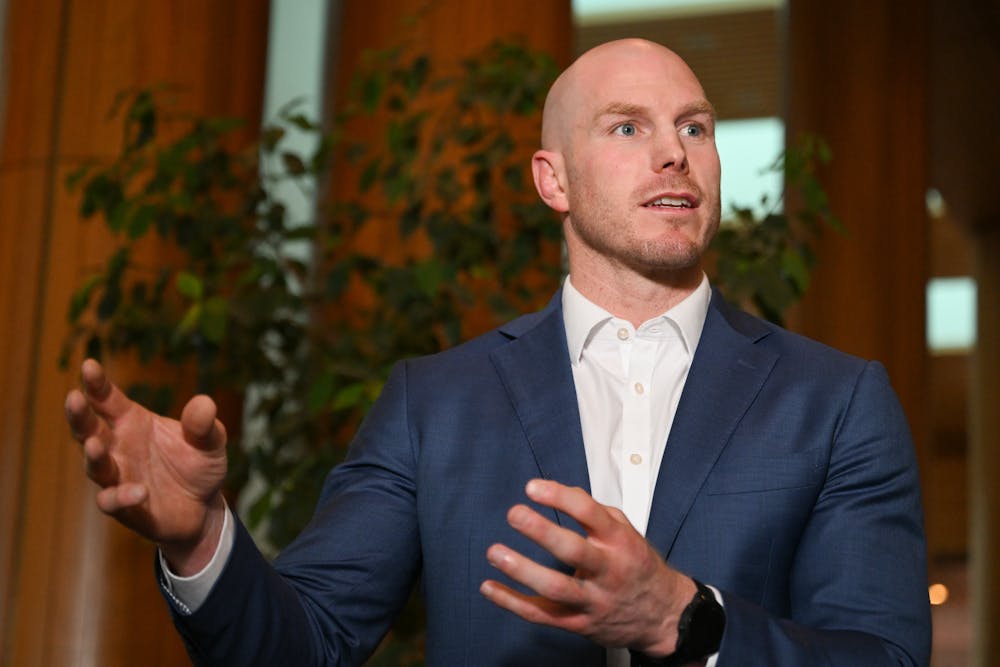 David Pocock battled disinformation during the 2022 federal election campaign.
Lukas Coch/AAP
David Pocock battled disinformation during the 2022 federal election campaign.
Lukas Coch/AAP
A significant aspect of these campaigns was disinformation, including the misrepresentation or impersonation of candidates. Senator David Pocock was a key target in the ACT in 2022, but successfully ran a challenge[20] through the Australian Electoral Commission.
But this is 2024, and two years is an aeon in social media. The Jacqui Lambie Network (JLN) website trick we saw this week is an old-school one. Unlike some of the other strategies, it’s not effective. It is, however, childish.
So why bother? The attacking party would be obvious to most, if not by the authorised name as required by electoral laws. This dilutes the effect and it likely reinforces the reasons to vote for the JLN.
But political parties do it to capitalise on those who don’t realise they’re receiving a message in bad faith. Even if it’s a minority, it’s someone. In a tight political climate, it might be enough to tip the scales in their favour.
The collateral damage, of course, is the spread of misinformation and public disillusionment with politics and elections.
Read more: Few restrictions, no spending limit, and almost no oversight: welcome to political advertising in Australia[21]
Can we stop this?
We can, easily.
Cybersquatting is in a grey area legally. There are gaps in the relevant legislation that make it very difficult for those affected to get websites taken down. They’re often managed by international organisations with laborious processes.
But the government can ban cyber hijacking or squatting of politicians or parties’ web addresses or social channels. It can restrict negative advertising, and bring in green ticks to verify truthful advertising.
Government can also ensure social media companies take more responsibility for content, and tolerate fewer excuses for poor behaviour. This isn’t restricting freedom of speech, only restricting disinformation. Some independents have already[22] introduced bills in parliament on this issue.
If it’s so easy, why hasn’t it been done? Because that requires political support. Considering politicians are the ones who benefit most from the existing framework, we don’t need a negative ad to tell us how unlikely they are to do anything about it anytime soon.
References
- ^ finding out (www.abc.net.au)
- ^ a heap (www.crikey.com.au)
- ^ dwindling trust in government (www.abc.net.au)
- ^ All governments are guilty of running political ads on the public purse. Here's how to stop it (theconversation.com)
- ^ social media (theconversation.com)
- ^ his Scomosas (www.sbs.com.au)
- ^ Twitter/X account for his dog Toto (twitter.com)
- ^ curated images are exactly that (theconversation.com)
- ^ considering paying influencers (www.abc.net.au)
- ^ the villain edit (www.girlmuseum.org)
- ^ We tracked election ad spending for 4,000 Facebook pages. Here's what they're posting about – and why cybersecurity is the bigger concern (theconversation.com)
- ^ we decide (theconversation.com)
- ^ more susceptible to believing (theconversation.com)
- ^ spam text messages (www.theguardian.com)
- ^ cartoon series (www.onenation.org.au)
- ^ 750,000 views (www.smh.com.au)
- ^ make a filter (www.marketingmag.com.au)
- ^ only major party (www.smh.com.au)
- ^ death taxes (www.theguardian.com)
- ^ successfully ran a challenge (www.abc.net.au)
- ^ Few restrictions, no spending limit, and almost no oversight: welcome to political advertising in Australia (theconversation.com)
- ^ have already (mumbrella.com.au)