


The music industry still constrains mothers' careers
- Written by: Catherine Strong, Associate professor, Music Industry, RMIT University

Women participate in Australia’s music industries – as musicians and workers – at rates well below men[1]. On average, women receive less airplay on Australian radio, less pay and less representation on music boards, awards and line-ups than their male counterparts[2].
Understanding why women might leave their music careers and what could bring them back is an important part of solving the puzzle to increase their participation.
We recently conducted a study[3] aimed at developing strategies to help women and gender-non-conforming people in Victoria return to music work after a career break.
One key finding – unsurprisingly – was that caring responsibilities and parenthood were common reasons for women taking a break. These responsibilities then create barriers to re-establishing careers and career progression in music.
This, of course, is not unique to music work[4]. Women take on the majority of caring work[5] for children. It means they take longer away from their careers, and are more likely to return on a part-time basis. This leaves them at a disadvantage compared to men who have had no career interruptions.
But there are particular circumstances in the music industry that create complications and problems specific to this field, compounding the disadvantage new parents face in any workplace and compounding the issues of insecure work in music.
Read more: Returning to work after childbirth: still a case of 'managing it all'[6]
Unsociable social hours
The culture of music has been built around its role in the entertainment industries. Gigs are often held late at night, and the consumption of alcohol (and possibly other drugs) is central to many music scenes.
Even music with a more conservative image, like classical, is still performed outside normal working hours.
As one person we interviewed said:
I really had to start reinventing my world because as a single mum I couldn’t do a nighttime life, I couldn’t. I couldn’t afford babysitters, and your job is to parent. So the whole nighttime scenario was – I could occasionally get out, but I couldn’t have a career with gigs and rehearsals after hours.
Even when respondents could afford childcare, they told us the hours on offer do not match with when they are needed.
This separation of music performance from “everyday life” and domesticity means industry structures, such as venues and booking agents, often overlook basic accommodations for women with caring responsibilities.
One respondent said:
Touring is really, really difficult with a child because venues often don’t provide you with accommodation or green rooms or anywhere you can change a nappy or put a child down. You have to have a carer on tour with you to make that work and women with families manage that but it’s the exception, not the rule.
Another interviewee told us they had become sick with mastitis because of a lack of places to breastfeed or express.
Irregular work puts mothers off beat
The literal gig economy of music means not having regular hours, which makes planning financially and organisationally difficult.
It’s not an office job where you know you’re working nine to five, five days a week, and those hours are set for the whole year. I mean it can be very flexible but at the same time there’s that unpredictability [which] can be really hard with arranging childcare or additional hours.
This unpredictability and informal nature mean a lack of structures protecting workers. Often working as sole traders or on short-term contracts, women have little recourse if they face discrimination because of their parenting status, if they are underpaid, or if they face harassment.
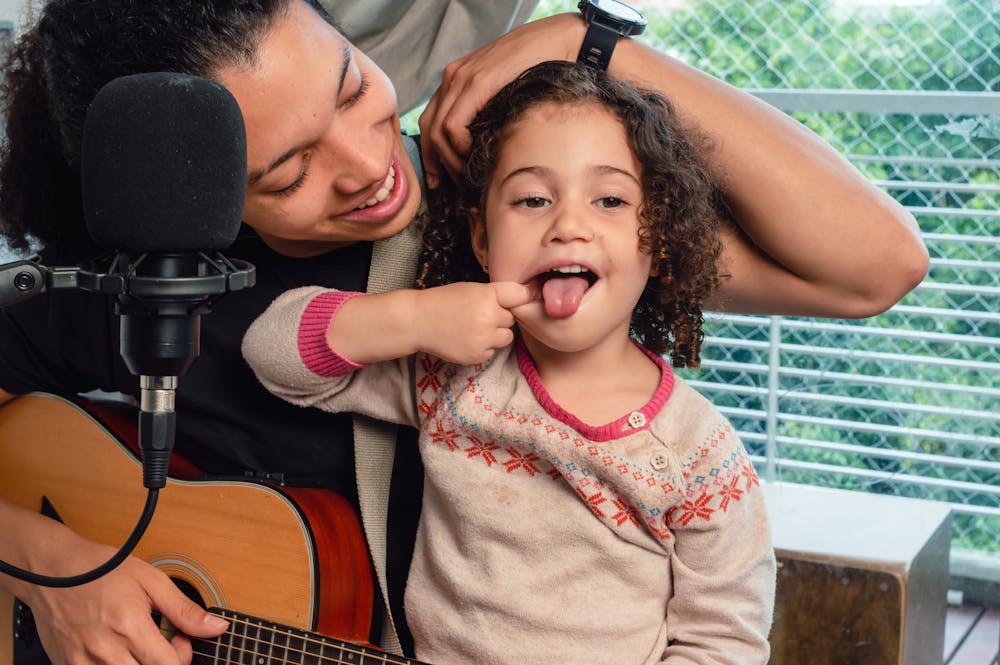
For some women, the combination of these factors means parenting and a music career are just not compatible:
There’s been times where I’ve just gone, ‘I’m just going to take a regular job where I get sick pay and holiday pay and carer’s leave, and where I can take time off to look after my kid during the school holidays, because I’m a single parent and no one else is going to do it.’ So many roles in the music industry are self-employed, and you are left flailing to try and look after yourself.
In an industry where women and gender-non-conforming people are already facing sexism, harassment and ageism[7], parenthood can be the final straw.
For others, seeing how hard parenting is in music might lead them to delay having children, or not have them at all.
Making music work more accessible
Music industry employers and workers offered several suggestions to improve the conditions for parents in the music industry.
The new Centre for Arts and Entertainment Workplaces may help mothers assert their rights within music workplaces[8].
Grant schemes should provide a way to account for care-giving, including facilitating children being taken on tour. Funding quiet infant-feeding rooms and safe, flexible and affordable childcare options would send the message women with children are valued.
Participants told us they needed employers to be more understanding about career gaps and to provide paid parental leave beyond government requirements.
Working to change the culture of the music industry so women with children are not treated as a novelty would help retain the talent of many who struggle to balance caring and music work.
Read more: Pay, safety and welfare: how the new Centre for Arts and Entertainment Workplaces can strengthen the arts sector[9]
Community is key
Our key takeaways were about the importance of personal relationships.
Participants told us rebuilding connections and networks in the music industry after a career break – or maintaining them during the break – was central to being able to restart careers.
 Music grants should take into account the need to provide space for breastfeeding. Shutterstock
Networks are fundamental to building strong music careers[10]. For women trying to shape careers around the constraints of motherhood, having people who had been, or were in, the same situation made them feel supported and gave them creative ideas about how to solve problems. Formal and informal mentorships were highly valued.
People in our study had formed connections with one another and were resolved to develop their careers. But opportunities for building bridges back into the music industry are still constrained.
Ongoing activism, community-building and initiatives focused on bringing parents (and others who take career breaks) back into music work are essential for diverse and thriving music cities.
References
- ^ rates well below men (www.abc.net.au)
- ^ than their male counterparts (ses.library.usyd.edu.au)
- ^ a study (www.encoremusiccareers.org)
- ^ not unique to music work (theconversation.com)
- ^ majority of caring work (theconversation.com)
- ^ Returning to work after childbirth: still a case of 'managing it all' (theconversation.com)
- ^ sexism, harassment and ageism (musicindustryreview.com.au)
- ^ within music workplaces (theconversation.com)
- ^ Pay, safety and welfare: how the new Centre for Arts and Entertainment Workplaces can strengthen the arts sector (theconversation.com)
- ^ building strong music careers (search.informit.org)










