In Fanatic Heart, Tom Keneally revisits the tumultuous life of an Irish rebel
- Written by: Paul Sharrad, University Fellow (Literature/Humanities), University of Wollongong
As a child, I would visit the old house at the centre of family life and often there would be a conversation running thus:
“Have I told you about Clarrie Dobbs?” (or others of such names).
“Yes, Grandpa, many times.”
“Ah, he was a terrible bloke that Clarrie. When he was out well-sinking …”
Some stories just don’t let you go. And as you get older, the urge to get them all heard grows stronger. Tom Keneally has regularly stored away curious details and colourful characters from history, sometimes waiting until he found the form best suited to his dramatising of them, occasionally repeating them in different guises, once or twice finding the moment of topical discussion into which they could be blended.
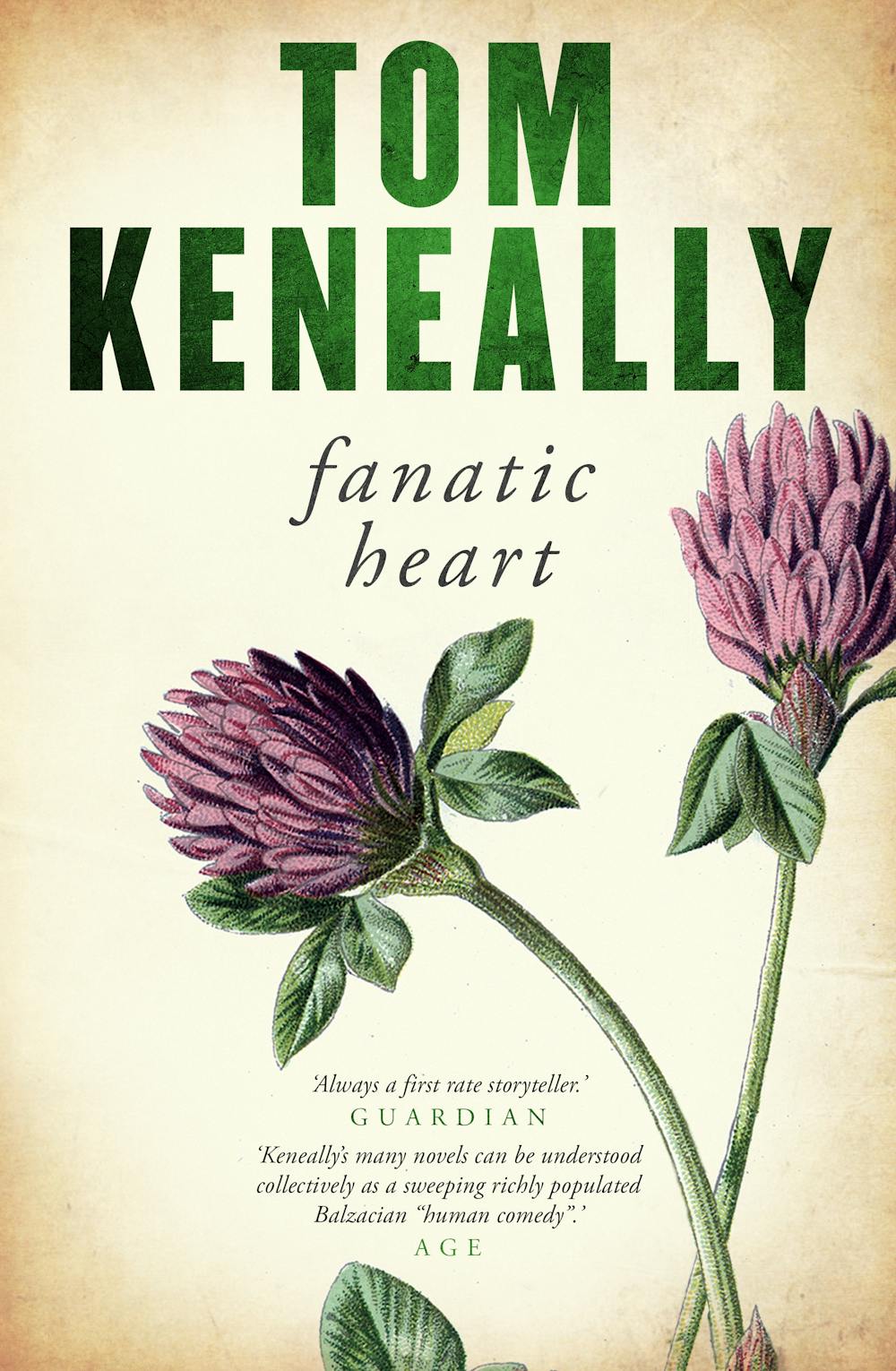
Review: Fanatic Heart – Tom Keneally (Vintage).
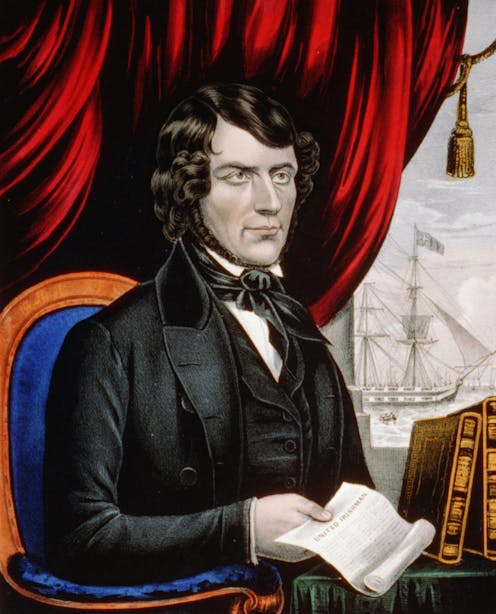
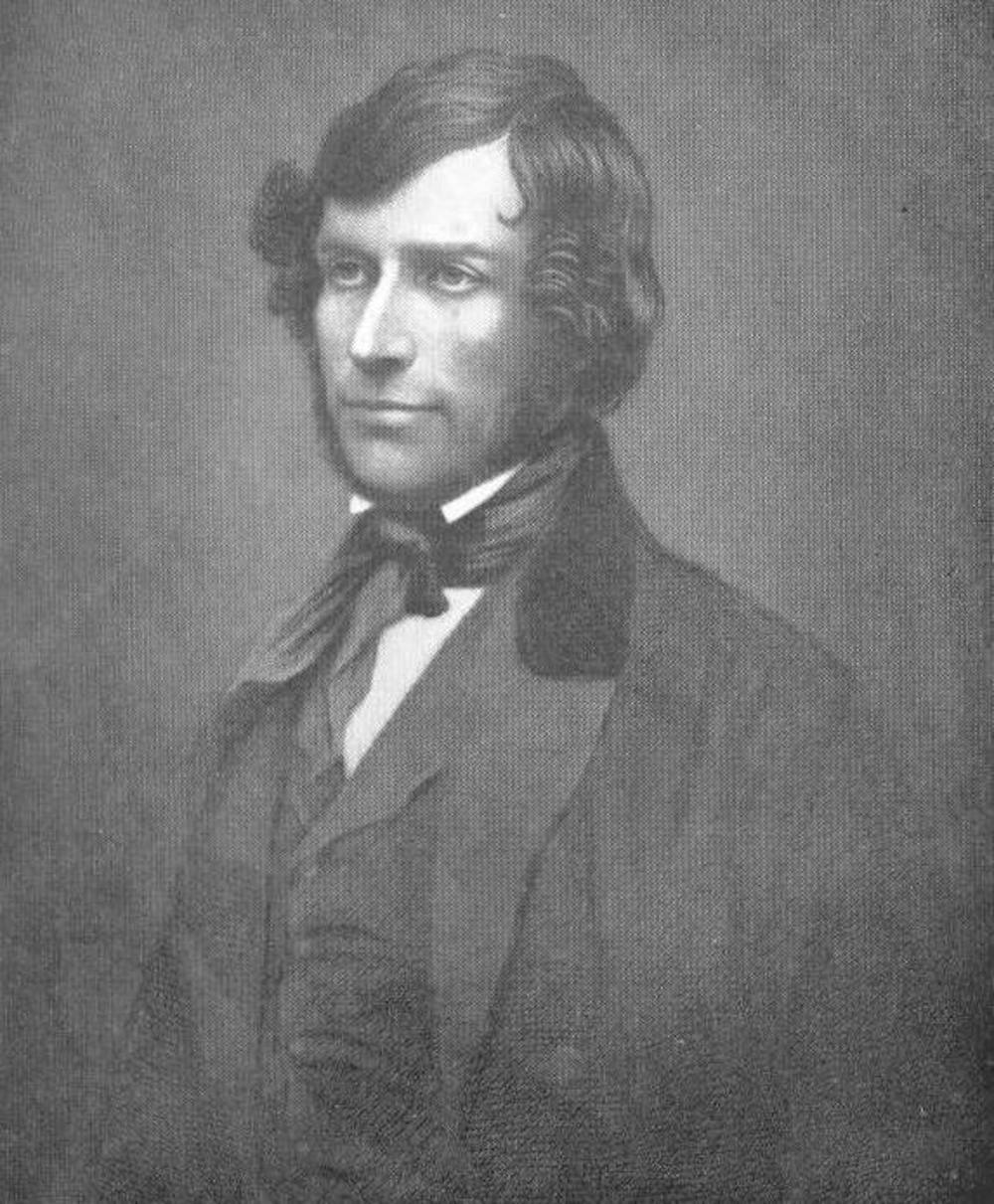 John Mitchel.
Public domain
Keneally has been taken to task for his biologised depictions of his female characters, who either support or fall victim to males at the centre of stories, and he has made a point in the latter part of his career to give centre stage, social context, and voice to woman characters.
In Fanatic Heart, he turns our attention away from John Mitchel at regular intervals to concentrate on Mitchel’s long-suffering wife, Jenny. Their marriage was born of passion. Jenny Mitchel supported her husband’s outspoken nationalism, following him into exile in Van Diemen’s Land, then on to several locations in the United States once American Irish organised Mitchel’s escape from British control.
The novel is unusual, in that for the average reader it appears to be purely a novel. There are only a couple of hints at the back that John and Jenny were real people central to Ireland’s political history and that actual journals and newspaper columns inform the narrative.
This is probably because so much of the book does what historians have often objected to in Keneally’s work: his readiness to dramatise the people of historical record by imagining their feelings and filling in gaps between documented events.
John Mitchel.
Public domain
Keneally has been taken to task for his biologised depictions of his female characters, who either support or fall victim to males at the centre of stories, and he has made a point in the latter part of his career to give centre stage, social context, and voice to woman characters.
In Fanatic Heart, he turns our attention away from John Mitchel at regular intervals to concentrate on Mitchel’s long-suffering wife, Jenny. Their marriage was born of passion. Jenny Mitchel supported her husband’s outspoken nationalism, following him into exile in Van Diemen’s Land, then on to several locations in the United States once American Irish organised Mitchel’s escape from British control.
The novel is unusual, in that for the average reader it appears to be purely a novel. There are only a couple of hints at the back that John and Jenny were real people central to Ireland’s political history and that actual journals and newspaper columns inform the narrative.
This is probably because so much of the book does what historians have often objected to in Keneally’s work: his readiness to dramatise the people of historical record by imagining their feelings and filling in gaps between documented events.
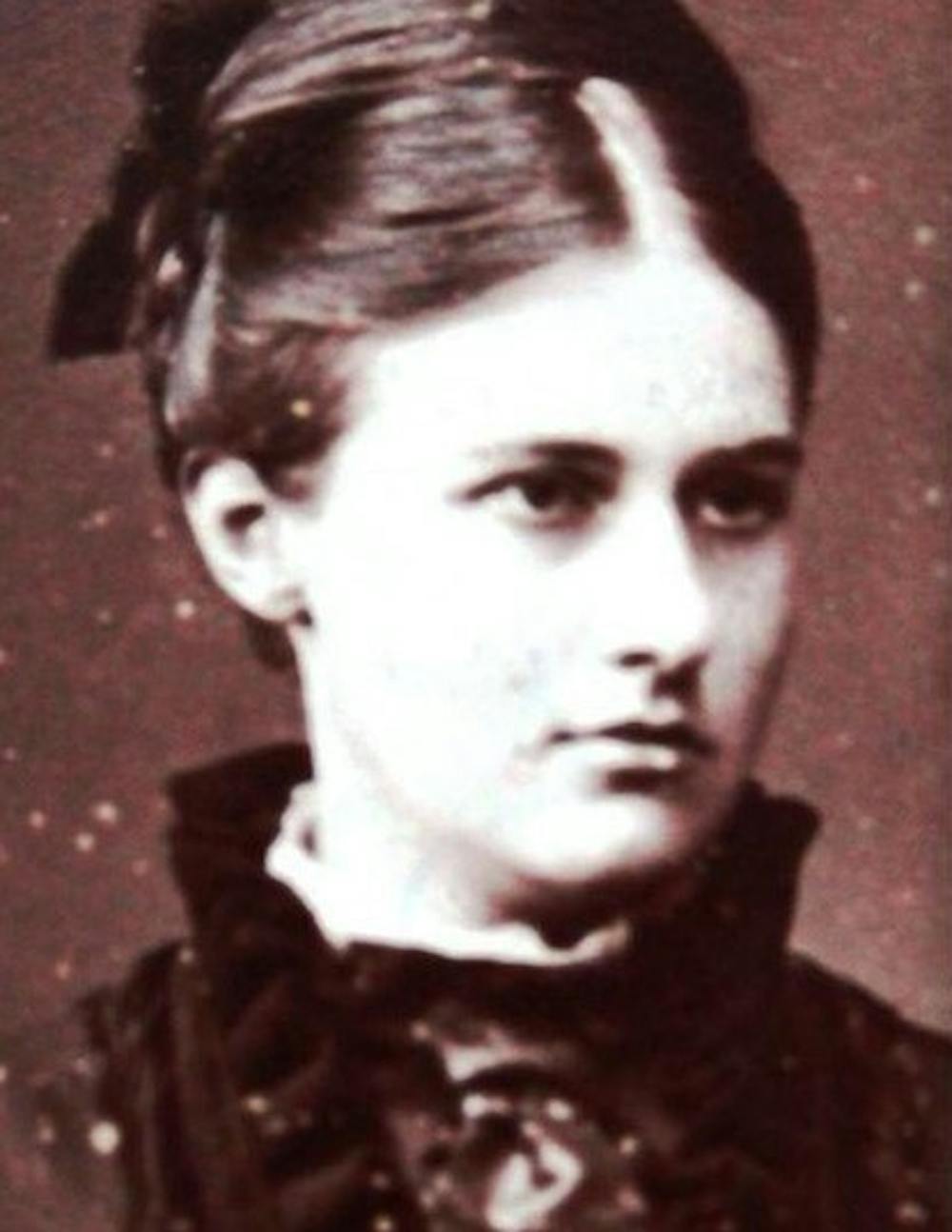 Jenny Mitchel c.1845.
Public domain
As a novel, however, I’m not sure Fanatic Heart is entirely successful. Its historical roots prompt an external looking-back that results in a lot of telling rather than showing. The narrative does keep moving, but I didn’t get a strongly immediate sense of the “fanaticism” that made Mitchel so dangerous to the British.
Some editorial intervention would have improved things at times. At one point, a girl named Henty is mentioned and we have to track back some way to find that the Mitchels had a daughter, Henrietta, and then intuit that “Henty” is her nickname. Mitchel’s arrest is made under “an obscene law”, the name of which appears a page or so later, and the explanation of the law not for another page or two; some integration please. Equally, we don’t need to know that the sentencing magistrate was a former suitor of Jane Austen’s.
Read more:
Set in a 19th century Australian leper colony, Eleanor Limprecht's The Coast depicts past cruelties, but has powerful things to say about the present[15]
The question of slavery
The book is at its best when it presents a dramatic scene, as with the opening one of an entire village of famine-devastated bodies, or later when there is a debate over slavery between John, Jenny, and the abolitionist Reverend Beecher. That encounter is the climax of the novel’s exploration of Mitchel as a mesh of contradictions.
I shall not be surprised if some readers charge Keneally with offering an apologia for slavery, but they should note that it is Mitchel speaking, that Jenny obviously does not support slavery, that Mitchel is captured by the false race science of the time, and that he does have some pertinent arguments against hypocritical fixation on one Southern social evil while ignoring the slavish conditions of (mostly Irish) workers under the North’s uncontrolled industrial capitalism.
As Mitchel and many writers since have lamented, a moment of ironic levity in print can leave one trapped between two camps of “know nothing” literalists.
The story ends on a high note, with the Mitchel family settling happily on a Tennessee farm (without slaves), freed from Britain and the frenetic rivalries of New York and Ireland. That resolution connects with the other focus of this tale of global movements: the family as held together by Jenny.
Jenny Mitchel c.1845.
Public domain
As a novel, however, I’m not sure Fanatic Heart is entirely successful. Its historical roots prompt an external looking-back that results in a lot of telling rather than showing. The narrative does keep moving, but I didn’t get a strongly immediate sense of the “fanaticism” that made Mitchel so dangerous to the British.
Some editorial intervention would have improved things at times. At one point, a girl named Henty is mentioned and we have to track back some way to find that the Mitchels had a daughter, Henrietta, and then intuit that “Henty” is her nickname. Mitchel’s arrest is made under “an obscene law”, the name of which appears a page or so later, and the explanation of the law not for another page or two; some integration please. Equally, we don’t need to know that the sentencing magistrate was a former suitor of Jane Austen’s.
Read more:
Set in a 19th century Australian leper colony, Eleanor Limprecht's The Coast depicts past cruelties, but has powerful things to say about the present[15]
The question of slavery
The book is at its best when it presents a dramatic scene, as with the opening one of an entire village of famine-devastated bodies, or later when there is a debate over slavery between John, Jenny, and the abolitionist Reverend Beecher. That encounter is the climax of the novel’s exploration of Mitchel as a mesh of contradictions.
I shall not be surprised if some readers charge Keneally with offering an apologia for slavery, but they should note that it is Mitchel speaking, that Jenny obviously does not support slavery, that Mitchel is captured by the false race science of the time, and that he does have some pertinent arguments against hypocritical fixation on one Southern social evil while ignoring the slavish conditions of (mostly Irish) workers under the North’s uncontrolled industrial capitalism.
As Mitchel and many writers since have lamented, a moment of ironic levity in print can leave one trapped between two camps of “know nothing” literalists.
The story ends on a high note, with the Mitchel family settling happily on a Tennessee farm (without slaves), freed from Britain and the frenetic rivalries of New York and Ireland. That resolution connects with the other focus of this tale of global movements: the family as held together by Jenny.
 Tom Keneally at the Mitchell Library, Sydney, in 2001.
Dean Lewins/AAP
Read more:
In Nimblefoot, Robert Drewe returns to historical fiction after more than 25 years[16]
Fanatic Heart reworks the historical picture of John Mitchel that Keneally drew in The Great Shame. There, Mitchel was the touchy political rebel, who refused to call his comfortable life in Van Diemen’s Land anything other than enforced exile; in the fictive version, he is less inclined to escape when the opportunity arises. It is his wife who urges him back into his political role. Her place in the story also pushes John’s fellow exile, the flashy Thomas Meagher, into the background, faulting him for the shabby treatment of his Vandemonian wife.
There are many fascinating historical details in Fanatic Heart, such as Mitchel’s ambiguous social position as a Presbyterian/Unitarian Irishman and his almost successful persuasion of Russia to invade Ireland in support of its independence.
But novelistic happy endings rarely match the realities of history. Despite his interest in the American Civil War (seen in his novel Confederates[17] and the biographical history An American Scoundrel[18]), Keneally excises the last chapters of Mitchel’s story. Restless by temperament and from force of events, John continued to travel – to Paris, Washington, Richmond, and eventually back to Ireland. He ran a blockade back to the Confederacy, in support of which both his sons were killed. In a final contradiction, the “fanatic heart” sought Irish election to the British parliament just before his death.
References^ Corporal Hitler’s Pistol (www.penguin.com.au)^ A River Town (www.hachette.com.au)^ The Widow and her Hero (www.penguin.com.au)^ John Boyle O’Reilly (adb.anu.edu.au)^ Thomas Francis Meagher (adb.anu.edu.au)^ John Mitchel (adb.anu.edu.au)^ The Great Shame: A Story of the Irish in the Old World and the New (www.penguin.com.au)^ Australians: Origins to Eureka (readingaustralia.com.au)^ Young Ireland movement (www.encyclopedia.com)^ Fanatic Heart (www.penguin.com.au)^ Bring Larks and Heroes (www.textpublishing.com.au)^ Woman of the Inner Sea (www.penguinrandomhouse.com)^ Blood Red Sister Rose (www.hachette.com.au)^ Daughter of Mars (www.penguin.com.au)^ Set in a 19th century Australian leper colony, Eleanor Limprecht's The Coast depicts past cruelties, but has powerful things to say about the present (theconversation.com)^ In Nimblefoot, Robert Drewe returns to historical fiction after more than 25 years (theconversation.com)^ Confederates (www.hachette.com.au)^ An American Scoundrel (www.penguin.com.au)
Tom Keneally at the Mitchell Library, Sydney, in 2001.
Dean Lewins/AAP
Read more:
In Nimblefoot, Robert Drewe returns to historical fiction after more than 25 years[16]
Fanatic Heart reworks the historical picture of John Mitchel that Keneally drew in The Great Shame. There, Mitchel was the touchy political rebel, who refused to call his comfortable life in Van Diemen’s Land anything other than enforced exile; in the fictive version, he is less inclined to escape when the opportunity arises. It is his wife who urges him back into his political role. Her place in the story also pushes John’s fellow exile, the flashy Thomas Meagher, into the background, faulting him for the shabby treatment of his Vandemonian wife.
There are many fascinating historical details in Fanatic Heart, such as Mitchel’s ambiguous social position as a Presbyterian/Unitarian Irishman and his almost successful persuasion of Russia to invade Ireland in support of its independence.
But novelistic happy endings rarely match the realities of history. Despite his interest in the American Civil War (seen in his novel Confederates[17] and the biographical history An American Scoundrel[18]), Keneally excises the last chapters of Mitchel’s story. Restless by temperament and from force of events, John continued to travel – to Paris, Washington, Richmond, and eventually back to Ireland. He ran a blockade back to the Confederacy, in support of which both his sons were killed. In a final contradiction, the “fanatic heart” sought Irish election to the British parliament just before his death.
References^ Corporal Hitler’s Pistol (www.penguin.com.au)^ A River Town (www.hachette.com.au)^ The Widow and her Hero (www.penguin.com.au)^ John Boyle O’Reilly (adb.anu.edu.au)^ Thomas Francis Meagher (adb.anu.edu.au)^ John Mitchel (adb.anu.edu.au)^ The Great Shame: A Story of the Irish in the Old World and the New (www.penguin.com.au)^ Australians: Origins to Eureka (readingaustralia.com.au)^ Young Ireland movement (www.encyclopedia.com)^ Fanatic Heart (www.penguin.com.au)^ Bring Larks and Heroes (www.textpublishing.com.au)^ Woman of the Inner Sea (www.penguinrandomhouse.com)^ Blood Red Sister Rose (www.hachette.com.au)^ Daughter of Mars (www.penguin.com.au)^ Set in a 19th century Australian leper colony, Eleanor Limprecht's The Coast depicts past cruelties, but has powerful things to say about the present (theconversation.com)^ In Nimblefoot, Robert Drewe returns to historical fiction after more than 25 years (theconversation.com)^ Confederates (www.hachette.com.au)^ An American Scoundrel (www.penguin.com.au)