


Google AI
The Times Australia
The Times World News

.

How much are the parties spending on ads? And how come One Nation's Townsville candidate lives in Melbourne? – podcast

  • Written by: Benjamin Clark, Deputy Engagement Editor, The Conversation
How much are the parties spending on ads? And how come One Nation's Townsville candidate lives in Melbourne? – podcast

On Monday May 9, early voting centres will open and Australians can start casting their votes for the federal election.

Increasing numbers of Australians are choosing not to line up for their democracy sausage on election day, opting instead to get it out of the way beforehand. In 2019, about 40% of Australians either voted early by visiting a pre-poll station (32.7%) or they filled out a postal ballot (8.5%).

So the next week is crucial for parties’ and candidates’ campaigns – can they convince enough persuadable voters before they cast their ballots?

In this episode of Below the Line, award-winning broadcaster Jon Faine and our regular panel of political scientists discuss how early voting is “truncating” political campaigns, by bringing forward the crucial vote-turning period.

This means that the campaign will intensify in the next week, says Anika Gauja. The parties will need to get their key messages out repeatedly. Early voting is one of the reasons the leaders may have agreed to two debates in the next seven days – on Mothers’ Day with Channel 9 in prime time and another again on Wednesday 11 May with Channel 7.

They also discuss whether the Reserve Bank’s recent interest rate hike will hurt Prime Minister Scott Morrison, or perhaps help him among mortage-free retirees. On the whole, polling expert Simon Jackman believes it represents a net-negative for the government, because there are more mortgage-holders in marginal seats.

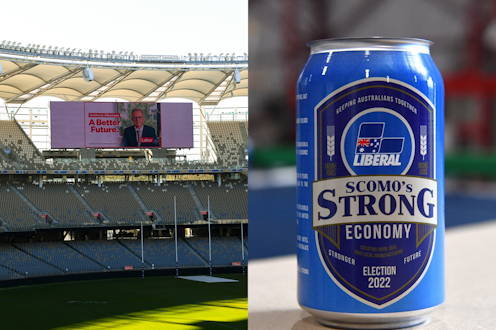
The political parties’ advertising is also dissected. Spending on ads shot up in the last week, with Labor coming out on top as the biggest spender on social media.

Finally, they discuss preferences, campaign finance disclosures and the curious case of a candidate for Pauline Hanson’s One Nation party who lives 2,500 kilometres away from the electorate she’s seeking to represent.

Below the Line is a limited-edition election podcast brought to you by The Conversation and La Trobe University. The show is produced by Courtney Carthy and Benjamin Clark.

Correction: Jon states that the One Nation candidate for “Bob Katter’s seat in northern Queensland” lives in the Melbourne suburb of Pakenham, whereas the far-flung candidate Diane Pepe is actually contesting the seat of Herbert[1], which is adjacent to Katter’s seat of Kennedy.

Disclosure: Andrea Carson has received funding for research projects from Facebook.

Image credit: Lukas Coch/Mick Tsikas/AAP

References

  1. ^ contesting the seat of Herbert (www.theguardian.com)

Read more https://theconversation.com/below-the-line-how-much-are-the-parties-spending-on-ads-and-how-come-one-nations-townsville-candidate-lives-in-melbourne-podcast-182596

Times Magazine

Federal Budget and Motoring: Luxury Car Tax, Fuel Excise and the Cost of Driving in Australia

For millions of Australians, the Federal Budget is not an abstract economic document discussed onl...

Buying a New Car: Insider Tips

Buying a new car is one of the largest purchases many Australians make outside buying a home. Yet ...

Hybrid Vehicles: What Is a Hybrid, an EV and a Plug-In Hybrid?

Australia’s car market is changing faster than at any point since the decline of the local Holden ...

Chinese Cars: If You Are Not Willing to Risk Buying One, What Are the Current Affordable Petrol Alternatives

For years Australian motorists shopping for an affordable new car generally looked toward familiar...

Australia’s East Coast Braces for Wet Week as Weather Pattern Shifts

Large sections of Australia’s east coast are preparing for a significant period of wet weather as ...

A Report From France: The Mood of a Nation

France occupies a unique place in the global imagination. To many outsiders, it remains the land ...

The Times Features

Restaurants Are Packed Again — So Why Are Australians S…

Australians still love dining out. Despite years of inflation, rising interest rates, higher rents...

Real Estate and the Federal Budget: Early Signs Emergin…

Australia’s federal budget has landed, and while economists, investors and political strategists c...

The Modern Causes of Back Pain and What You Can Do

Key Highlights Modern lifestyles are a major contributor to ongoing back painPosture, movement, a...

What to Know About Adding Natural Oils to Your Wellness…

Key Highlights Natural oils are commonly used to support everyday wellbeingConsistency and qualit...

How Online Mental Health Support Is Changing Access to …

Key Highlights Online mental health services are improving accessibility for many individualsFlex...

Why every drop counts

Accurate water measurement and confidence in Sustainable Diversion Limits (SDLs) are essential to ...

Dining Out Is Expensive. Buying High Quality Meat and F…

For many Australians, dining out has quietly shifted from a weekly habit to an occasional indulgen...

REFLECTIONS: A Legacy in the Rain at Carla Zampatti AFW…

Words & Photography by Cesar Ocampo There is a specific kind of magic that happens when high fa...

Where Our Batteries Come From: Battery making is big bu…

Batteries are now so deeply embedded in modern life that most people rarely stop to think about th...









