People attending GPs aren't getting all the preventive health care they need. Here's what could help
- Written by: Oliver Frank, Senior Research Fellow, Discipline of General Practice, and Specialist General Practitioner, University of Adelaide

When you go to your usual GP, you probably sit down, tell her your health-care needs or problems, and she advises and discusses with you how you can address them.
But there’s one important aspect missing in many visits to the GP: what you can do to prevent ill health in the future.
Preventive care includes advice, such as to stop smoking or about forthcoming perimenopause; physical examination such as measuring blood pressure, waist circumference or eyesight; tests for high cholesterol or screening mammography (breast X-ray); and treatments such as vaccinations.
We’ve been researching[1] ways GPs and people attending them can be better reminded of relevant preventive health care, and have developed a solution that might help.
What are patients missing?
Just to give a few examples, only about half or fewer eligible Australians currently participate in the national programs to screen[2] for cancer of the bowel, breast or cervix.
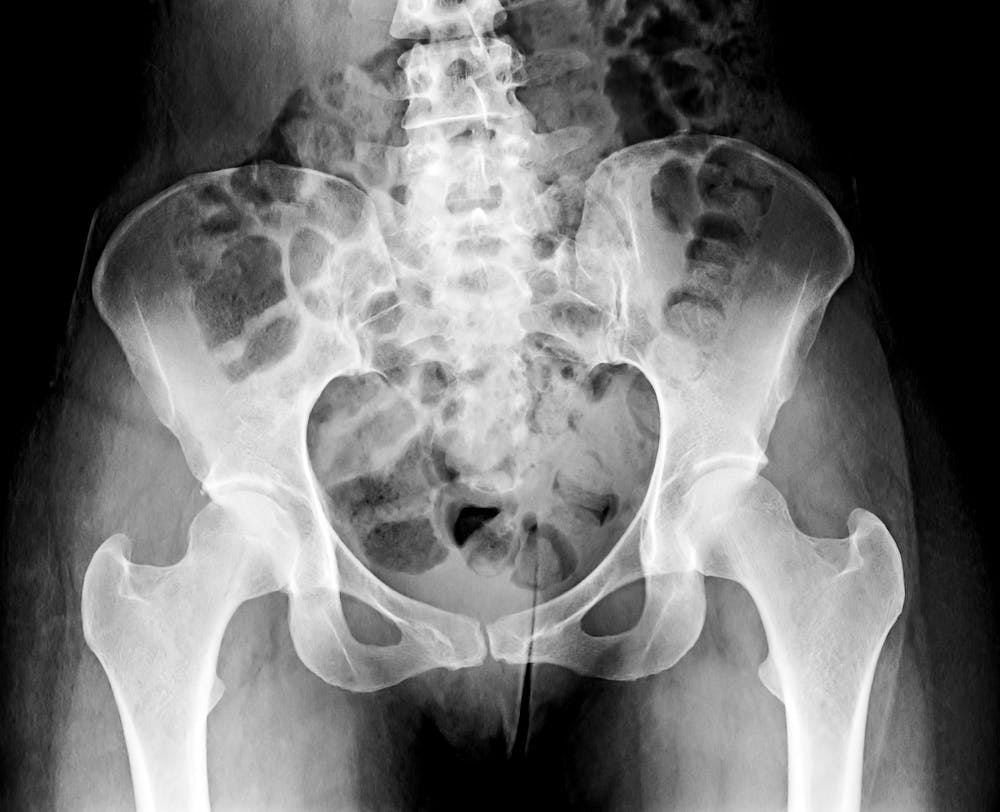
Osteoporosis is a condition in which bones become weak and can break easily. It is a major health program that is common in older people, with osteoporotic fractures reducing quality and length of life. Despite this, only about 10% of people at higher risk[3] for osteoporosis are screened for it by their GP.
Invasive pneumococcal infection is serious and sometimes fatal. Our research has found 30% of people under the age of 65 years have chronic health conditions that put them at higher risk of pneumococcal infection, but only 24% of them[5] report having received pneumococcal vaccine.
Why isn’t all recommended preventive care routinely offered?
National guidelines[6] for prevention advise how often different activities should be performed for people of different ages and sexes, making the date on which each relevant preventive activity is due for each person predictable. In view of this, why don’t most people know which preventive activities are recommended for them and when each is due next to be performed? There are a few reasons for this.
Read more: Focus on prevention to control the growing health budget[7]
One reason is that the guidelines for the prevention, early detection or care of some conditions are complex.
Second, which preventive measures are recommended changes as people age and as their personal and family health history changes.
Preventive care is more likely to be offered[8] in longer consultations, but the Medicare Benefits Schedule provides lower subsidies per minute for longer consultations than for shorter ones. This increases patients’ out-of-pocket costs for longer consultations and discourages patients from seeking, and GPs from offering, longer consultations.
Currently, there is no one place each person can view a list of all of the preventive health measures recommended for them, when each of them was done, and when they are next due.
Our research developed a solution
Most of the electronic clinical record systems used by Australian GPs automatically generate onscreen reminders to GPs about preventive activities. Those reminders cover only a limited range of preventive activities, are not very informative, and GPs can ignore them repeatedly without any accountability.
Most importantly, the reminders are not communicated automatically to the patient. To address this, we are studying the effects of automatically sending SMS messages to patients[9] about preventive activities that are due to be performed.
The messages are sent after the person has made an appointment to see their GP. They tell the person what care is due and advise the person to discuss this in their forthcoming consultation. These reminders empower their recipients and enable them to receive the recommended care with a minimum of additional time, effort or cost.
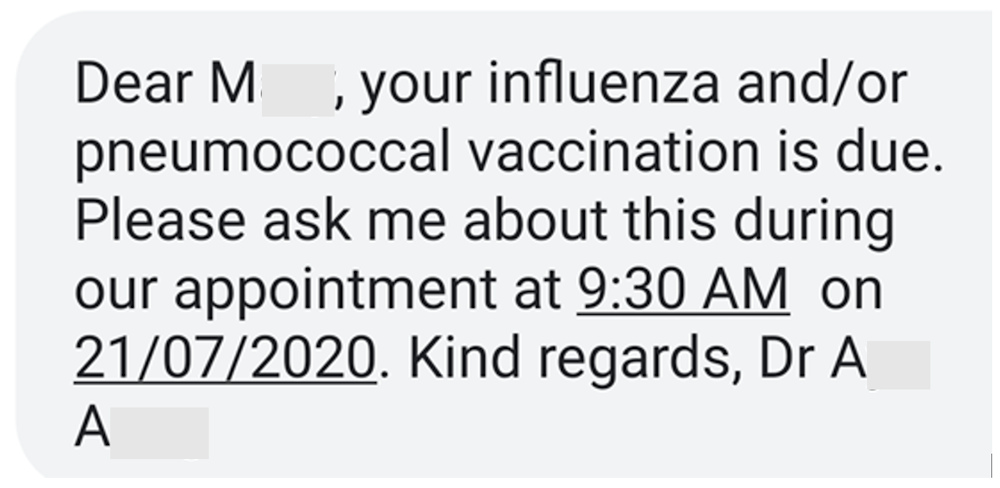 An example of the text message sent to patients.
Author Provided, Author provided
An example of the text message sent to patients.
Author Provided, Author provided
Our earlier studies[10] of providing information and reminders on paper before consultations found people welcomed receiving this information and acted on them.
Read more: How physical activity in Australian schools can help prevent depression in young people[11]
GPs’ clinical software systems should be improved to allow and encourage each person to view a comprehensive display of their preventive care updates. Currently, the freely available Doctors Control Panel[12] onscreen reminder software for GPs (used in our research program) comes closest to providing a comprehensive listing of preventive activities recommended for each person, and when they were, or are, due to be performed.
What can you do now?
At least annually, you should ask your usual GP about which preventive activities are recommended for you, when each was last performed with what result or finding, and when each is due to be performed next.
If you plan to do this when you are going to see your usual GP for some other reason, ask for a long appointment so your GP can find and give you this information.
References
- ^ researching (doi.org)
- ^ screen (www.aihw.gov.au)
- ^ 10% of people at higher risk (healthybonesaustralia.org.au)
- ^ Shutterstock (image.shutterstock.com)
- ^ only 24% of them (pubmed.ncbi.nlm.nih.gov)
- ^ National guidelines (www.racgp.org.au)
- ^ Focus on prevention to control the growing health budget (theconversation.com)
- ^ more likely to be offered (www.ncbi.nlm.nih.gov)
- ^ automatically sending SMS messages to patients (www.publish.csiro.au)
- ^ studies (www.annfammed.org)
- ^ How physical activity in Australian schools can help prevent depression in young people (theconversation.com)
- ^ Doctors Control Panel (www.doctorscontrolpanel.com.au)