


New Zealand's climate change regulation is messy and complex -- here’s how to improve it
- Written by: Nathan Cooper, Associate Professor of Law, University of Waikato
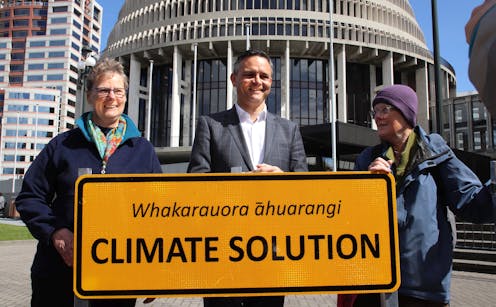
Like other countries, New Zealand has both international and domestic targets to reduce emissions, but they run on different timelines and are based on different assumptions.
This week, public submissions[1] close on New Zealand’s first emissions reduction plan which proposes policies for staying within the emissions budget for 2022-25 and keeping on track for future budgets.
New Zealand also pledged to cut emissions by half by 2030[2] when it announced its upgraded[3] nationally determined contribution (NDC[4]) during the recent COP26 climate summit. This is part of the global effort, under the Paris Agreement[5], to limit warming to 1.5℃ above pre-industrial levels.
The co-existence of international commitments, domestic laws and carbon budgets shows how complex climate change regulation is. This complexity can be confusing. It highlights the “messiness” of New Zealand’s current regulatory regime and the need for a legislative “tidy-up”.
Under domestic legislation, the Climate Change Response Act 2002 (CCRA[6]) requires the government to set emissions budgets for five-year periods up to 2050 and to publish an emissions reduction plan[7] for each period. Following the current consultation period, the government will release its first emissions reduction plan in May.
New Zealand’s new international pledge has a timeline to 2030 and equates to an emissions budget of 571 Megatons of CO₂-equivalent (MtCO₂e) to “spend” between now and then. Under the domestic climate change law, the proposed combined budgets for 2022-30 add up to 28MtCO₂e more than this (599MtCO₂e).
It’s not yet clear whether the budgets in the law will be revised down in light of the new NDC, or whether the gap will be filled by financing emissions reductions overseas.
Read more: COP26: New Zealand's new climate pledge is a step up, but not a 'fair share'[8]
Different timelines add to the confusion. Our international commitment works towards 2030, while domestically, provisional budgets are already available until 2035. And the Climate Change Response (Zero Carbon) Amendment Act 2019 requires that greenhouse gas emissions (other than biogenic methane) reach net zero by 2050[9].
Better alignment, clearer message
Once released, the consequences of the emissions reduction plan will be wide ranging. Stakeholders in all sectors will look to incorporate its emissions reduction policies.
Unless everyone clearly understands its goals and purpose, the plan risks an unnecessarily negative reception. There is widespread public support[10] for more action on climate change mitigation in New Zealand. But the roles everyone can play must be made clear.
Read more: Lawyers challenge New Zealand's proposed emissions budgets as inconsistent with the 1.5℃ goal[11]
The emissions reduction plan provides an opportunity to rethink how the law could better align national and international targets, timelines and milestones to improve the clarity of messaging on what must be achieved, when and by who.
Aotearoa’s emissions reduction plan must be clear, innovative and inclusive, directing public concern for the “climate emergency[12]” and showing us where real change is possible.
Clear, innovative and inclusive
There’s no need for fresh legislation if the emissions reduction plan begins with a vision statement, weaving together all relevant obligations, to create a clear and measurable set of goals. The United Nations Sustainable Development Goals[13] provide a good example of how complex goals can be articulated simply, and how targets and indicators can be used to add detail and help track progress.
The emissions reduction plan should be launched as a “living document” which not only sets out a plan of action but also acts as a place to track progress, and to get involved. It should make full use of interactive tools and apps so it becomes something people can easily navigate and interact with.
For example, in the transport sector, one of the draft targets is to reduce vehicle kilometres travelled by cars and light vehicles by 20% by 2035 through providing better travel options[14]. Such a target could link directly to individually tailored options for car sharing and public transport timetables and could include opportunities for users to set their own goals and challenges, too.
Reducing emissions significantly, and transitioning towards a net-zero carbon economy, offers a host of opportunities. But the scale of change required also carries risk. Consultation begins next year on a national adaptation plan, with the goal of limiting the risks to people.
Lessons from other examples
The government has already committed to delivering a “fair, equitable and inclusive transition[15]”. For this to happen, all sectors must be involved and it will require a mix of emissions pricing, well-targeted regulation, tailored sectoral policies, direct investment and incentives for businesses.
Getting the balance right, in particular between incentives and regulation, will be crucial. Private sector leadership should be encouraged and supported so that low-emissions business models become normalised. But we’ll also need regulation to prohibit certain behaviour.
The recently announced ban on most single-use plastics[16], including plastic bags and straws, is a good example of regulatory intervention to change harmful consumer behaviour. The emissions reduction plan should not shy away from similar policies to address the ecologically destructive behaviour of industry and consumers.
References
- ^ public submissions (environment.govt.nz)
- ^ cut emissions by half by 2030 (www.beehive.govt.nz)
- ^ upgraded (climateactiontracker.org)
- ^ NDC (unfccc.int)
- ^ Paris Agreement (unfccc.int)
- ^ CCRA (www.legislation.govt.nz)
- ^ emissions reduction plan (www.legislation.govt.nz)
- ^ COP26: New Zealand's new climate pledge is a step up, but not a 'fair share' (theconversation.com)
- ^ reach net zero by 2050 (www.legislation.govt.nz)
- ^ widespread public support (environment.govt.nz)
- ^ Lawyers challenge New Zealand's proposed emissions budgets as inconsistent with the 1.5℃ goal (theconversation.com)
- ^ climate emergency (www.theguardian.com)
- ^ Sustainable Development Goals (sdgs.un.org)
- ^ providing better travel options (environment.govt.nz)
- ^ fair, equitable and inclusive transition (environment.govt.nz)
- ^ ban on most single-use plastics (www.theguardian.com)










