



The Aboriginal flag is now 'freely available for public use'. What does this mean from a legal standpoint?
- Written by: Isabella Alexander, Professor of Law, University of Technology Sydney
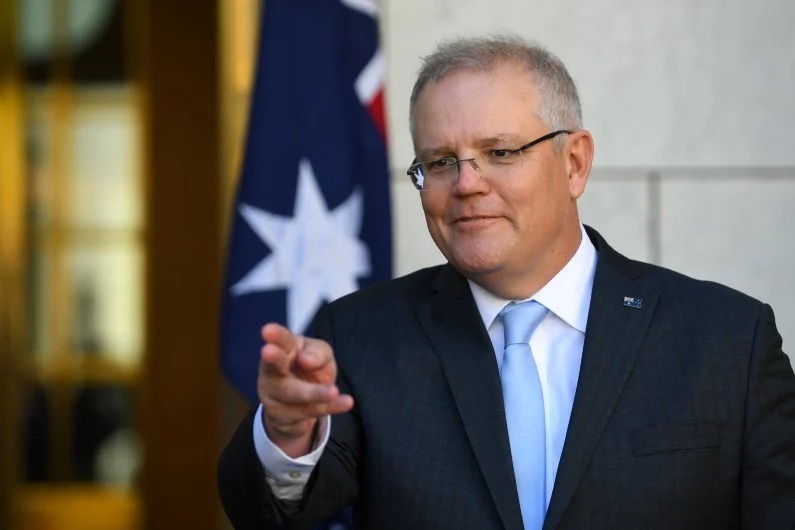
This week, Prime Minister Scott Morrison announced[1] the federal government had “freed the Aboriginal flag for Australians”.
After an extensive social media campaign to #Freetheflag[2], the federal government has purchased the copyright from Harold Thomas, the Luritja artist who created it more than 50 years ago. The deal reportedly cost $20 million.
Read more: Don't say the Aboriginal flag was 'freed' – it belongs to us, not the Commonwealth[3]
The Aboriginal flag has long been a symbol of resistance and unity for Indigenous people in Australia. Although the copyright settlement is a practical solution to a controversial problem, not everybody is pleased the federal government now owns the exclusive rights to reproduce the Aboriginal flag.
Has it really been freed?
A fight to #FreetheFlag
Controversy over the flag erupted in June 2019[4]. Clothing the Gaps, an Aboriginal-owned-and-led business, received cease and desist letters from a non-Indigenous company, WAM Clothing, demanding it stop using the Aboriginal flag on its clothing.
As the then-copyright owner, Thomas had granted WAM Clothing exclusive rights for use of the flag on its clothing. This meant anyone else wanting to put the flag on clothing – even non-commercially – had to get permission from the company.
Clothing the Gaps started a petition to #Freetheflag[6], which gathered more than 165,000 signatures and high-profile supporters from across Australia.
Community anger grew when the AFL, NRL and Indigenous community groups were also asked to pay for using the flag, and in some cases, threatened with legal action.
In September 2020, a Senate inquiry[7] began examining the flag’s copyright and licensing arrangements. In the meantime, Minister for Indigenous Australians Ken Wyatt was quietly negotiating with Thomas to purchase the flag’s copyright.
Then in the lead-up to Australia Day this week, Morrison announced the flag was now “freely available for public use”.
What’s in the agreement?
The exact details of the agreement are confidential but, according to the government[8], the agreement transfers the Aboriginal flag’s copyright to the Commonwealth. The agreement also includes:
-
all future royalties the Commonwealth receives from sale of the flag will be put towards the ongoing work of NAIDOC (the details of this have yet to be seen)
-
an annual $100,000 scholarship in Thomas’ honour for Indigenous students to develop Indigenous governance and leadership
-
an online history and education portal for the flag.
To ensure Aboriginal flags continue to be manufactured in Australia, the current manufacturers, Carroll and Richardson Flagworld, will remain the exclusive licensed manufacturers and providers of Aboriginal flags and bunting.
But this only covers commercial productions – individuals are free to make their own flags for personal use.
Read more: How easy would it be to 'free' the Aboriginal flag?[9]
Thomas still has rights
Cathy Freeman carrying the Aboriginal flag at the World Track and Field Championships in Athens in 1997. Lionel Cironneau/AAP Photo[10]Under the terms of the copyright assignment, Thomas retains moral rights over the flag.
This means he still has the right to be identified and named as the creator of the work, can stop someone else being wrongly identified as the creator of the work, and can stop the work from being subjected to derogatory treatment, which means any act which is harmful to the creator’s reputation.
Thomas will also use $2 million to establish a not-for-profit body to support the flag’s legacy.
Just like the national flag
The flag will now be managed in the same way as the Australian national flag[11].
This means it will be free for anyone to use it in any medium and for any purpose (except for making and selling flags commercially). You can place copies on clothing, sportsgrounds and articles, and you can use the flag in any medium, such as on websites or in artworks, including having it tattooed on your body.
However, it is recommended to follow the usual protocols[12] for respectful use of the flag.
How free is the flag?
Despite the new provisions, some Indigenous people are unhappy[13] control of the flag is now in the hands of the federal government rather than an Indigenous-led body.
Others have pointed out that if the flag is “free” for anyone to use, this is likely to benefit large corporations and off-shore manufacturers using cheap labour to make clothing and products featuring the flag, rather than Indigenous-owned enterprises.
It is possible the flag is now even more free than the government suggests. As academic David Brennan points out[14], under the Copyright Act 1968[15], if the Commonwealth owns copyright in an artistic work, then it expires 50 years after the calendar year in which the work was made. This contrasts with the usual term of protection for artistic works, which is the life of the author and 70 years thereafter.
If this is correct, it would mean that copyright in the flag (which Thomas created in 1971) actually expired on January 1, 2022, and the flag is now in the public domain. This would throw into question the validity of the exclusive licence to Flagworld and the government’s ability to dispose of royalties.
Travis Varcoe of the Magpies wears Aboriginal flags with Adam Goodes’ jersey number 37. Joe Castro/AAP Image[16]It would also mean Thomas’ moral rights are extinguished, as they last only as long as the copyright does.
Without seeing the terms of the agreement, which are commercial-in-confidence, we cannot be certain. Clarification from the government would be welcome.
A final twist
Before he transferred copyright, Thomas says he created[17] a digital representation of the flag, and minted it as a non-fungible token (NFT).
NFTs are digital certificates[18] secured with blockchain technology, which authenticate a claim of ownership to a digital asset. They have taken off in the art world, and are bought and sold for millions of dollars.
But all they can do is provide evidence of authenticity for a specific digital file. They do not afford any other rights, such as copyright, and many find the high prices they command to be baffling. Others are concerned[19] by their enormous carbon footprints. Thomas states he will hold the NFT “on an ongoing basis, on behalf of Indigenous communities”.
Thomas professes himself happy with the outcome, stating “the flag will remain, not as a symbol of struggle, but as a symbol of pride and unity”.
However, the thing about flags is their meaning is made by those who wave them, rather than simply by those who create them.
References
- ^ announced (www.pm.gov.au)
- ^ #Freetheflag (twitter.com)
- ^ Don't say the Aboriginal flag was 'freed' – it belongs to us, not the Commonwealth (theconversation.com)
- ^ erupted in June 2019 (theconversation.com)
- ^ Dave Hunt/AAP Image (photos.aap.com.au)
- ^ #Freetheflag (www.change.org)
- ^ Senate inquiry (www.aph.gov.au)
- ^ government (www.pm.gov.au)
- ^ How easy would it be to 'free' the Aboriginal flag? (theconversation.com)
- ^ Lionel Cironneau/AAP Photo (photos.aap.com.au)
- ^ Australian national flag (www.pmc.gov.au)
- ^ usual protocols (www.pmc.gov.au)
- ^ unhappy (theconversation.com)
- ^ David Brennan points out (medium.com)
- ^ Copyright Act 1968 (www.austlii.edu.au)
- ^ Joe Castro/AAP Image (photos.aap.com.au)
- ^ created (www.smh.com.au)
- ^ digital certificates (theconversation.com)
- ^ concerned (theconversation.com)









