Tech-Driven Restoration: Saving the World's Critically Endangered White-headed Langur
- Through decades of careful conservation efforts, the white-headed langur population has increased from just over 300 in the 1980s to more than 1,400 across 130 groups today.
- An AI-powered system covers more than 20 monitoring stations in the Guangxi Chongzuo White-headed Langur National Nature Reserve. It has logged 37,200 detections of langur activity, which provide critical data for research and conservation.
- To date, 77.6 hectares of habitat has been restored, 2 drinking water sources and 18 water drinking points for the langurs have been built, and 2 ecological corridors have been constructed.
CHONGZUO, CHINA - Media OutReach Newswire - 27 March 2026 - In the rugged karst mountains of Guangxi in Southern China, a primate species once on the brink of extinction – the white-headed langur – is steadily recovering in population thanks to a range of measures that bring together technology, law enforcement, and ecological restoration.
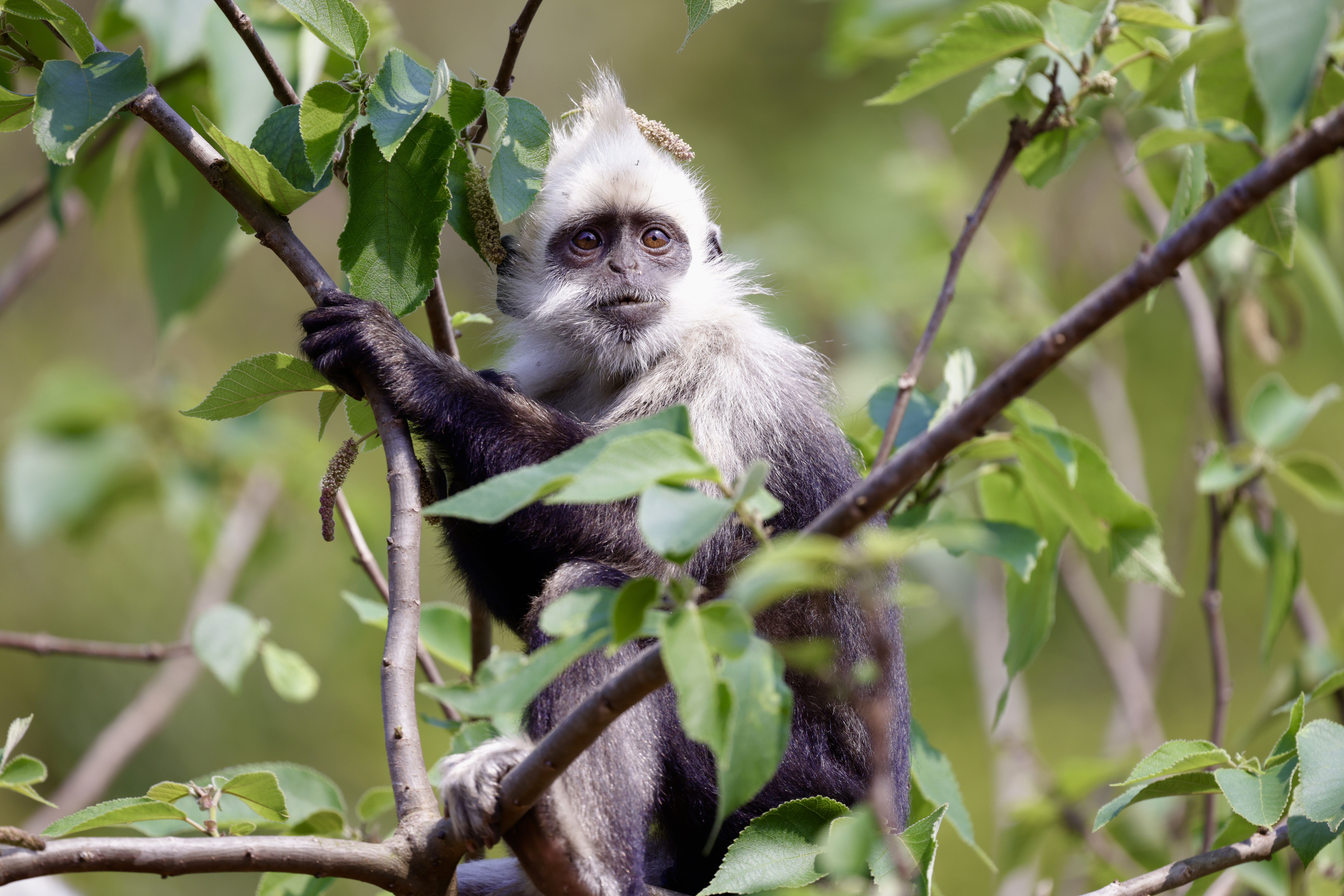
Found exclusively in Chongzuo, Guangxi, the white-headed langur is listed as Critically Endangered by the IUCN Red List of Threatened Species and the Red List of China's Vertebrates. New monitoring data reveals that the "stone mountain elf", which is even rarer than the giant panda, is no longer on the brink of extinction. Through the combined efforts of the local government, the nature reserve, academia, and the tech sector, the survival crisis triggered by habitat fragmentation has been significantly reversed for this species.
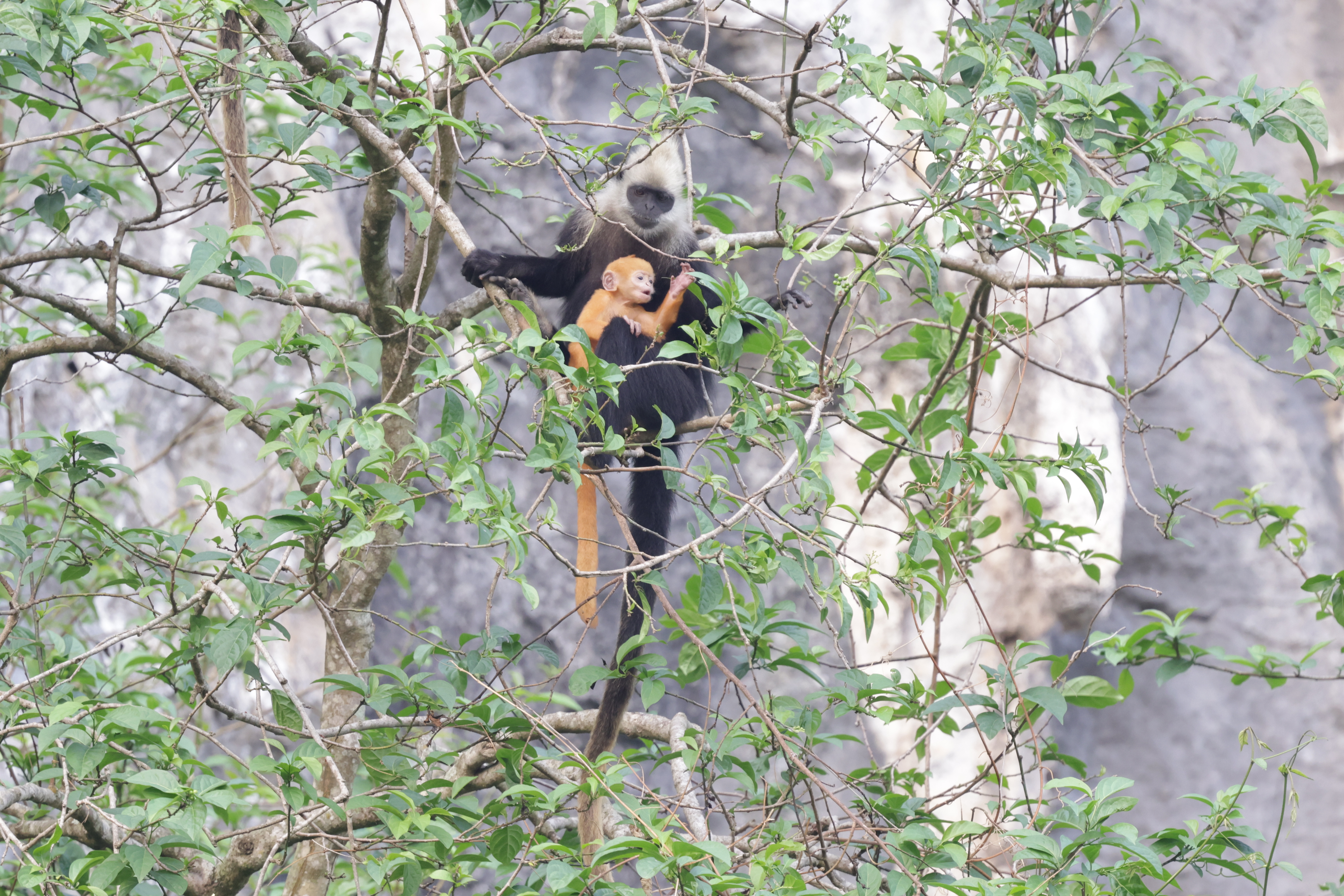
To address the challenges posed by the rugged karst terrain and the difficulties of traditional patrol and monitoring, the nature reserve teamed up with Huawei and the China-ASEAN Artificial Intelligence Application Cooperation Center to develop an intelligent monitoring platform powered by AI computing. Thanks to the video-based animal monitoring devices deployed along the cliffs, the system can collect real-time data on the langurs' distribution, surroundings, and patterns of activity. Using AI-driven automated labeling and data analytics, the reserve has developed a complete dashboard for visualized management. This has significantly enhanced the efficiency of data retrieval and analysis. To date, the system has recorded over 37,200 instances of langur activity.
In addition to technical support, innovation in ecological protection and restoration mechanisms is also critical. The Chongzuo White-Headed Langur Habitat Protection Regulations, the first regulation of its kind in China, forms the legal framework for the reserve's protection efforts. Under this framework, a range of measures has been implemented. To date, 77.6 hectares of habitat has been restored, 2 drinking water sources and 18 water drinking points for the langurs have been built, and 2 ecological corridors have been constructed. The white-headed langur population has increased to more than 1,400 across 130 groups. As the langur is an umbrella species of the local karst ecosystem, the growth of its population is critical to the region's biodiversity. Wild duck lettuce, a level-II protected species in China, was recently found in the reserve for the first time, a sign of recovery in the fragile local ecosystem.
Nong Dengpan, Director of the Guangxi Chongzuo White-headed Langur National Nature Reserve Management Center, said: "The growth of the white-headed langur population can be attributed to a combination of technology, legislation, and ecological restoration efforts. Digital technology enables more precise observation of these limestone langurs and more informed management of their living environment. This integrated conservation model can serve as a reference for the protection and population recovery of other endangered primate species, such as the eastern black crested gibbon in Southeast Asia."
Tian Yongsheng, Deputy General Manager of Huawei Guangxi, noted: "Huawei is committed to conserving nature with technology. We work with global partners to support ecosystem conservation using digital technologies like 5G, cloud, and AI. The success of the white-headed langur project demonstrates AI's immense value in processing complex geographical data and massive volumes of species data. We will continue using innovative technologies to protect biodiversity and enable the harmonious coexistence of humanity and nature."
By the end of 2025, our digital inclusion projects for environmental protection had been implemented in 65 protected areas around the world. These projects have significantly improved the efficiency of biodiversity conservation and the sustainable use and management of natural resources.
Hashtag: #Huawei
The issuer is solely responsible for the content of this announcement.