The 10th Kubuqi International Desert Forum to Open: Ordos Becomes a Beacon of Green Hope for the World
ORDOS, CHINA - Media OutReach Newswire - 31 July 2025 - From September 8 to 9, 2025, the 10th Kubuqi International Desert Forum will convene in Ordos, Inner Mongolia Autonomous Region.
As a vital international exchange platform for desertification prevention and control, this forum, with the theme "Scientific Desertification Control, Green Development", will host delegates from international organizations such as the United Nations Environment Programme (UNEP) and the UNCCD Secretariat, as well as government officials, experts, and scholars from Africa, Europe, the Middle East, and other regions, to jointly explore innovative approaches to desertification prevention and control. Beyond showcasing Ordos' success in desertification control, this gathering will share Chinese wisdom and solutions in the fields of ecological restoration and sustainable development with the global community.
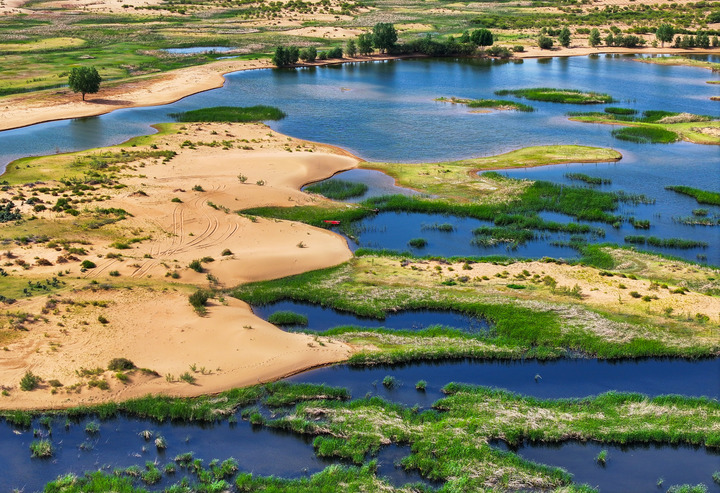
From "Sea of Death" to "Economic Oasis": Kubuqi's Remarkable Ecological Turnaround
As China's seventh-largest desert, Kubuqi was once branded as the "Sea of Death". However, after decades of scientific desertification control, this area has undergone a fundamental ecological transformation. According to statistics, Kubuqi's desertification control rate surged from 7% to 40% in 2024, with ambitious targets of 50% by 2025 and 70% by 2030. Central to this success is a 420-kilometer northern shelterbelt integrated with a "four-pillar desertification prevention" system, combining photovoltaic arrays, silt dams and other measures. These interventions have reduced soil erosion by 5.7 million mu (380,000 hectares) since 1995, raised soil-water conservation efficiency to 61.4%, and prevented 300 million tons of sediment from entering the Yellow River over the past decade.
This transformation is driven by the pioneering "PV + Desertification Control" model. Within the Kubuqi Desert, 10.02 gigawatts of solar capacity now doubles as an ecological restoration engine across approximately 46,700 hectares of rehabilitated desert land. The integrated system delivers three-dimensional benefits, namely clean energy generation atop panels, sustainable agriculture beneath them, and livestock grazing between arrays. This approach has simultaneously increased green energy production and ecological recovery while lifting average incomes by over 30,000 RMB through "work-relief programs". Landmark projects like Dalad Banner's "Steed Solar Park", where 196,000 photovoltaic panels form a galloping horse design, have become a Chinese landmark in the global fight against desertification.
How Ordos Tamed the Desert: Systematic Approach and Tech-Powered Solutions
Ordos's success in desertification control stems from its holistic "ecosystem integration" philosophy applied through "four strategic measures" in the campaign to address the ecological challenges at the Yellow River's "Great Bend":
Financial Integration: Strategic allocation of 14.9 billion RMB to priority projects including desert-marginal forests and PV-controlled rehabilitation zones. Technological Integration: Accelerated iteration and upgrading of desertification control models and technologies, achieving a 60% field application rate of forestry and grassland technologies. Benefit Integration: Balancing desert control with increasing the income of farmers and herdsmen by allocating 16% of key project funds to "work-relief programs" and issuing Inner Mongolia's first forest carbon credit certificate. Collaborative Integration: Unprecedented mobilization of resources including over 30 state-owned enterprises such as China Three Gorges Corporation, CHN Energy, and Inner Mongolia Energy Investment Group, over 100 private enterprises and non-profit organizations such as Yitai Group, Mengtai Group, and Ant Foundation, over 500 engineering teams and cooperatives, and 25,000 farmers and herdsmen.
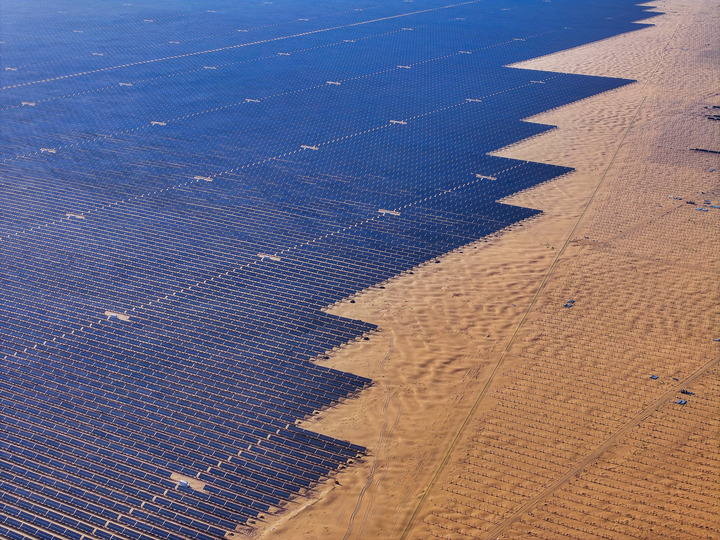
Furthermore, the Kubuqi model now crosses borders through technical exchanges with Mongolia, Saudi Arabia, and other nations. The Kubuqi model, as remarked on by the UNEP, is a replicable template for global desertification control.
Green Transformation and Livelihood Improvement: A Win-Win Path of Desertification Control and Development
Ordos's desertification control efforts have not only reshaped its ecology but also invigorated its economy. Annually, Ordos establishes over approximately 66,667 hectares of new plantations of caragana shrubs, drought-resistant species crucial for stabilizing sandy soils. This brings the total conserved caragana grassland to over approximately 933,333 hectares. Local processing facilities convert caragana shrubs into 35,000 tons of livestock feed and 10,000 tons of biofuel annually, creating economic value from ecological restoration. In former coal-mining subsidence zones, "New Energy and Ecological Regeneration" integrated demonstration bases now operate where solar arrays power adjacent sustainable farms. In 2024, the city achieved a total output value of 7.5 billion RMB from forestry and grassland, and established 190,000 hectares of carbon-sequestering forests, equivalent to 2.6 times the land area of Singapore, standing as tangible proof that clear waters and green mountains are invaluable assets.
Where deserts once advanced, greenery now prevails. Where land lay wounded, sustainable economies now thrive. Ordos proves by action that desertification prevention and control and high-quality development can resonate in harmony.
The 10th Kubuqi International Desert Forum convenes amid escalating global desertification challenges. According to the UNCCD Secretariat's latest data, 40% of the land around the world is now degraded, impacting nearly half of humanity. The practice of Ordos delivers a compelling case for achieving the UNCCD's goals.
From Kubuqi to Riyadh, from the Yellow River to the Sahara Desert, China's scientific solutions are promoting global ecological recovery. The 10th Kubuqi International Desert Forum will open a new chapter in global desertification prevention and control.
The issuer is solely responsible for the content of this announcement.