SSSTC Launches Video Recording SATA SSD for Stable, Uninterrupted Performance
TAIPEI, TAIWAN - Media OutReach Newswire - 24 June 2025 - Solid State Storage Technology Corporation (SSSTC) announces the launch of its SSSTC CVD Series SATA SSDs, specifically engineered for high-frequency, long-duration continuous write applications.
Designed to meet the demanding requirements of video recording, surveillance, video production, media streaming, in-vehicle recording, edge sensing, and industrial data logging, the SSSTC CVD Series delivers exceptional stability and durability in write-intensive environments.
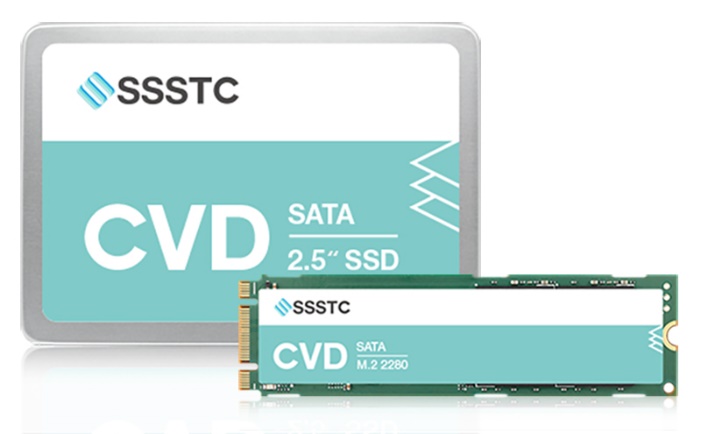
The SSSTC CVD Series SATA SSD with Direct Write technology is the ideal choice for video recording applications. Image courtesy of Solid State Storage Technology Corporation (SSSTC).
When non-optimized SSDs are used for high-intensity video recording, they often suffer from sudden speed drops caused by SLC cache saturation or firmware interference—resulting in lag, frame loss, write interruptions, or even video data loss. To address these pain points, the SSSTC CVD Series features SSSTC's optimized Direct Write firmware, purpose-built for intensive write workloads. This technology writes data directly to TLC NAND Flash Memory, eliminating reliance on the SLC cache and significantly improving performance stability.
As a result, the SSSTC CVD Series delivers stable write speeds (preventing speed drops), low latency (eliminating write lag), distortion-free visuals (avoiding frame loss), and uninterrupted recording (preventing write interruptions), thereby preserving the integrity of video data. Even under 24/7 high-resolution continuous recording, the SSSTC CVD Series maintains steady and consistent performance.
Powered by high-quality Kioxia BiCS FLASH™ 5th-generation 3D TLC NAND Flash Memory, the SSSTC CVD Series combines finely tuned firmware developed by SSSTC's in-house R&D team to ensure high stability and reliability, achieving a mean time between failures (MTBF) of over 3 million hours.
In terms of capacity and form factor, the SSSTC CVD Series is designed to meet the commonly adopted specifications in industrial applications, featuring capacities from 128 GB to 2 TB and industry-preferred form factors, 2.5-inch and M.2 2280, to ensure seamless integration with industrial PCs, embedded platforms, and edge devices. It also supports an operating temperature range of 0 °C to 85 °C, enabling dependable performance in diverse and rugged environments.
Additionally, the SSSTC CVD Series features a low-power design through its support for DevSleep mode, significantly reducing power consumption during system idle periods. This makes it especially suitable for front-end recording devices and mobile monitoring equipment that require stable, long-term operation.
As a subsidiary of Kioxia, SSSTC leverages decades of expertise in NAND Flash Memory storage and industrial applications to provide stable and reliable SSDs to customers worldwide. The SSSTC CVD Series is now in mass production. For more information, please visit the SSSTC website: https://www.ssstc.com.
Hashtag: #SSSTC
The issuer is solely responsible for the content of this announcement.