Syngenta extends leadership in fungicides with ADEPIDYN® technology
- ADEPIDYN® technology on track to be first of Syngenta's crop protection active ingredients to attain billion-dollar annual sales within eight years of commercialization
- Following registration approval in Great Britain, farmers in more than 55 countries now have access to this powerful fungicide
- Success reflects Syngenta's innovation leadership in fungicides and the SDHI mode of action, and in bringing to market products with strong sustainability attributes
BASEL, SWITZERLAND - EQS Newswire - 7 May 2024 - Syngenta Group, one of the world's largest agricultural technology companies, is extending its leadership in fungicides with the success of its patented ADEPIDYN® technology (trademark for active ingredient: pydiflumetofen).
Following its recent registration in Great Britain, farmers in more than 55 countries globally are now able to access this powerful fungicide, with strong sales across continents reflecting farmer demand for effective control of a broad range of crop diseases. The company is on track to achieve one billion US dollars in sales of products containing ADEPIDYN® technology, marking the first time its active ingredient achieves this milestone in only eight years.
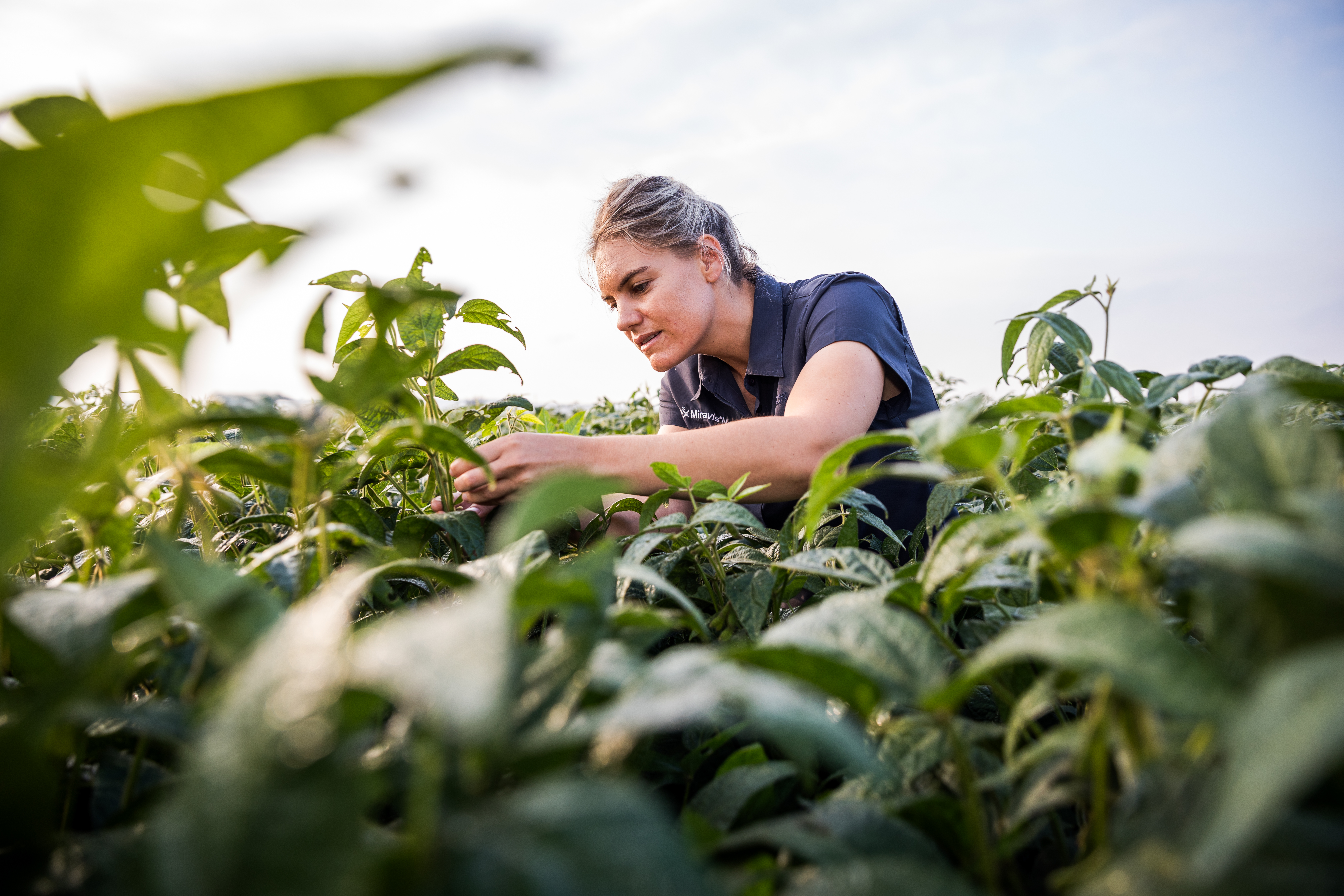
"ADEPIDYN® technology is a game-changer for modern agriculture and enables farmers to grow crops more sustainably," said Ioana Tudor, Global Head of Marketing at Syngenta Crop Protection. "It represents a significant milestone in our efforts to secure high yields with low impact to the planet and is exciting because of its high levels of consistency and effectiveness. We're very proud that our innovation is delivering such impact."
Worldwide, farmers lose an estimated 10-23 percent of their crops to fungal diseases each year. An additional 10-20 percent is lost post-harvest. In the top five most important calorie crops – rice, wheat, corn, soybeans and potatoes – fungal infections have been estimated to cause yield losses that could feed at least 600 million people every day for a year.
ADEPIDYN® technology offers a new solution that effectively fights fusarium head blight in wheat, which produces mycotoxins that contaminate harvests and threaten human and animal health. In addition, it offers a step-change in performance against a wide spectrum of other important diseases, such as septoria in wheat and net blotch in barley. ADEPIDYN® technology is registered in more than 100 crops including corn, soybean, peanuts, vegetables, potatoes, grapes, tomatoes and fruit crops.
ADEPIDYN® technology embodies Syngenta's commitment to sustainable innovation, core to its new Group-wide sustainability priorities announced in April. The effectiveness and long-lasting activity of the technology enable low use rates and potentially fewer sprays especially in leaf spot diseases, while safeguarding beneficial organisms. It is also an important tool for resistance management. The technology works by inhibiting the activity of an enzyme that is essential for fungal respiration, starving the fungi from the energy they need to survive. It is designed to adhere to the plant surface and to penetrate rapidly through the leaf surface – creating a reservoir of active ingredient in the waxy layer of the plant tissue that enables even distribution and long-lasting protection as the plant grows.
The technology further highlights Syngenta's success with the SDHI (Succinate dehydrogenase inhibitor) mode of action and the company's ability to effectively design active ingredients that address various farmer challenges. Following its first SDHI seed treatment sedaxane, Syngenta launched its SDHI fungicide isopyrazam which transformed farmers' ability to control sheath blight in rice, and later SOLATENOL® technology to protect crops against septoria and rusts. In Brazil, SOLATENOL® technology is today regarded as crucial in farmers' fight against soybean pod anomaly – a new fungal disease which spread within just three years to 12 states across the country since it was first identified.
Beyond innovation in research and development, Syngenta's success is
underpinned by its commitment to invest in cutting-edge manufacturing operations. Strong global demand has fueled investments aimed at increasing the efficiency of manufacturing of ADEPIDYN® technology. These set the foundation for the production of a growing portfolio of formulations containing ADEPIDYN® technology that target specific grower needs in different markets.
The latest Syngenta innovation in the SDHI family is TYMIRIUM® technology, which was launched globally in 2022. In addition to protecting crops against key fungal diseases, TYMIRIUM® technology provides broad-spectrum protection against plant-parasitic nematodes that reduce global crop yield by an estimated 12 percent a year.
Hashtag: #Syngenta
The issuer is solely responsible for the content of this announcement.
About Syngenta Group
Syngenta Group is one of the world's biggest agricultural technology companies, with roots going back more than 250 years. With around 60,000 employees, operating in more than 100 countries, the company strives to transform agriculture with science-driven, technological innovations to deliver high productivity and high-quality food while fighting climate change and restoring nature. Syngenta Group works with farmers and partners to deliver four Sustainability Priorities: Higher Yields, Lower Impact; Regenerate Soil and Nature; Improve Rural Prosperity; and Sustainable Operations. The priorities are underpinned by regenerative agriculture practices to nurture and restore soil health, protect the climate and biodiversity, and enhance farm productivity and profitability. Syngenta Group, which is registered in Shanghai, China, and has its management headquarters in Switzerland, draws strength from its four business units: Syngenta Crop Protection, headquartered in Switzerland; Syngenta Seeds, headquartered in the United States; ADAMA®, headquartered in Israel; and Syngenta Group China. Together, these businesses provide industry-leading ways to serve customers around the world.
For Syngenta Group photos and videos, please visit the Syngenta Group Media Library.
Data protection is important to us. You are receiving this publication on the legal basis of Article 6 para 1 lit. f GDPR ("legitimate interest"). However, if you do not wish to receive further information about Syngenta Group, just send us a brief informal message and we will no longer process your details for this purpose. You can also find further details in our privacy statement.
Cautionary Statement Regarding Forward-Looking Statements
This document may contain forward-looking statements, which can be identified by terminology such as "expect," "would," "will," "potential," "plans," "prospects," "estimated," "aiming," "on track" and similar expressions. Such statements may be subject to risks and uncertainties that could cause the actual results to differ materially from these statements. For Syngenta Group, such risks and uncertainties include risks relating to legal proceedings, regulatory approvals, new product development, increasing competition, customer credit risk, general economic and market conditions, compliance and remediation, intellectual property rights, implementation of organizational changes, impairment of intangible assets, consumer perceptions of genetically modified crops and organisms or crop protection chemicals, climatic variations, fluctuations in exchange rates and/or grain prices, single source supply arrangements, political uncertainty, natural disasters, and breaches of data security or other disruptions of information technology. Syngenta Group assumes no obligation to update forward-looking statements to reflect actual results, changed assumptions or other factors.