4 in 5 Asia Pacific Consumers Have Experienced Effects of Climate Change and Recognize the Importance of Environmental Sustainability When Making Nutrition-Related Decisions – Herbalife Nutrition Survey
Herbalife Nutrition launches its Asia Pacific Simply Recycle Challenge to encourage collective action against climate change
HONG KONG SAR - Media OutReach - 20 June 2022 - Premier global nutrition company, Herbalife Nutrition, today released findings from its Asia Pacific Nutrition Sustainability Survey, which revealed that the vast majority – four in five – of consumers in Asia Pacific said that they have experienced the effects of climate change (79%), and recognize the importance of environmental sustainability in making nutrition-related decisions (78%).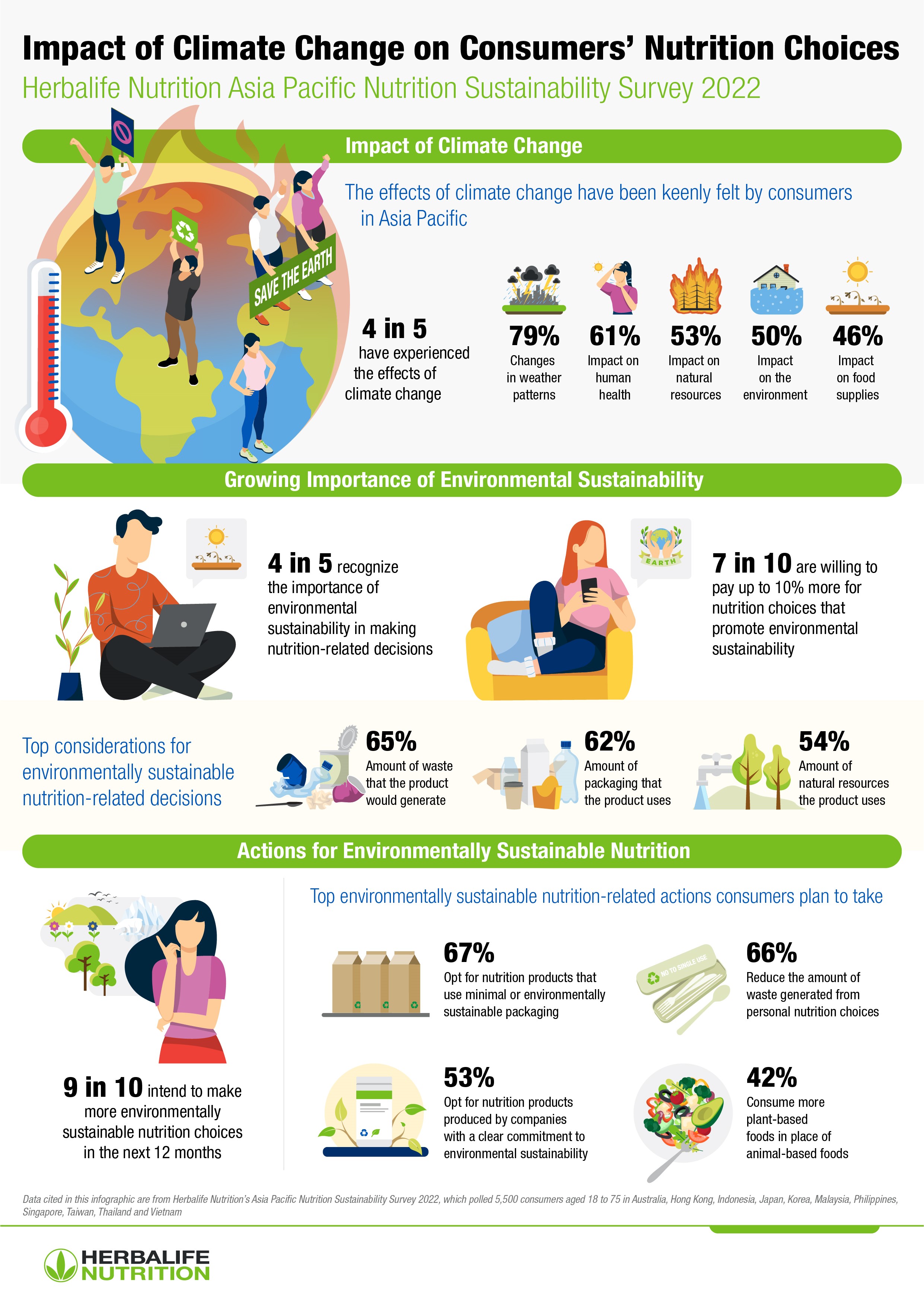
Conducted in April 2022, Herbalife Nutrition's Asia Pacific Nutrition Sustainability Survey 2022 polled 5,500 consumers aged 18 to 75 in 11 Asia Pacific markets, including Australia, Hong Kong, Indonesia, Japan, Korea, Malaysia, Philippines, Singapore, Taiwan, Thailand and Vietnam. The survey shed light on consumers' attitudes towards sustainable nutrition, the environmentally sustainable nutrition-related actions that they intend to take, and the importance of sustainability efforts by nutrition companies.
Among those respondents who consider environmental sustainability important, their top considerations are "the amount of waste generated"(65%) and "the amount/material of packaging a product uses" (62%) when they decide whether to purchase a nutrition product. Additionally, three-fourths (76%) feel the recyclability of packaging materials is important in making nutrition-related decisions. This is felt most strongly by respondents in the Philippines (93%) and Thailand (89%).
The survey also revealed that close to 80% of consumers in APAC would pay more for nutrition choices that support or promote environmental sustainability. Across the different demographic groups, Gen Z/ Millennials (80%) are more likely to pay more for sustainable nutrition choices, compared to Gen X/ Boomers (76%). When asked about how much more they would pay, 70% said between 1% and 10%, while 18% are willing to pay from 11% up to 15% more.
"Global climate change is affecting us all, spurring consumers across Asia Pacific to place more importance on environmental sustainability in their nutrition-related decisions," said Stephen Conchie, Senior Vice President and Managing Director, Herbalife Nutrition Asia Pacific and China. "We are keenly aware of the urgency of climate change and are striving to play our part in helping protect the planet for the future, such as harnessing the power of plant-based proteins and ingredients in our products, reducing the use of plastic and amount of packaging, as well as increasing recycling efforts through the launch of Asia Pacific Simply Recycle Challenge."
"The Simply Recycle Challenge is an all-new initiative that rallies our extensive distributor network in the Asia Pacific region to recycle their used Herbalife Nutrition product canisters. This initiative will also contribute to our Global Responsibility goal of making 50 million positive impacts by our company's 50th anniversary in 2030," added Conchie.
Vast Majority Want to Make More Environmentally Sustainable Nutrition Choices
According to the findings, almost nine in 10 (88%) consumers in Asia Pacific said that they intend to make more environmentally sustainable nutrition choices over the next 12 months. The top actions that they plan to make include:
- Opting for nutrition products that use minimal or environmentally sustainable packaging (67%)
- Reducing the amount of waste generated from personal nutrition choices (66%)
- Opting for nutrition products that are sustainably grown, sourced and produced (53%)
- Opting for nutrition products that are produced by companies with a clear commitment to environmental sustainability (53%)
- Consuming more plant-based foods in place of animal-based foods (42%)
Growing Demand for Plant-Based Nutrition Alternatives
The survey also found that seven in 10 (68%) Asia Pacific consumers feel it is important for nutrition companies to offer plant-based alternatives. Furthermore, for those who intend to consume more plant-based foods in the next 12 months, 70% said they want to improve their health and well-being, while 64% believe that plant-based food options are more environmentally sustainable.
Governments, Corporations, Consumers Play Equal Roles in Enabling Sustainable Nutrition
Consumers in Asia Pacific were candid about who should have the biggest role in enabling environmentally sustainable nutrition choices. 35% said corporations like nutrition companies have the biggest role, 34% opted for consumers, and 31% chose the government, indicating that all parties are almost equally important in contributing to the sustainable nutrition cause.
What is most heartening to see is that nine in 10 (90%) respondents feel that a nutrition company's recycling program would encourage them to support its sustainability initiatives, showing that corporations can play an active role in sparking consumer actions against climate change.
To further expand its commitment to environmental sustainability, and address consumers' growing desire for making sustainable nutrition choices, Herbalife Nutrition launched the Asia Pacific Simply Recycle Challenge on World Environment Day 2022 (June 5). The Challenge, which is organized as part of the company's Go Green initiative in Asia Pacific from June to August, encourages Herbalife Nutrition distributors and independent Nutrition Clubs owners across the region to recycle their used Herbalife Nutrition product canisters. This recycling program will not only help increase recycling capacity in Asia Pacific markets, but will also contribute to global reforestation efforts. For every 25 Herbalife Nutrition product canisters recycled, one tree will be planted through the partnership with the global non-profit organization One Tree Planted.
The new recycling program is an addition to Herbalife Nutrition's ongoing efforts to eliminate negative environmental impacts. In its Global Responsibility Report: Nourishing People and the Planet launched last year, the Company discussed its goals to reduce the use of plastic and use more recycled materials like PCR (post-consumer resin) in its Formula 1 canisters, while also decreasing the overall amount of packaging for its nutrition products globally.
For more information on Herbalife Nutrition's global responsibility efforts, please visit www.IAmHerbalifeNutrition.com/global-responsibility/.
About Herbalife Nutrition Ltd.
Herbalife Nutrition (NYSE: HLF) is a global nutrition company that has been changing people's lives with great nutrition products and a business opportunity for its independent distributors since 1980. The Company offers science-backed products to consumers in 95 markets by entrepreneurial distributors who provide one-on-one coaching and a supportive community that inspires their customers to embrace a healthier, more active lifestyle. Through the Company's commitment to nourish people, communities and our planet, Herbalife Nutrition pledges to achieve 50 million positive impacts – tangible acts of good – by 2030, its 50th anniversary.