What Does 4E Mean in Running Shoes? A Guide for Australian Men
- Written by: Times Media
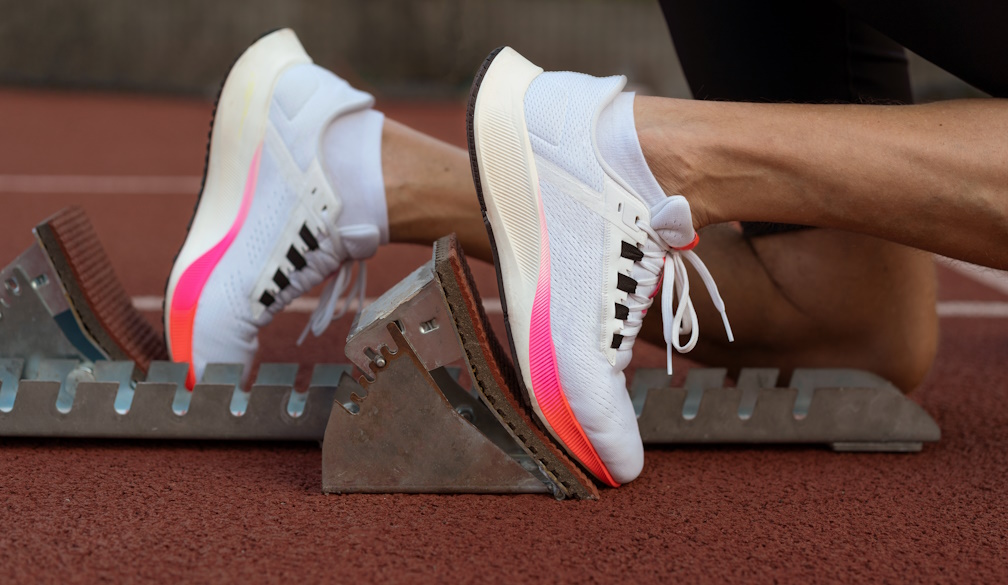
Seeing “4E” on a running shoe can be confusing if you have always shopped by length alone.
For men, 4E usually means extra-wide. It sits above the common D standard width and 2E wide fitting used by many athletic brands. The important catch is that 4E is not one universal measurement. The actual width changes with shoe size, brand, model and the last used to build the shoe.
For Australian runners, there is another wrinkle: many running brands sell shoes locally using US sizing rather than a separate Australian standard. That makes it useful to understand both the width code and the manufacturer's own sizing chart before ordering.
What Does 4E Mean in Men's Running Shoes?
In most men's athletic footwear systems, the progression looks roughly like this:
D is standard width, 2E is wide, and 4E is extra-wide.
Brooks Australia, for example, currently categorises men's D as normal, 2E as wide and 4E as extra-wide. New Balance Australia uses the same broad pattern, although it labels 4E as X-Wide.
That sounds simple until you compare actual shoes.
A 4E label tells you where the shoe sits within a manufacturer's width range. It does not mean every 4E shoe has exactly the same internal dimensions.
The shape of the toe box, amount of upper material, heel width, midfoot volume and overall last can all change how roomy a shoe feels.
How Much Wider Is 4E Than 2E?
The difference is usually only a few millimetres, but that can be enough to change how a shoe feels over a long run.
New Balance Australia's current men's width chart gives a useful example. At US men's size 10, it lists D at about 10.6 cm across the foot, 2E at about 10.9 cm and 4E at about 11.3 cm. At size 12, the corresponding figures are approximately 11.0 cm, 11.4 cm and 11.7 cm.
Those measurements belong to New Balance's system. They should not be copied across to another brand.
A few millimetres may sound trivial when measured with a ruler. Inside a running shoe, however, that difference applies around a foot that is repeatedly expanding, loading and moving over thousands of steps.
Who Actually Needs 4E Running Shoes?
4E makes sense when the correct shoe length still leaves the forefoot noticeably compressed in standard or 2E widths.
Some men simply have naturally broad feet. Others have a wider forefoot combined with a relatively normal heel. Foot shape can also change with age, weight, swelling or conditions such as bunions.
The most useful clue is not the width printed on an old pair. It is how your foot sits in the shoe you are wearing now.
If the upper is pulled tightly across the ball of the foot, the little toe is pushed inward, or the side of your forefoot visibly sits beyond the platform of the shoe, you may need more width.
Men comparing 4e running shoes should therefore check whether the problem is genuinely width rather than length. A larger shoe size and a wider shoe are solving two different problems.
Signs Your Running Shoes May Be Too Narrow
A narrow shoe often becomes obvious after the run has started rather than when you first put it on.
Watch for recurring pressure around the little-toe joint, tingling across the forefoot, toes rubbing together, numbness, side blisters or an upper that feels increasingly restrictive after several kilometres.
A large footwear review covering 18 studies found that 63% to 72% of participants were wearing shoes that did not accommodate either the length or width of their feet. Poor fit was also associated with problems including foot pain, corns, calluses and lesser-toe deformities.
That does not mean every sore foot needs 4E footwear. It does mean width deserves to be checked rather than assumed.
Why You Should Not Simply Size Up
Going from a US 10 to an 11 can create a little extra width because larger shoes are built proportionally bigger.
It also creates extra length.
That can leave more space in front of the toes, loosen the heel and change where the ball of the foot sits relative to the shoe's flex point.
Proper shoe fitting takes more than heel-to-toe length into account. The Brannock fitting method measures heel-to-ball length as well as overall length and width, because the shoe should bend in the same region as the foot.
If your current running shoe has enough length but feels squeezed at the sides, try the same length in 2E or 4E before moving to a longer shoe.
Is There an Australian 4E Size?
Not really.
Australian runners frequently see US, UK and European sizes on shoe boxes, but “Australian men's size” is not a consistently recognised athletic-footwear standard.
Brooks Australia states that it uses US sizing for its running shoes and notes that what shoppers sometimes refer to as Australian sizing is often treated as similar to UK sizing in casual conversation. The company recommends using its conversion chart rather than assuming the systems are interchangeable.
Width lettering is separate again.
You might therefore see a shoe sold in Australia as US men's 10, 4E. The “10” describes the length category within the brand's US sizing system, while “4E” describes the extra-wide fitting.
4E Does Not Automatically Mean a Wide Toe Box
This distinction catches people out.
Overall shoe width is commonly measured around the ball of the foot. Toe-box shape describes what happens farther forward.
A shoe can be extra-wide around the metatarsals and still taper quite sharply toward the toes. Another model may have a naturally broad, rounded front even in a narrower width category.
Research supports the idea that toe-box geometry matters. Back in 2024, 25 male marathon runners were asked to run in both shoe designs rather than stick with just one pair. One was a standard design, while the other gave the toes an extra 8 mm of height and 3 mm more room at the front. Researchers recorded changes in toe deformation, in-shoe foot displacement and ground-reaction-force measures.
The study does not establish a perfect toe-box shape for everyone. It does show that fairly modest changes in front-of-shoe space can alter what happens inside the shoe.
How Should a 4E Running Shoe Fit?
Extra-wide should feel roomy at the forefoot, not loose everywhere.
Your heel should remain reasonably secure when walking or jogging. The midfoot should feel held without a hard band of pressure across the instep. At the front, the toes should have enough space to sit naturally.
Brooks Australia's current fitting guidance suggests approximately half an inch, or about a thumb's width, between the big toe and the front of the running shoe.
That measurement addresses length. Width still needs to be judged separately.
If a 4E shoe gives the forefoot relief but lets your heel move excessively, you may not need less width. You may simply need a model with a different heel shape.
Why Shoe Shape Varies Even Within the Same Brand
Running shoes are built for different purposes.
A lightweight speed shoe may have a closer-fitting upper than a daily trainer. A stability shoe may use a broader platform. Trail shoes can add overlays that make the upper feel firmer around the foot.
Even when two models are both labelled 4E, they may not provide the same amount of practical space.
Brooks Australia explicitly notes that sizing and fit can vary between brands and between models because different lasts are used during construction.
This is why an old size is best treated as a starting point rather than a guarantee.
Do Feet Get Wider During a Run?
They can change enough for a close-fitting shoe to become uncomfortable.
A study of recreational runners examined foot shape before and after 10 km and 20 km runs. Researchers recorded significant changes in ball width, girth, arch height and overall foot volume as distance increased. Comfort ratings also changed, particularly around the forefoot and heel.
That does not mean you should deliberately buy a loose shoe for anticipated expansion.
It does mean a running shoe that already feels squeezed before you start has very little margin once the foot has been loaded for an hour or more.
For long-distance runners, getting the width right at the beginning matters.
Can a 4E Shoe Be Too Wide?
Absolutely.
If the foot slides sideways on corners, the heel moves noticeably or the upper has to be tightened aggressively just to keep the shoe attached, the fit may be too broad.
Extra space is useful only where it is needed.
Some runners fall between D and 2E, or between 2E and 4E. Others need a broad forefoot but a relatively narrow heel. In those situations, the shape of the model matters as much as the width code.
When looking at 4e running shoes, the aim should not be to find the widest pair available. It should be to find enough space for your forefoot while keeping the rest of the foot controlled.
How Should Australian Men Measure Their Feet?
Measure both feet while standing.
Use the larger foot as the fitting reference if there is a meaningful difference. Measure length and the widest part across the forefoot rather than relying on an old shoe size.
The Brannock Device Company recommends measuring both feet and fitting the larger one because differences between left and right feet are common.
Try shoes with the socks you normally run in. If possible, do the fitting later in the day, particularly if your feet tend to feel fuller after work or exercise.
Then move in them. Walking around a store is more informative than sitting down, and a brief treadmill jog is even better where available.
FAQs About 4E Running Shoes
Is 4E wider than 2E for men's running shoes?
Yes, within brands that use the standard D, 2E and 4E progression. Men's 2E is commonly sold as wide, while 4E is usually extra-wide or X-Wide.
Is 4E the same width in every running shoe?
No. Width codes are useful categories, not universal measurements. Different lasts and upper constructions can make two 4E shoes fit differently.
Should I choose 4E if my toes feel cramped?
Possibly, but first work out where the tightness is occurring. If the ball of the foot is comfortable but the toes are squeezed, a broader toe-box shape may matter more than moving to a wider overall fitting.
Can someone with normal-width heels wear 4E?
Yes. Some runners have broad forefeet and comparatively narrow heels. The right shoe needs enough forefoot width while still providing good heel security.
Treat 4E as a Starting Point, Not the Answer
For Australian men, 4E is best understood as an extra-wide category rather than a precise universal measurement.
It can make an enormous difference for a runner whose forefoot is being compressed in D or 2E footwear. It can also be completely unnecessary for someone whose problem is toe-box shape, instep height or the wrong shoe length.
Start with measurement. Then look at the model's width chart, try the shoe under load and pay attention to where the space actually appears.
The right running shoe is not the one with the biggest width code. It is the one that leaves enough room for your foot to work naturally without letting it move around unnecessarily.