

Why Heel Pain Is Often Worst With the First Steps of the Day
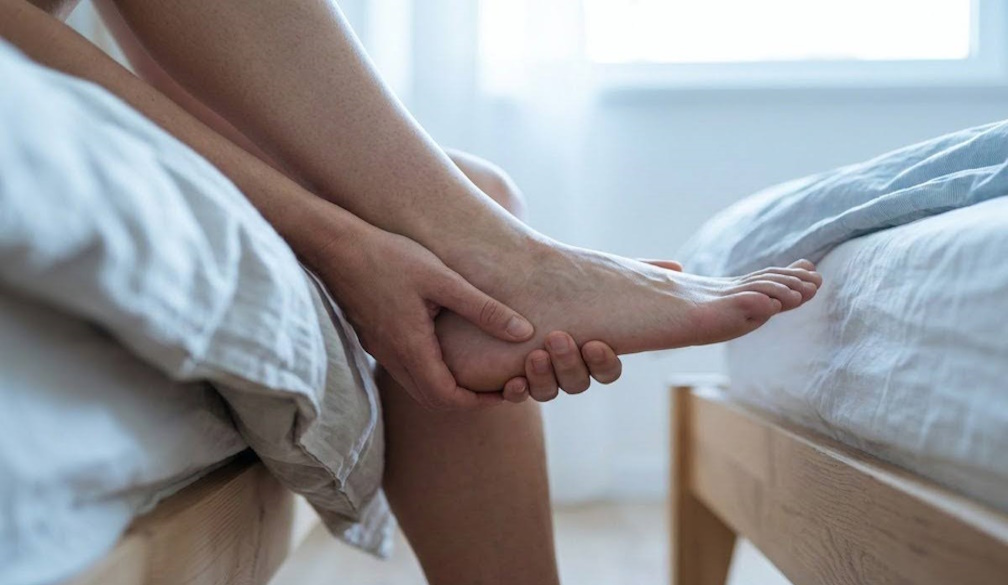
Sharp pain under the heel on the first steps out of bed, easing after a few minutes of walking, is one of the most commonly described foot complaints. Because it settles as the day goes on, many people write it off as stiffness and carry on. Health information from both Australia and the United Kingdom describes this exact pattern, and it is worth knowing what it usually looks like before deciding whether to do anything about it.
What the Pattern Looks Like
Healthdirect, the Australian Government's health information service, describes heel pain from the plantar fascia, the thick band of tissue running from the heel bone to the toes and forming the arch, as often worse in the morning as you take your first steps, after prolonged standing or sitting, and after intense activity. The UK's National Health Service adds that the pain is felt on the bottom of the foot around the heel and arch, is much worse when walking starts after sleeping or resting, eases with movement, and can return after standing, walking or running for a long time. Stretching the sole of the foot, for example by raising the toes off the floor or climbing stairs, can also be painful.
Several things are listed as making this more likely. The NHS names being aged 40 to 60, recently starting exercise on hard surfaces, exercising with a tight calf, increasing standing, walking or running beyond your usual level, wearing shoes with poor cushioning or support, and being overweight. Healthdirect adds flat feet or high arches, pregnancy, and spending long periods on your feet.
When It Is Worth Getting Looked At
The NHS suggests seeing a GP if the pain is severe or stops you doing normal activities, is getting worse or keeps coming back, has not improved after two weeks of looking after it yourself, or comes with tingling or loss of feeling in the foot. It also lists foot pain in someone with diabetes as a reason to seek advice. For anyone unsure where to start, a GP is a reasonable first stop. A podiatrist, for example through local podiatry services Maribyrnong residents can search for, is another option, and can examine how the foot is loaded and moving. The NHS lists insoles, suitable shoes and night splints among the things a podiatrist may suggest. Heel pain can also have causes other than the plantar fascia, which is one reason an examination is worth more than a guess made from a symptom list.
What the Health Information Suggests Trying First
Both services describe similar first steps for pain that is not severe. Healthdirect lists resting the foot, pain relief medicines such as ibuprofen or paracetamol, shoes with good support and cushioning, heel pads or arch supports, night splints, and an ice pack applied for 10 to 20 minutes. The NHS suggests gentle stretches for the sole of the foot and heel, low-impact exercise such as swimming, and avoiding long periods of walking or standing, high heels, flip-flops, backless slippers and walking barefoot on hard surfaces. This is general information rather than advice for any one person, and medication in particular is a question for a pharmacist or doctor.
A Note on Heel Spurs
A heel spur is a small bony growth on the heel bone, and people sometimes assume it must be the cause of heel pain. Healthdirect notes that a heel spur is often linked with plantar fasciitis but that many people have spurs without any pain. Finding one does not by itself explain the symptoms, which is another reason a clinician looks at the whole foot rather than the scan alone.
Reading the Pattern Rather Than Ignoring It
Heel pain that is worst after rest and eases with movement is easy to dismiss because it improves on its own within minutes. Several of the risk factors above, such as footwear, sudden changes in activity and long hours on your feet, are things a person can see in their own routine. Noticing the pattern early, and knowing the point at which the health services suggest getting advice, is more useful than waiting to see whether it disappears.