How Outdoor Learning Can Influence Children’s Personal Development and Social Growth
Many parents notice that children spend a significant amount of time using phones, tablets or televisions during the day. Sometimes they watch a funny cartoon, and other times, they are lost playing a game on a smartphone.
In busy households, screens can sometimes be used to keep children occupied while adults manage daily responsibilities. However, too much passive screen time can also take children away from the experiences their bodies and minds need most. A 2023 review on the effects of excessive screen time on child development noted concerns around children’s cognitive, language and social-emotional development when screen use becomes excessive. The issue is not that every screen is harmful. The concern is that long hours on screens may replace movement, conversation, sensory play and real interaction.
This is one reason outdoor learning has become such an important part of early childhood education. UNICEF highlights outdoor play as valuable for children’s physical health, social skills, concentration, resilience and school readiness. The Australian Institute of Family Studies also explains that nature play can support young children’s wellbeing, especially when children have frequent, positive experiences in natural environments.
It is no surprise that many preschools and childcare centres across NSW and Australia now include outdoor learning as an integral part of their daily programs. In this post, we will look at how outdoor learning can support your child’s physical development, personal confidence and social growth.
How Outdoor Learning Supports Children’s Physical Development?
Young children develop through movement. Their muscles, balance, posture, coordination and spatial awareness all grow through repeated physical experiences. Outdoor learning gives children the room and variety they need to move their bodies in different way; here are some key benefits:
Movement Builds Strength and Coordination
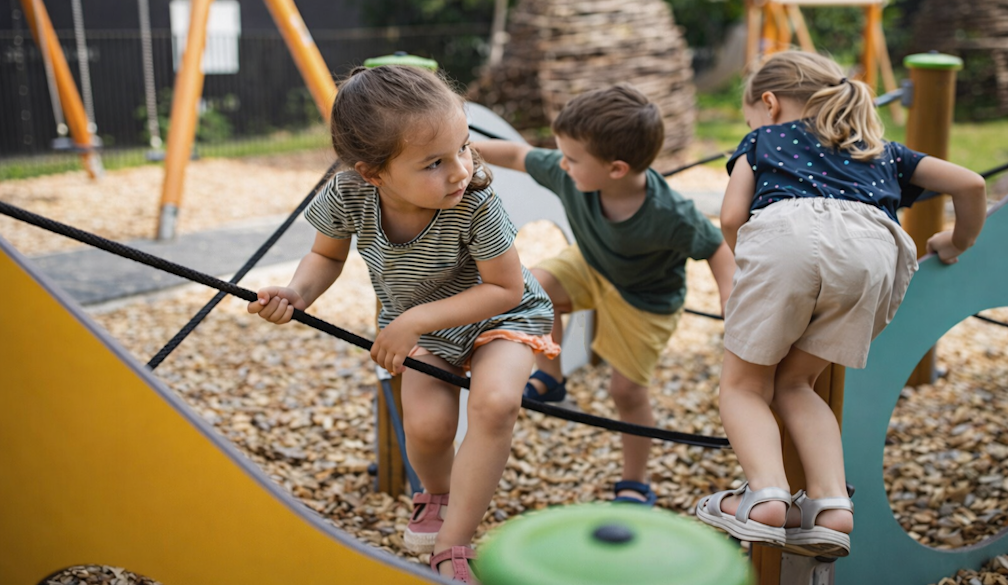
Running, climbing, balancing, digging, carrying, jumping and stretching all support gross motor development. These movements help children build core strength, stamina and body control. They also help children understand how their bodies move through space, which is important for safety, confidence and everyday independence.
Sensory Play Supports Thinking and Body Awareness
Outdoor environments usually offer more varied physical experiences than indoor rooms. Different surfaces, natural materials, open space, sand, water, slopes, steps and climbing equipment invite children to adjust their movement. A child walking across uneven ground is learning balance. A child carrying a bucket of sand is building strength. A child pouring water from one container to another is practising hand control and coordination.
Fine Motor Skills Grow Through Outdoor Play
Fine motor development also benefits from outdoor play. Picking up leaves, handling small stones, planting seeds, drawing in sand, squeezing mud and using outdoor tools all strengthen the small muscles in the hands and fingers. These skills later support drawing, writing, dressing, eating independently and other everyday tasks.
Movement Helps Children Settle and Learn
Physical development is also connected with attention and learning. Children who have regular opportunities to move are often better able to settle for group time, listen to instructions and take part in preschool routines. Outdoor learning gives children a healthy way to use their energy while building the physical skills they need for the next stage of childhood.
How Outdoor Play Supports Social and Emotional Growth?
In addition to the physical development of children, outdoor learning also has a strong influence on how children understand themselves and relate to others. When children play outside together, they are not only moving their bodies. They are learning how to share space, read other children’s needs, manage feelings and build friendships. Here’s how outdoor play influences emotional and mental wellbeing:
Cooperation, Sharing and Turn-Taking
Outdoor play often involves cooperation. Children may work together to build something, take turns with equipment, create a pretend game or decide how to use loose parts such as sticks, leaves, stones and containers. These experiences help children practise communication in a real setting. They learn how to ask, wait, explain, listen and respond.
Friendship grows through these repeated interactions. A child may invite another child into a game, help someone climb down, offer a turn, or comfort a friend who feels upset. These small moments matter because they teach children that other people have feelings, needs and ideas too. Over time, this supports empathy and emotional awareness.
Outdoor Play Creates Natural Social Moments
Outdoor environments can also make social learning feel more natural. There is often more space to move away, reset, rejoin a group or try again after a disagreement. A child who feels overwhelmed indoors may feel calmer outside, where movement, fresh air and sensory experiences can help regulate emotions.
Confidence, Resilience and Self-Belief
Personal development is closely connected to this. When children try a new physical challenge, solve a small problem, or join a group game, they begin to see themselves as capable. They learn that it is okay to try, pause, ask for help and try again. These experiences build confidence from the inside because the child has lived through the process, not simply been told they are doing well.
Want to Support Your Child’s Overall Development? Choose a Childcare Centre That Values Outdoor Play
Because outdoor learning supports so many parts of early development, it is worth looking closely at how a preschool or childcare centre uses outdoor time. A strong early learning setting should treat outdoor play as part of the learning program, rather than a short break between indoor activities.
Parents can look for outdoor routines that include both planned and spontaneous play. Planned activities may support movement, nature care, sensory exploration or group games. Spontaneous play gives children the freedom to choose, imagine, negotiate and follow their interests. Both forms are important because children need guidance as well as independence.
A quality routine may include prepared outdoor environments that are set up daily with rotating activities based on children’s developmental needs and interests. So, when you visit a centre, ask how often children go outside, what happens during outdoor play, how educators support social development, and how the outdoor environment changes across the week. Also observe whether educators are engaged with the children, rather than only supervising from a distance.