


Why Commercial Kitchens Are Switching to Smarter Cooking Oil Management Systems
Why Commercial Kitchens Are Switching to Smarter Cooking Oil Management Systems
Across Australia’s hospitality industry, commercial kitchens are under increasing pressure to improve efficiency, reduce waste, maintain food quality and operate more sustainably.
While many operators focus on labour costs, staffing shortages and rising ingredient prices, one operational area is quietly becoming a major point of discussion among restaurant groups, hotels, clubs and fast-paced kitchens: cooking oil management.
For years, cooking oil was treated as a basic consumable. Oil arrived in 20-litre tins, staff manually handled stock, used oil disposal was messy and kitchens accepted a certain level of waste as unavoidable.
That approach is changing rapidly.
Today, more venues are moving towards integrated cooking oil management systems designed to improve safety, streamline kitchen operations and reduce unnecessary oil consumption.
The shift is particularly noticeable among high-volume hospitality operators where consistency, compliance and efficiency directly impact profitability.
The Operational Problem Many Kitchens Still Face
Traditional cooking oil handling methods create several operational challenges.
Manual oil handling increases spill risks, consumes storage space and adds unnecessary labour to already busy kitchen environments. Staff are often required to move heavy oil containers through kitchens, while used oil storage can become difficult to manage during peak trading periods.
Beyond logistics, poor oil management can also impact food quality.
When oil is not filtered properly or replaced at the right intervals, food consistency suffers. Oil degradation can affect flavour, appearance and cooking performance, particularly in high-volume frying environments.
At the same time, sustainability expectations across the hospitality sector continue to grow.
Large restaurant groups and venues are increasingly looking for ways to reduce waste streams and improve environmental outcomes without disrupting operations.
Why Bulk Cooking Oil Systems Are Becoming More Popular
Modern bulk cooking oil systems are designed to solve many of these operational pain points.
Instead of relying on individual oil containers, bulk systems allow fresh oil to be stored and delivered directly where it is needed within the kitchen. Used oil can then be collected safely through sealed recovery systems.
This creates several advantages:
- Reduced manual handling
- Improved kitchen safety
- Cleaner storage areas
- Faster oil transfers
- Better inventory control
- Reduced packaging waste
- More consistent oil quality
For busy commercial kitchens, even small operational efficiencies can have a measurable impact over time.
Many venues are also finding that structured oil management processes help extend oil life when combined with proper filtration systems and staff procedures.
Sustainability Is Now Part of Kitchen Operations
Sustainability is no longer just a marketing conversation within hospitality.
Increasingly, it is becoming part of operational decision-making.
Used cooking oil is now widely recognised as a valuable recoverable resource when handled correctly. Rather than entering waste streams, collected oil can be processed and repurposed within broader renewable energy and resource recovery sectors.
This has led more hospitality businesses to review how their oil is stored, handled and collected.
Reliable collection processes, sealed storage systems and consistent servicing are becoming more important, particularly for larger venues and franchise groups operating across multiple locations.
The Importance of Choosing the Right Supplier
As cooking oil systems become more advanced, hospitality operators are also placing greater importance on choosing suppliers that understand both logistics and kitchen operations.
Consistency of supply, service responsiveness and system reliability all play a major role in keeping kitchens running efficiently.
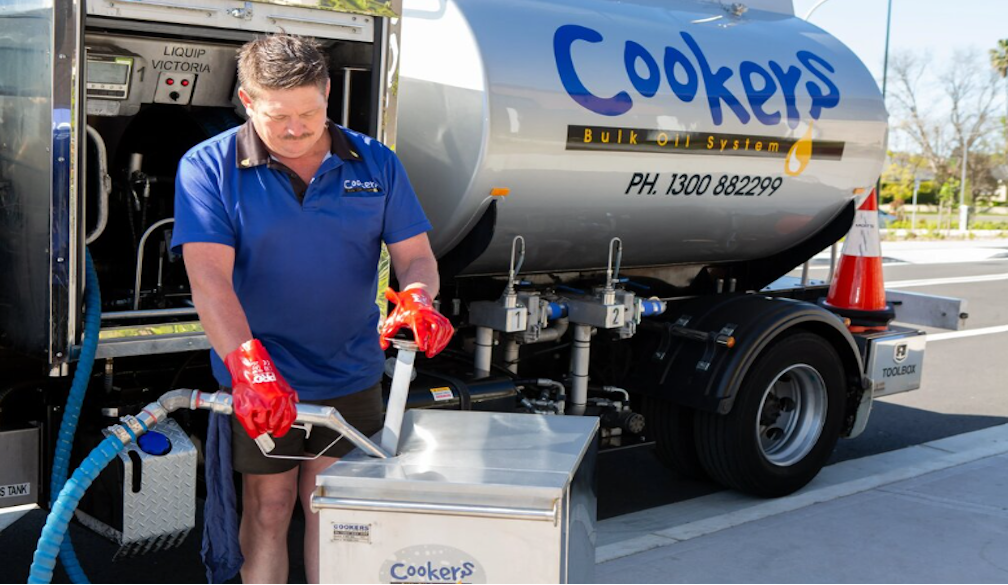
Experienced providers such as Cookers have helped commercial kitchens across Australia transition from traditional oil handling methods to more streamlined bulk oil management systems.
For many operators, the decision is no longer simply about purchasing bulk cooking oil. It is about implementing systems that improve operational efficiency, support sustainability goals and create safer kitchen environments.
The Future of Commercial Kitchen Oil Management
As hospitality businesses continue to modernise operations, cooking oil management systems are likely to become standard practice rather than a premium upgrade.
Operators are becoming more data-conscious, more sustainability-focused and more aware of the operational inefficiencies hidden within traditional kitchen workflows.
In a competitive hospitality landscape where margins matter, smarter oil management is increasingly being viewed as a practical operational investment rather than a back-of-house afterthought.
And for many commercial kitchens across Australia, that shift is already well underway.










