How API-First Design Improves SaaS Platform Flexibility
The world of Software-as-a-Service (SaaS) platforms is one filled with uncertainty; expectations and scalability are constantly moving targets. With this in mind, all companies that look to develop successful products must ensure that they can respond quickly to these changing conditions without the need for a full-scale architectural rebuild repeatedly. API-first is the path that will give birth to this flexibility.
The API-first design approach is much more than a technical preference; it presents itself as a strategic response to constructing digital products. Teams, by placing APIs before the initiation of backend and frontend systems, start off with a structured, modular foundation that supports scalability, integration, and further success. This feature becomes very essential to all new-age Saas software development services and any given result that a thought of flexibility might bring regarding a product's continued success.
Understanding API-First Design
API-first design is a strategy by which integration protocols and communication mechanisms are established in advance, even before developing a system. APIs are the most vital interface layer for service interactions that can negate any need for one to consider or hard-code them as they initially work from the design room.
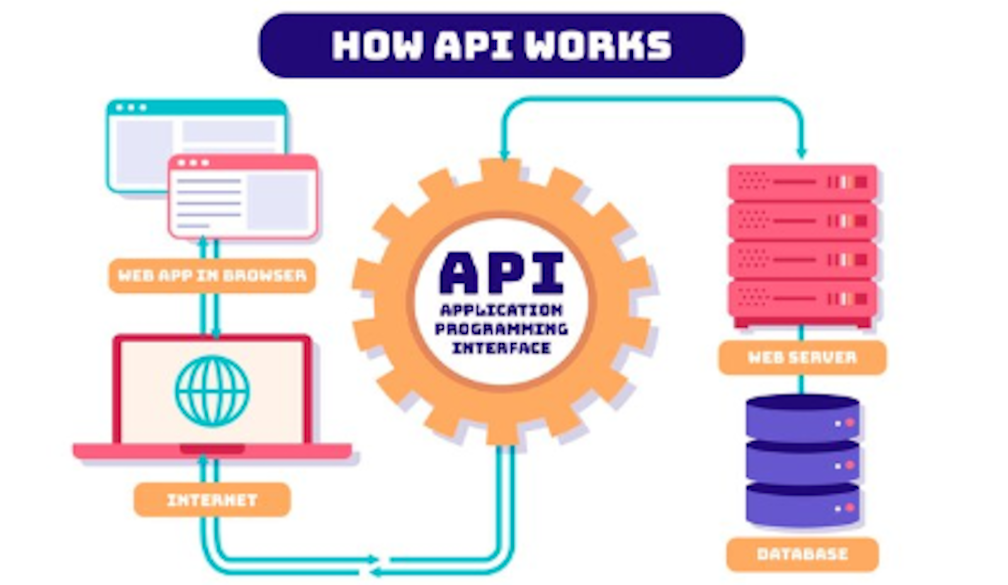
On a SaaS platform, the APIs act as links that allow the following to work in conjunction:
- Frontend applications
- Backend services
- Third-party integrations
- Mobile apps
- External partner systems
An adequately defined common interface ensures consistency across teams, minimizes dependencies, and, ultimately, makes a software service more maintainable.
With this delineation, teams would play a role in designing different pieces of a system separately so that those components could coalesce together.
Improving Scalability Through Modular Architecture
One of the biggest issues faced by SaaS platforms is scaling effectively. Increasing user demand means that systems must handle more requests, data, and integrations while not allowing performance to drop.
An API-first design tends to support modular architecture wherein different components can be updated, replaced, or scaled independently of each other. In this way, instead of updating the whole system, developers can work to improve specific services without any changes in others.
For example, if a SaaS platform needs to modify its authentication system, API-first architecture allows this change to take place without causing any disturbance to the other components. This reduces technical risks and contributes to better system resilience.
Many companies rendering digital product engineering services adopt the API-first principle to keep SaaS platforms agile as user needs grow.
Supporting Multi-Platform Product Experiences
In the contemporary SaaS context, it is rare for platforms to use only a single interface. Users access the products through web applications, mobile apps, and sometimes desktop interfaces. The interfaces must communicate with the same sets of backend systems.
API-first design solves this issue by providing a constant bridge for intercommunication. On the contrary, rather than forming entirely diverse backend systems for each platform, API sets will be created for general use to do the needful with all interfaces.
Many things can be derived from this strategy:
- Consistent applications and functionalities across the different platforms
- Quick enrichment of new interfaces
- Avoidance of redundancy in backend logic
- Easy updatability and maintenance features
This makes it possible to serve additional channels without altering too much of the architecture design for SaaS platforms.
Enabling Faster Product Iteration
SaaS startups rely heavily on time. Speed and agility in updating and testing features can be what makes a product a success in a highly competitive market.
API-first approach significantly speeds up development as it allows teams to work in parallel. Consequently, frontend developers can work independently from the backend developers, as long as they respect the API structure set by the others.
This kind of parallelism also prevents bottlenecks, which in turn leads to improved efficiency. It allows the teams to test components separately with minimal effect on the testing of the whole system.
Due to its productivity benefits, API-first design becomes the preferred workflow for teams facilitating Product Development Services, which need efficiency in how design, testing, and engineering teams reliably work together.
Simplifying Third-Party Integration
Integration is a fundamental requirement for most SaaS platforms. Businesses often need to connect their products with payment gateways, CRM systems, analytics tools, and other external services.
Without structured APIs, these integrations can become complex and difficult to maintain.
API-first design simplifies this process by providing clear, documented endpoints that external systems can interact with. This reduces integration time and minimises the risk of errors.
Well-designed APIs also make it easier to add new integrations as business needs evolve. This flexibility allows SaaS platforms to expand their capabilities without requiring major system changes.
Improving Maintainability and Reducing Technical Debt
Technical debt accumulates when systems are built without proper planning or structure. Over time, this makes updates more difficult and increases the risk of system instability.
API-first design helps prevent technical debt by enforcing clear boundaries between system components. Each service communicates through defined interfaces, making it easier to understand, maintain, and improve.
This structured approach allows developers to:
- Update individual services without affecting others
- Identify and fix issues more quickly
- Maintain cleaner, more organised codebases
- Reduce the risk of unintended system disruptions
As SaaS platforms grow, maintainability becomes increasingly important. API-first design ensures that systems remain manageable over the long term.
Supporting Automation and DevOps Practices
Modern SaaS development relies heavily on automation and continuous delivery. DevOps practices enable teams to release updates frequently while maintaining stability.
API-first architecture aligns well with these practices by creating predictable interfaces that can be tested and deployed independently.
Automated testing can verify API functionality before deployment, reducing the risk of errors. Continuous integration pipelines can deploy updates to individual services without affecting the entire system.
This improves reliability and allows SaaS platforms to evolve more efficiently.
Enhancing the Security and Access Control
Security stands out as a foremost issue when it comes to SaaS development, especially when sensitive user data is involved.
API-first design gives the security aspect a boost by enabling centralised access control. Authentication and authorization can be handled at the API level to ensure management of consistency in enforcement across all system components.
It gives room for teams to put into place:
- Secured authentication mechanisms.
- Role-based access control.
- Data protection policies.
- Monitoring and auditing capabilities.
Exercising access control through APIs can help shore up security measures and benefit the whole system from weaknesses.
Conclusion
The API-first design is established as a core approach in the current era of SaaS development. This approach provides mechanical communication between the different system components henceforth it offers flexibility, scalability, and efficient collaboration.
Method management enables faster development, more robust integration, stronger maintenance, and better security. It is good, as no matter how much the SaaS platform may diversify over time, the methodology does not impart unnecessary complications.
Whereas API-first design stands out as the solider basis for startups and embryonic business ventures to safely and methodically spawn a product over the long term for growth, the advent of structured development practices backed by Product Development Services and digital product engineering services will strengthen such foundations on an ongoing SaaS platform.
There's no way API-first design isn't optional anymore in a world with such severe competitiveness caused by product flexibility. It is merely the key mythic element for building scalable, well-organized SaaS platforms that are future-ready.