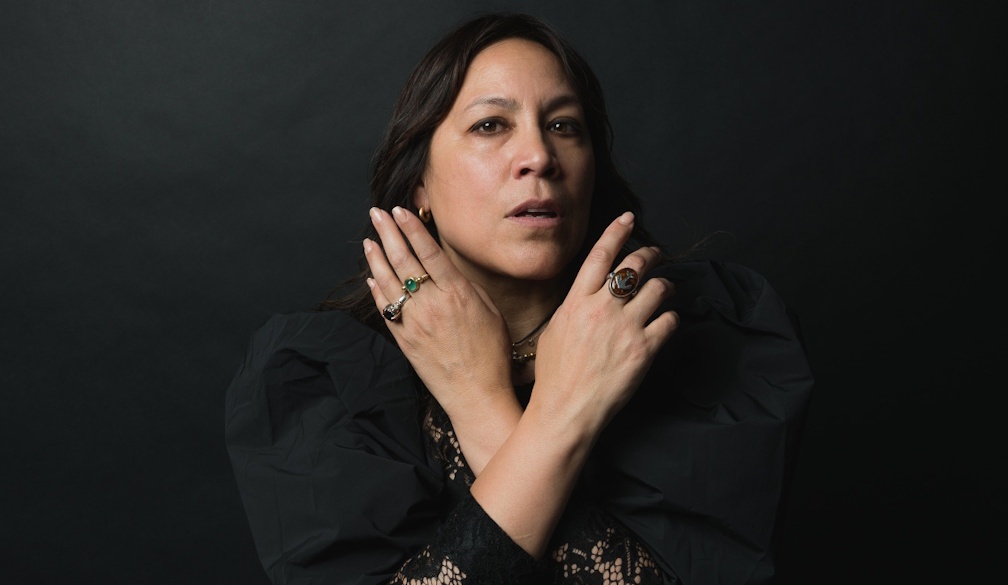

Julia Banks' new book is part of a 50-year tradition of female MPs using memoirs to fight for equality
- Written by: Joshua Black, PhD Candidate, School of History, National Centre of Biography, Australian National University
Political memoirs in Australia often create splashy headlines and controversy[1]. But we should not dismiss the publication of former Liberal MP Julia Banks’ book, Power Play, as just the latest in a genre full of scandals and secrets[2].
There is a long tradition of female parliamentarians using memoirs to reshape the culture around them. Banks — whose book includes claims[3] of bullying, sexism and harassment — is the latest to push for equality and understanding of what life is like for women in Canberra.
The power of a memoir
There are many ways to tell your story — from social media posts[4] to podcasts[5] and speeches[6] to parliament.
But there is something enduring about memoir. Sales figures aside, the political memoir can be a significant event. The inevitable round of media interviews, book tours and literary festivals can allow an author to stamp their broader ideas[7] onto the public debate and shed light on the culture of our institutions.
Read more: The 'madness' of Julia Banks — why narratives about 'hysterical' women are so toxic[8]
They also have the advantage of usually being written when women have left parliament, and no longer need to place their party’s interests ahead of all others. Indeed, Banks tells us that her story is that of “an insider who’s now out”.
It started with Enid Lyons
In 1972, Dame Enid Lyons (the first woman elected to the House of Representatives and wife of former prime minister Joe Lyons) published Among the Carrion Crows.
In her memoir, she offered a compelling insight into how she dealt with the male-dominated environment of parliament house. She recalled feeling like a “risky political experiment”, as if the very “value of women in politics would be judged” by the virtue of her conduct. She joyfully described how her maiden speech had moved men to tears.
In that place of endless speaking … no one ever made men weep. Apparently I had done so.
She also recorded key moments when she had vigorously presented her views in the party room and the parliament. She asserted the right of women to stand — and more importantly, to be heard — in parliament.
Encouraging women, challenging men
Since Lyons, women have continued to use autobiographies to promote women’s participation in politics and challenge the masculine histories of political parties.
When the ALP celebrated its centenary in 1991, it was the male history that was celebrated. Senator Margaret Reynolds (Queensland’s first female senator) “decided that the record had to be corrected”.
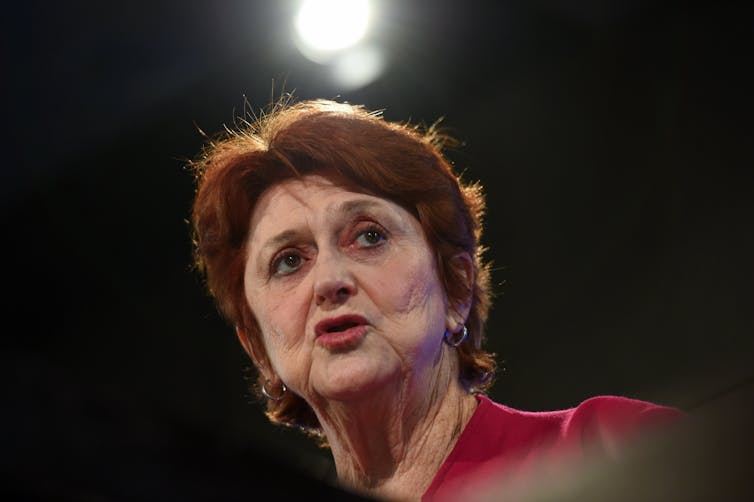 Former education minister Susan Ryan wanted to encourage other women to go into politics.
Lukas Coch/AAP
Former education minister Susan Ryan wanted to encourage other women to go into politics.
Lukas Coch/AAP
Reynolds’ writings on Labor women occurred alongside the ALP’s moves toward affirmative action quotas in the early 1990s. As well as a memoir, she wrote a series of newsletters called Some of Them Sheilas, and a book about Labor’s women called The Last Bastion. In it, she recorded the experiences and achievements of ALP women over the past 100 years.
In her 1999 book, Catching the Waves, Labor’s first female cabinet minister Susan Ryan acknowledged there was “a lot of bad male behaviour in parliament”. But she argued this should not “dissuade women from seeking parliamentary careers”. Importantly, Ryan saw her autobiography as a collective story about the women’s movement and its “breakthrough into parliamentary politics” in the 1970s and 1980s.
Read more: Why is it taking so long to achieve gender equality in parliament?[9]
While Labor women like Reynolds, Ryan and Cheryl Kernot were publishing their memoirs, few Liberal women put their stories on the public record. Former NSW Liberal leader Kerry Chikarovski’s 2004 memoir, Chika, was billed as the story of a woman who
learnt to cope with some of the toughest and nastiest politics any female has ever encountered in Australia’s political history.
In 2007 Pauline Hanson published an autobiography called Untamed and Unashamed, telling journalists, “I wanted to set the record straight”. But these were exceptions to the rule.
Julia Gillard’s story
Following the sexism and misogyny that disfigured her prime ministership, Julia Gillard’s 2014 memoir My Story helped revitalise the national conversation about women and power. Hoping to help Australia “work patiently and carefully through” the question of gender and politics, Gillard promised to “describe how I lived it and felt it” as prime minister.
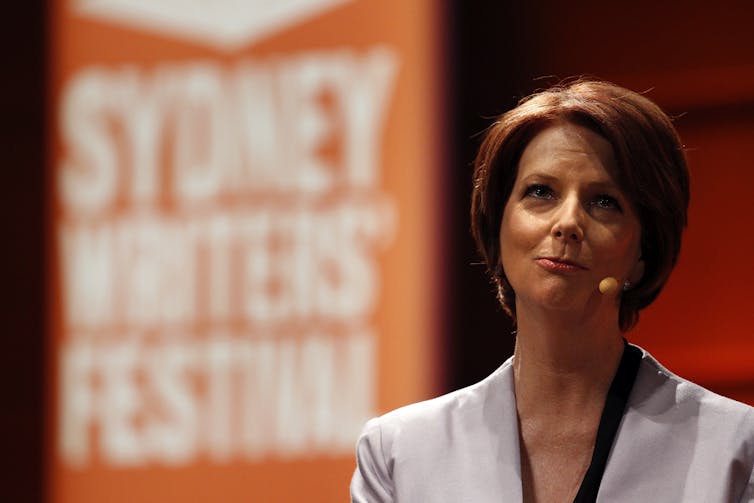 Julia Gillard released her memoir in 2014, the year after she lost the prime ministership.
David Moir/AAP
Julia Gillard released her memoir in 2014, the year after she lost the prime ministership.
David Moir/AAP
Importantly, she held not only her opponents but also the media to account for their gender bias. Critics like journalist Paul Kelly derided[10] Gillard’s version of history as “nonsense”, but the success of her account suggests otherwise. My Story sold 72,000 copies[11] in just three years.
In her 2020 book, Women and Leadership[12] co-authored with former Nigerian finance minister, Ngozi Okonjo-Iweala, Gillard interviewed eight women leaders from around the world, further showing how gender continues to shape political lives.
The risks of writing
A political memoir can be fraught, however. After a decade in parliament, Democract-turned-Labor MP Cheryl Kernot published her memoir Speaking for Myself Again in 2002. She had hoped it would argue the case for Australian women “participating fully” in politics to promote “their own values and interests and shift the underlying male agenda”.
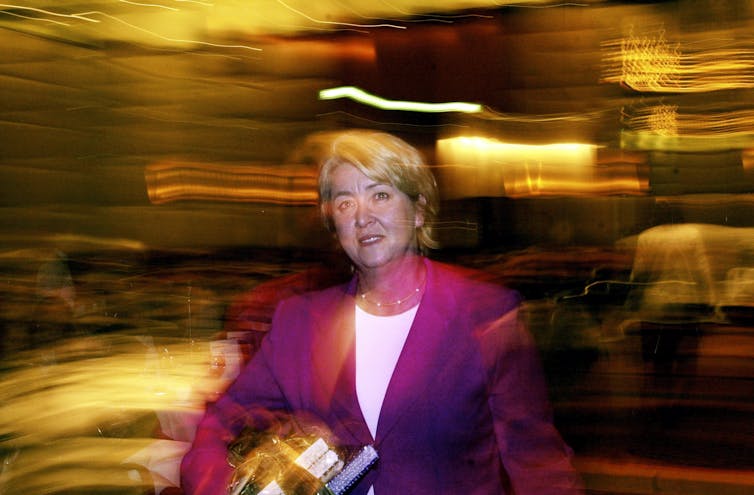 Former MP Cheryl Kernot’s memoir release was overshadowed by controversy.
Julian Ross/AAP
Former MP Cheryl Kernot’s memoir release was overshadowed by controversy.
Julian Ross/AAP
But the release was quickly overshadowed[13] by revelations of an extra-marital affair with Labor’s Gareth Evans (which were not in the book). Her book tour was halted amid the fallout. Kernot later despaired journalist Laurie Oakes — who broke the story — had managed to “sabotage people’s interest in the book”.
Others, such as Labor’s Ros Kelly, have told their stories in private or semi-private ways. Kelly’s autobiography was privately published as a gift to her granddaughter, but she also gives copies to women in politics, many of whom “have read it, and sent me really nice notes”.
Power in numbers
In the past five years, several women from across the political spectrum have published life stories.
In her memoir, An Activist Life, former Greens leader Christine Milne argued[14] that women should perform feminist leadership rather than being “co-opted into being one of the boys”. In Finding My Place, Labor MP Anne Aly, showed women of non-Anglo, non-Christian backgrounds belong in parliament too. Independents Jacqui Lambie and Cathy McGowan used their memoirs to show female MPs can thrive without the backing of the major parties.
Read more: Politics with Michelle Grattan: Former MP Kate Ellis on the culture in parliament house[15]
Most recently, former Labor MP Kate Ellis published Sex, Lies and Question Time, which includes reflections on the experiences of nearly a dozen other women in parliament.
For fifty years, Australia’s female politicians have used their memoirs to assert the equal rights of women in parliament, party rooms, and the media. Drawing on that lineage, Banks is the latest to help reveal and disrupt the sexism and misogyny in political life.
References
- ^ splashy headlines and controversy (theconversation.com)
- ^ scandals and secrets (theconversation.com)
- ^ claims (www.abc.net.au)
- ^ social media posts (www.abc.net.au)
- ^ podcasts (play.acast.com)
- ^ speeches (www.theguardian.com)
- ^ broader ideas (theconversation.com)
- ^ The 'madness' of Julia Banks — why narratives about 'hysterical' women are so toxic (theconversation.com)
- ^ Why is it taking so long to achieve gender equality in parliament? (theconversation.com)
- ^ derided (www.theaustralian.com.au)
- ^ sold 72,000 copies (www.theguardian.com)
- ^ Women and Leadership (theconversation.com)
- ^ quickly overshadowed (www.smh.com.au)
- ^ Christine Milne argued (www.abc.net.au)
- ^ Politics with Michelle Grattan: Former MP Kate Ellis on the culture in parliament house (theconversation.com)